Start here
What foundation drainage should solve
Foundation drainage solutions are meant to control water before it creates pressure, seepage, erosion, or moisture damage around the home. A drainage plan may be simple, such as extending downspouts and correcting low soil, or more involved, such as exterior drains, interior drainage, sump discharge, crack repair, or waterproofing.
The right plan depends on the water source. Roof runoff, surface water, groundwater, clogged gutters, poor grading, high mulch, patios, walkways, and low crawl-space areas can all affect how water reaches the foundation. If the source is not identified, the repair can miss the main cause.
In Rocky Mount and nearby communities, heavy rain can reveal drainage weaknesses quickly. Water near the foundation can contribute to leaks, damp crawl spaces, bowing wall pressure, soft soil, settlement concerns, and recurring crack leaks. Drainage is not a cure-all, but it is often a necessary part of a durable foundation plan.
Methods
Common foundation drainage solutions
Gutter and downspout correction
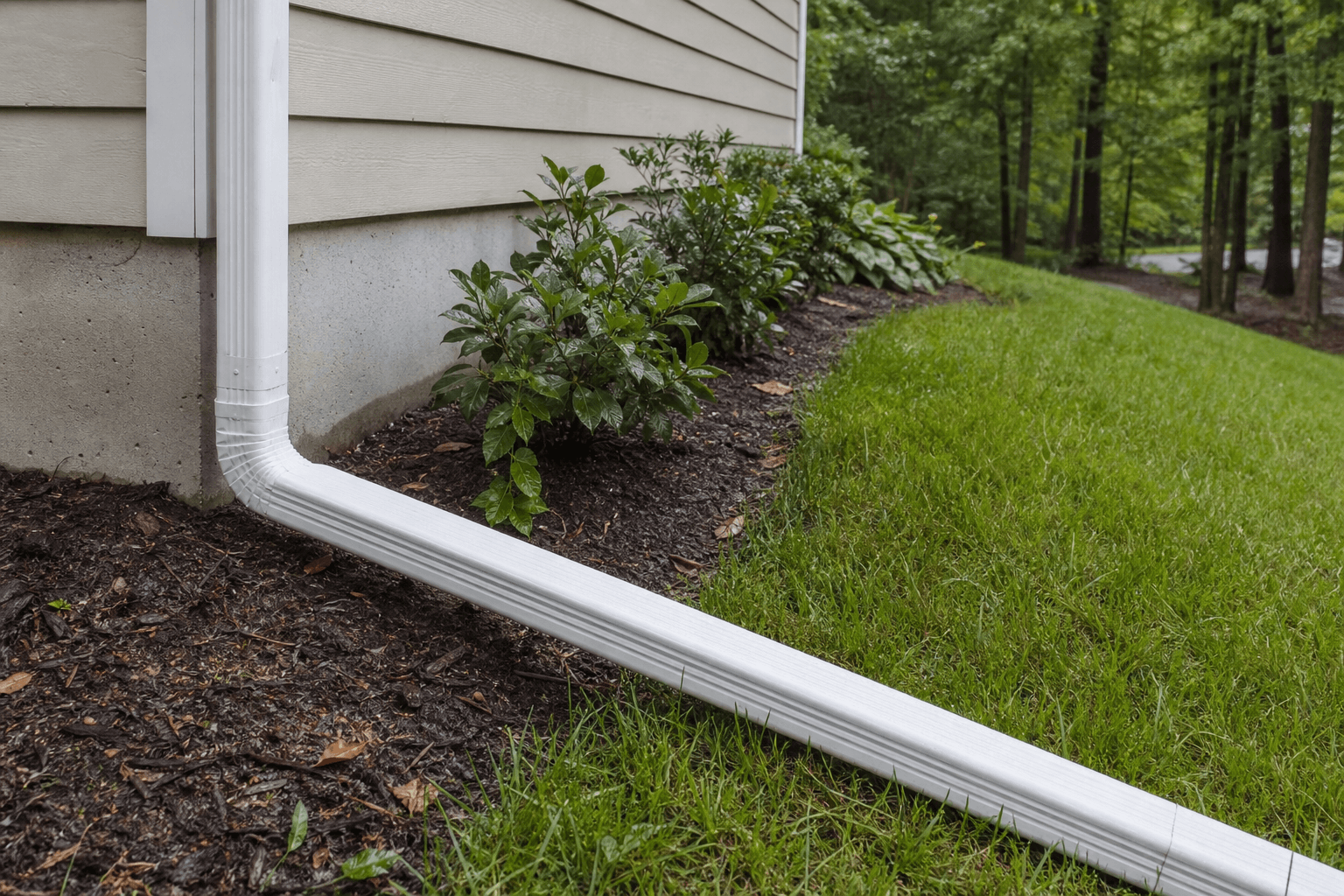
Clean gutters, larger downspouts, extensions, and discharge routing can keep roof water from landing beside the foundation.
Grading improvements
Soil should generally direct surface water away from the home where site conditions allow. Low spots and high mulch beds can trap water against the wall.
Exterior drain systems
French drains, swales, catch basins, or footing drains may be considered when surface water or subsurface water needs a controlled path away from the home.
Interior drainage and sump systems
Interior systems can collect and discharge water that reaches the foundation. They manage water entry rather than eliminating the outside source.
Waterproofing and crack repair
Wall coatings, membranes, crack repair, or seal details may help when matched to the actual water path and wall condition.
When needed
Signs drainage belongs in the repair plan
Water appears after rain
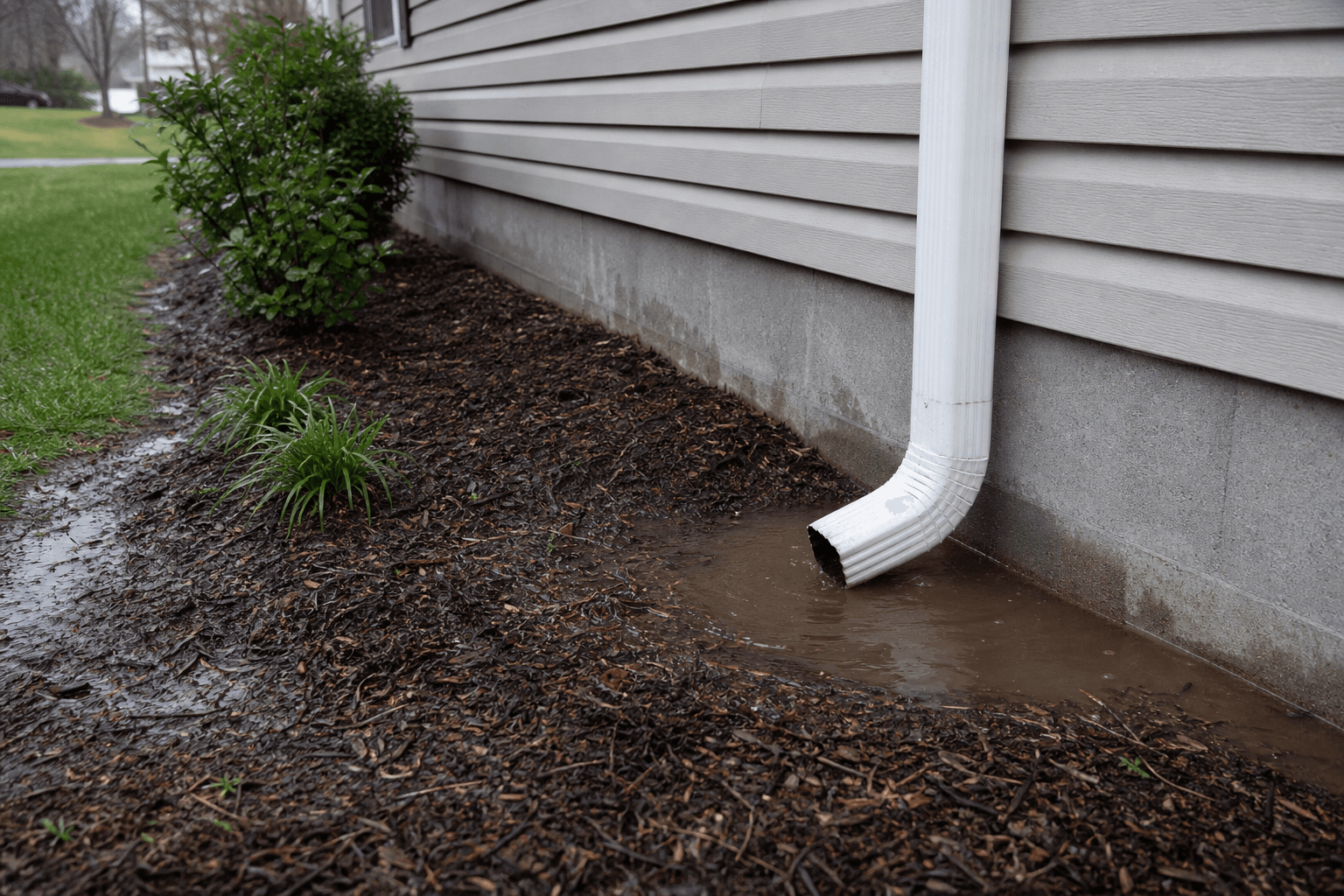
Leaks, damp stains, and puddles that follow storms often begin with exterior water control.
Soil stays wet near the wall
Persistent wet soil can increase pressure and moisture exposure along the foundation.
Cracks leak repeatedly
A crack repair may fail if water pressure keeps returning.
Walls bow or show horizontal cracks
Water pressure may be part of the force pushing against the wall.
Planning
How drainage work should be planned
A useful drainage plan starts during or soon after rain. The goal is to see where water lands, where it flows, where it sits, and where it enters. Downspouts should be checked before wall coatings because roof water is often easier to redirect than water that has already reached the foundation.
The plan should also explain the discharge point. Moving water away from one wall is not enough if it dumps near another foundation corner, a neighboring property, a low crawl-space door, or an area that sends water back toward the house.
Drainage work should be sequenced with other repairs. For example, a leaking crack may need sealing, but drainage may need to happen first. A bowing wall may need stabilization, but drainage may reduce the pressure that caused or worsened the movement.
Questions
Questions to ask before approving drainage work
What source is being controlled?
Ask whether the plan addresses roof runoff, surface water, groundwater, wall seepage, or interior collection.
Where will water discharge?
The outlet matters. Water should not be routed to another foundation problem.
What happens during heavy rain?
Ask how the system handles larger storms and what maintenance is required.
What does drainage not fix?
Drainage does not automatically repair cracks, bowing walls, wood damage, or settlement.
FAQ
Foundation drainage FAQs
What are foundation drainage solutions?
Foundation drainage solutions are repairs or improvements that move water away from the foundation or manage water that reaches it. They may include grading, downspout extensions, gutter correction, exterior drains, interior drains, sump systems, or waterproofing details.
Can drainage fix foundation cracks?
Drainage can reduce water pressure and moisture-related movement, but it does not close or structurally repair an existing crack. A crack may still need sealing or structural evaluation depending on its type.
Should I start with gutters and grading?
Often, yes. Roof runoff and soil slope are common first checks because they can send large amounts of water toward the foundation during storms.
Do I need a French drain or sump pump?
It depends on where water comes from, how often it returns, soil conditions, discharge options, and whether water is entering inside. Some homes need simple exterior corrections; others need more complete drainage systems.
Can drainage help bowing foundation walls?
Drainage may reduce pressure against the wall, but a wall that is already bowing or leaning may also need structural stabilization. Water control and wall repair should be reviewed together.
Sources
How this guide was reviewed
Last reviewed: July 31, 2026. This page is educational and does not diagnose a foundation condition, provide engineering advice, or quote repair pricing without an inspection.