Start here
What does water entering a foundation wall mean?
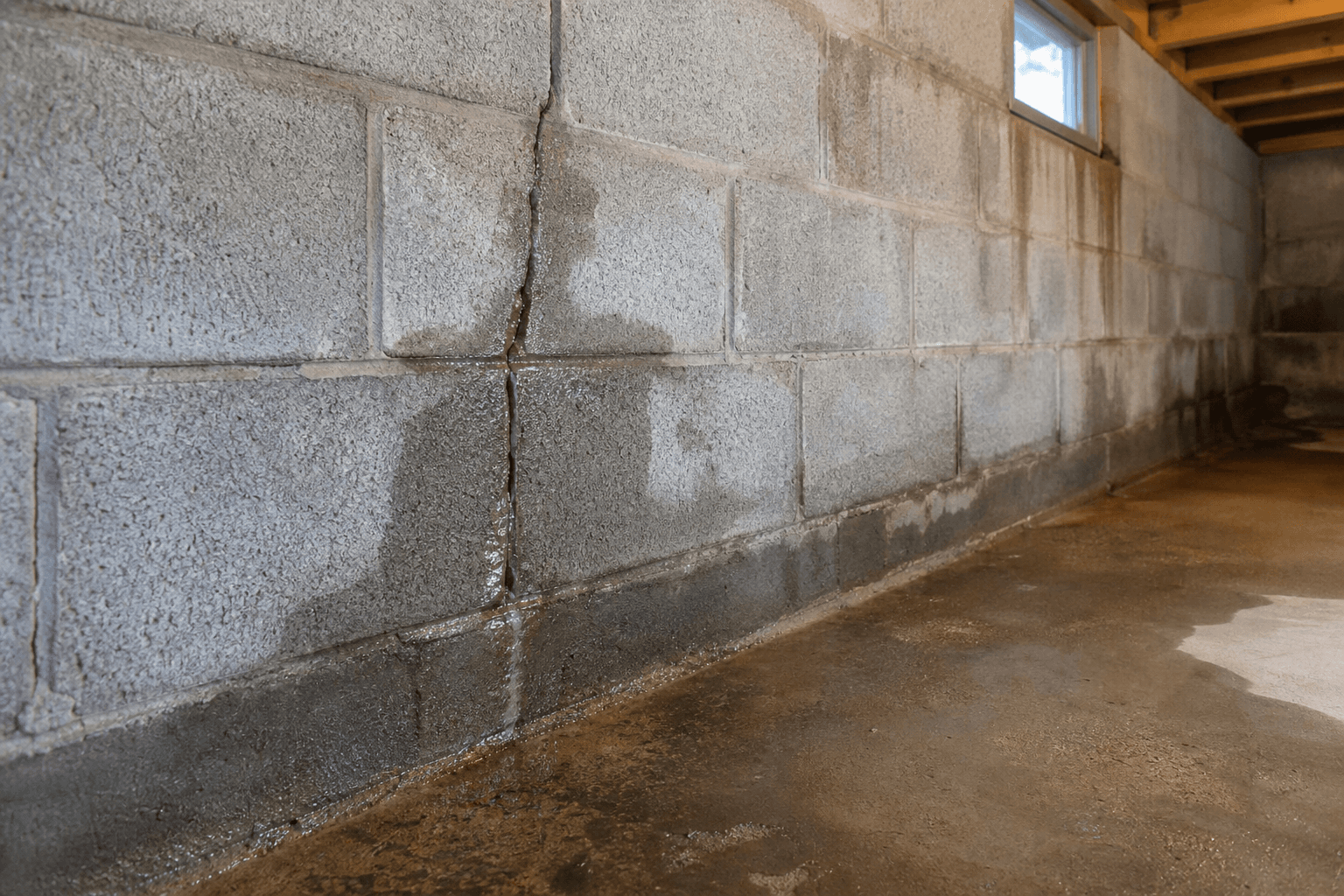
Foundation water intrusion — also called water infiltration or water ingression — means water is reaching the foundation and finding a way inside instead of draining away outside. It may appear as a damp stain, trickle, puddle, white mineral deposits, wet insulation, musty odor, or water entering during heavy rain. The visible spot inside the home is the entry path, but the cause often starts outside.
A small leak after a rare storm may be a drainage warning. Repeated water in the same location is more important because it means the source and path are still active. If water enters through a crack, a bowing wall, or an area with settlement symptoms, the issue should be reviewed as more than a simple leak.
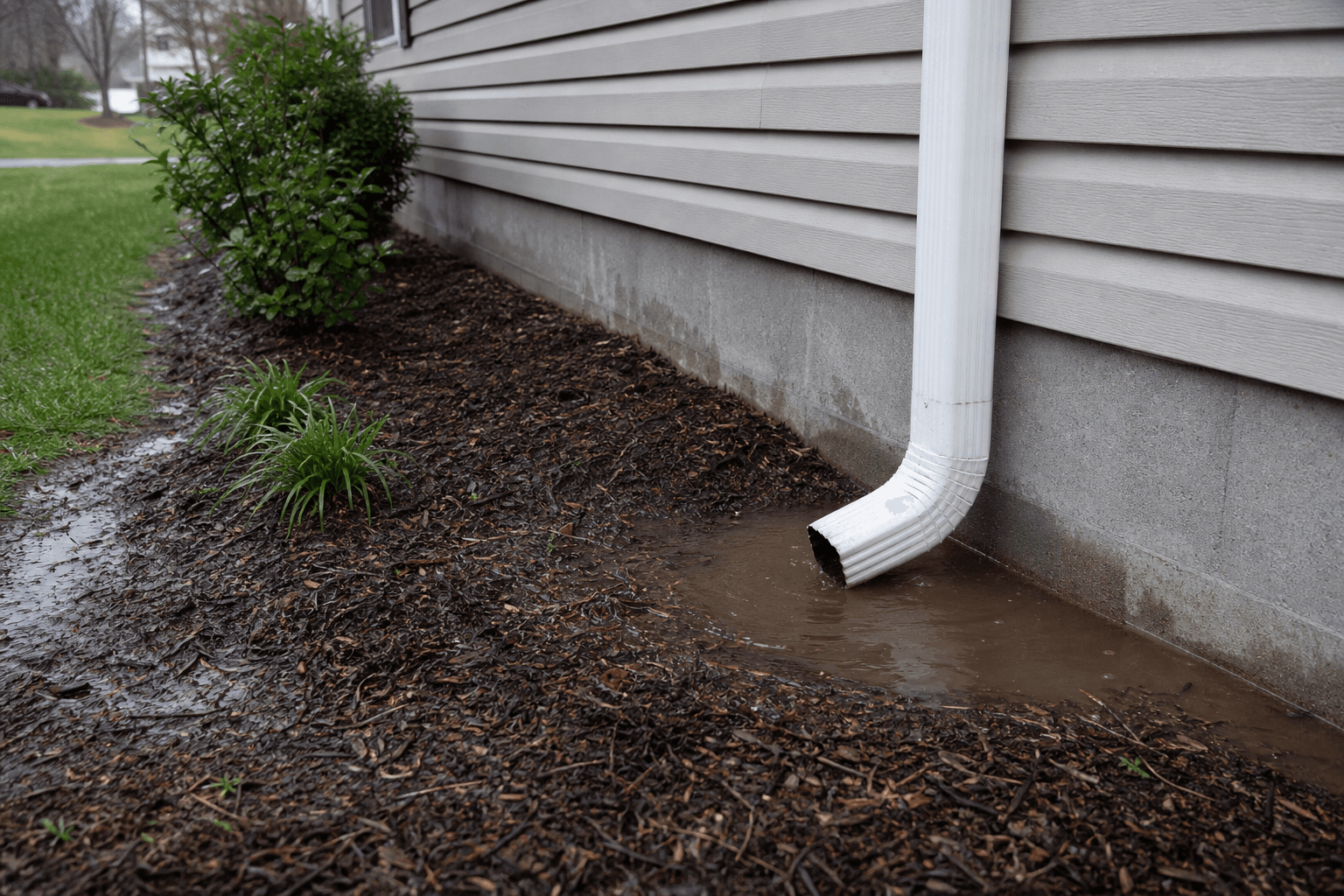
For Rocky Mount-area homes, roof runoff and soil moisture deserve close attention. Short downspouts, clogged gutters, low spots near the foundation, and mulch beds that hold water can keep the wall wet long enough for water pressure to find openings.
Watch
Water intrusion, from the outside source to the inside stain
Entry paths
Where water commonly enters foundation walls
Through a crack
Water follows a vertical, diagonal, or horizontal crack and leaves damp staining below it.
Find out whether the crack is only leaking or also moving structurally.
Through mortar joints
Concrete block or brick walls may leak through porous joints or small openings after soil becomes saturated.
Check exterior water load and whether water pressure is building against the wall.
At the wall-floor joint
Water appears where the foundation wall meets the slab or crawl-space floor.
Consider groundwater pressure, exterior drainage, and possible interior drainage options.
Around pipes or penetrations
Water appears near utility lines, sleeves, vents, or other wall penetrations.
Seal details may matter, but exterior water source still needs review.
Over the top of the wall
Water enters near siding, vents, doors, wells, or grade that is too high.
Correct grading, clearances, wells, and exterior drainage before interior finishes.
Causes
What usually drives water toward the foundation
Short downspouts discharge roof water beside the foundation instead of away from the house.
Gutters overflow or roof valleys dump water near one foundation wall.
Soil slopes toward the home or mulch beds hold water against the wall.
Cracks, porous mortar, or gaps around penetrations create an entry path.
Hydrostatic pressure builds when wet soil holds water against the foundation.
Crawl-space or basement drainage is missing, clogged, undersized, or overwhelmed.
Repeated heavy rain exposes a weakness that may stay hidden during dry weather.
Response
When to monitor and when to request help
Small damp stain after rare heavy rain
Document it, check outside drainage, and monitor whether it returns.
Water appears repeatedly in the same spot
Find the entry path and exterior water source before sealing interior finishes.
Water enters through a crack with movement signs
Review the crack as both a water issue and a possible foundation symptom.
Standing water, wet insulation, or damp framing
Address moisture more promptly because it can affect wood, air quality concerns, and repair scope.
Water plus bowing wall or floor movement
Request a broader foundation review, not just a leak repair.
Water that reaches wood framing, finished walls, stored items, insulation, or electrical areas should be taken more seriously. If water appears near a bowed wall or active crack, the wall condition should be reviewed before waterproofing is treated as the only issue.
Solutions
Possible water-control paths after inspection
The best repair starts with the source. If a gutter pours water beside the foundation, sealing the interior wall may fail. If groundwater pressure is recurring, exterior improvements alone may not be enough. A good plan connects the outside water load, the entry path, and the interior consequences.
Exterior drainage improvements
Extending downspouts, correcting grade, cleaning gutters, adjusting landscaping, or adding drainage may reduce the amount of water reaching the foundation.
Crack or penetration sealing
Sealing can help when the entry point is known and movement is not active. Structural cracks need a different review than simple water gaps.
Interior water control
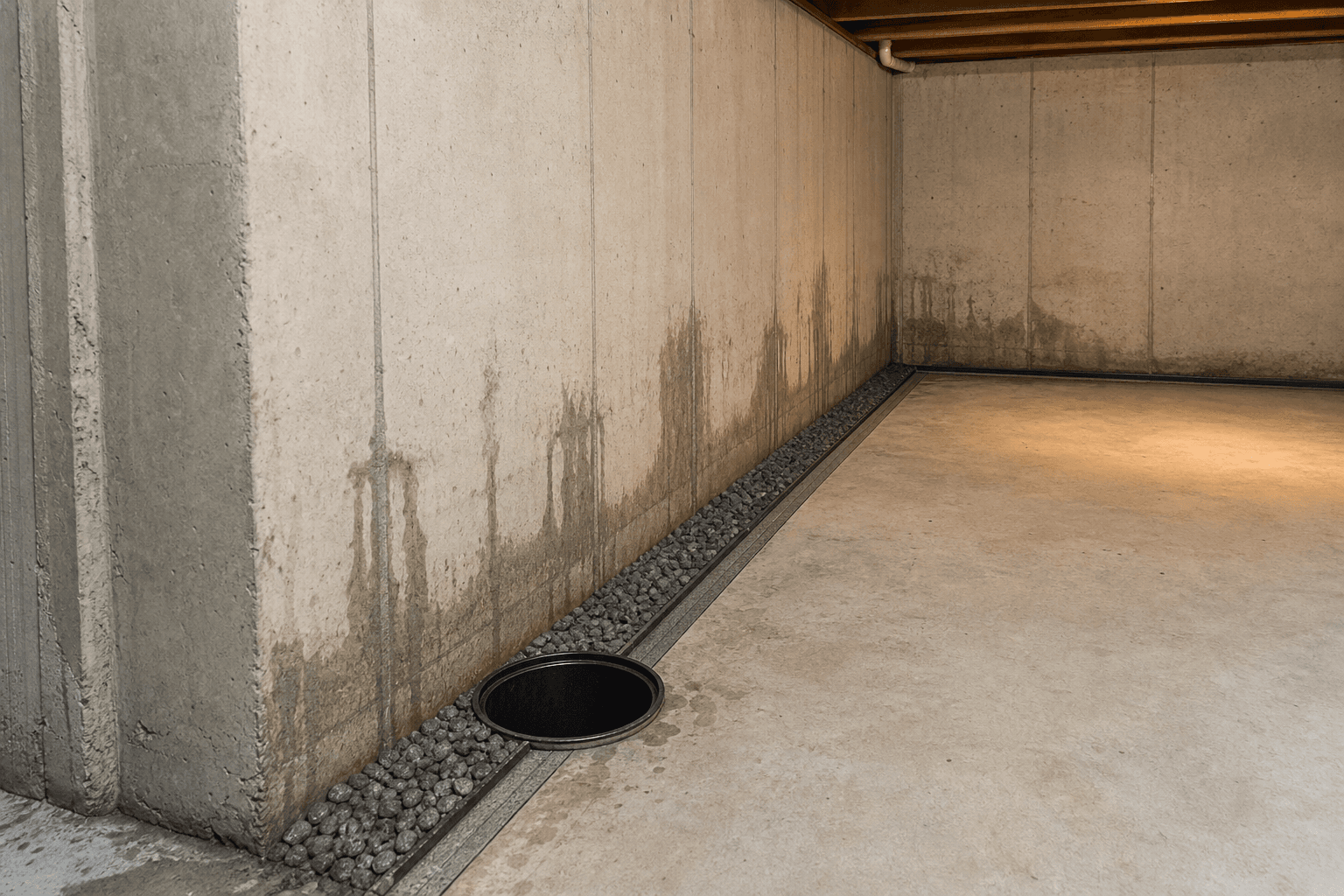
Interior perimeter drains, sump systems, or collection channels may manage water that reaches the foundation. These systems control water rather than removing the exterior cause.
Foundation repair
If water enters through a moving crack, bowing wall, settlement area, or displaced masonry, foundation repair may need to come before or alongside waterproofing.
Avoid
What not to do after water enters
Do not start by covering the stain. Paint, sealers, insulation, drywall, flooring, and storage shelves can hide the exact path water is taking. If the leak returns, the finished surface may trap moisture or make the next inspection harder. Document the water first, then clean up safely, then look for the source.
Do not assume the wettest interior spot is the whole problem. Water can travel along a wall, under a slab edge, through mortar joints, or from a higher exterior grade before appearing at the lowest visible point. A stain near the floor may be caused by roof water landing several feet away outside.
Do not treat every foundation leak as a simple waterproofing project either. If water enters through a widening crack, a bowed wall, a settled corner, or an area with sticking doors and uneven floors above it, the foundation condition needs to be considered before the leak is sealed.
Inspection
What a water-intrusion review should check
A useful review starts outside. Gutters, downspouts, splash blocks, roof valleys, grading, mulch height, patios, walkways, and low spots near the wall should all be checked. The question is where water goes during a storm and whether it is being held against the foundation long enough to create pressure.
Inside, the review should identify the first visible entry point, not just the largest puddle. Cracks, mortar joints, pipe penetrations, the wall-floor joint, vents, windows, crawl-space doors, and previous patches all matter. Photos taken during rain can be extremely helpful because many leaks dry before anyone arrives to inspect them.
The review should also separate water control from structural repair. A drainage system may manage recurring seepage, but it does not stabilize a bowing wall. A crack repair may stop one leak, but it does not fix poor grading. A good recommendation explains what is causing the water, where it enters, and what each proposed repair is meant to accomplish.
FAQ
Common questions about foundation water intrusion
What is water intrusion, and what does it mean for a foundation?
Water intrusion — also called water infiltration or water ingression — is water passing from outside into a building through the foundation or walls, instead of staying out where drainage should carry it away. For a foundation it means outside water pressure has found a path through a crack, joint, penetration, or porous masonry. It ranges from a minor damp stain to repeated flowing water, and it matters more when it keeps returning or shows up alongside cracks or wall movement.
Why is water coming through my foundation wall?
Water usually enters when outside water pressure finds a path through cracks, mortar joints, wall-floor joints, penetrations, or porous masonry. The source is often roof runoff, grading, saturated soil, or drainage that is not moving water away from the house.
Can I seal the inside of a leaking foundation wall?
Interior sealers may reduce minor seepage in some cases, but they do not remove exterior water pressure. If water returns, appears through cracks, or comes with wall movement, the cause should be evaluated before relying on surface coatings.
Is foundation water intrusion a structural problem?
Sometimes. Water intrusion can be a moisture problem only, but it becomes more concerning when it appears with foundation cracks, bowing walls, settlement signs, uneven floors, or repeated pressure after storms.
What should I check first after water enters?
Check gutters, downspouts, grading, mulch height, where the water appears inside, and whether the same area has cracks or wall movement. Photos taken during or soon after rain are especially useful.
Do I need exterior waterproofing or an interior drain?
It depends on the source, entry path, access, wall condition, and how often water returns. Some homes need exterior drainage correction; others need interior water control; some need both.
Related guidance
Pages that help complete the picture
Sources
How this guide was reviewed
Last reviewed: July 31, 2026. This page is educational and does not diagnose structural or waterproofing conditions remotely. Foundation wall movement and active water intrusion should be reviewed in person.