Quick answer: are foundation cracks serious?
Some foundation cracks are minor and stable. Others deserve prompt attention because they may indicate active movement, water pressure, drainage trouble, or uneven settlement. The most useful question is not simply, “Is there a crack?” It is: is the crack changing, leaking, displaced, horizontal, stair-step, or appearing with other symptoms around the home?
A narrow vertical crack that has not changed for years may only need monitoring. A crack that widens after rain, follows brick or block joints in a stair-step pattern, runs horizontally across a wall, leaks water, or appears with sticking doors and sloping floors should be reviewed by a qualified foundation professional or structural engineer.
What to watch
Foundation crack warning signs to take seriously
Foundation cracks are easier to understand when you look at the whole pattern around the home. A single crack may be cosmetic, but a crack plus water intrusion, floor movement, masonry separation, or door problems tells a different story. Before anyone patches or seals the crack, document what you see.
The crack is growing longer or wider.
The crack is horizontal, stair-step, or visibly displaced.
Water appears through the crack after rain.
Doors or windows nearby are sticking, rubbing, or no longer latching.
Floors slope, bounce, dip, or feel different from room to room.
A chimney, porch, brick veneer, or exterior wall appears to be separating.
Several new cracks appear in different parts of the home.
The foundation wall bows, leans, shears, or looks pushed inward.
If several of these signs are present at the same time, the issue is more likely to need professional interpretation. For example, a stair-step crack in brick veneer is more concerning when a nearby door also sticks, the floor slopes toward that side of the house, or the crack appears wider after repeated storms.
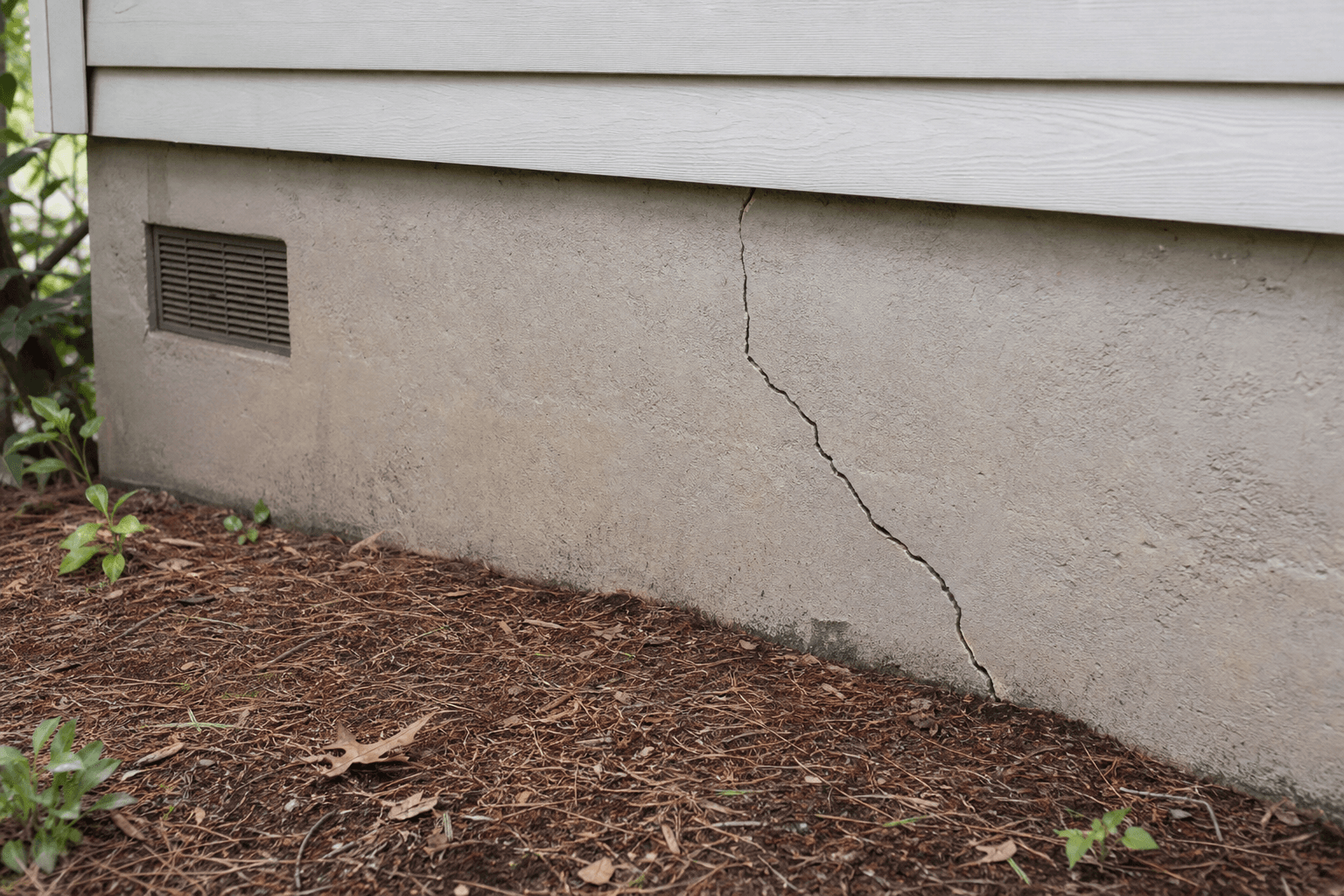
Crack patterns
Types of foundation cracks and what they can suggest
Crack direction gives clues, but it does not prove the cause by itself. The same visible pattern can have different meanings depending on foundation type, soil conditions, drainage, age of the home, and whether movement is still active. Use this table as a starting point for better questions, not as a diagnosis.
Hairline vertical crack
Often related to shrinkage, curing, or minor settlement, especially when narrow, dry, and unchanged.
Photograph, date, and monitor. Ask for help if it grows, leaks, widens, or appears with other symptoms.
Wider vertical crack
May still be stable, but width, depth, water entry, and change over time matter more than the name alone.
Measure the crack and watch for water, displacement, or related movement inside the home.
Diagonal crack
Can point to uneven settlement or movement, especially when wider at one end or near doors, windows, or corners.
Look for sticking doors, sloping floors, gaps, and changes after heavy rain.
Stair-step crack
Often follows mortar joints in brick, block, or masonry. It can be a sign of differential settlement or wall movement.
Do not treat it as cosmetic until the pattern, width, and related symptoms are reviewed.
Horizontal crack
Often more concerning because it may indicate soil or water pressure pushing against a foundation wall.
Request professional evaluation, especially if the wall bows, leans, or shows water intrusion.
Leaking crack
Water entry may indicate drainage, grading, hydrostatic pressure, or a crack that reaches through the wall.
Document when it leaks, check gutters and grading, and avoid sealing without understanding the water source.
Horizontal cracks and stair-step cracks usually deserve closer attention than a stable hairline vertical crack because they may point to pressure or uneven movement. Leaking cracks also deserve attention even when they are narrow, because water may be the symptom that reveals a larger drainage or pressure problem.
Likely causes
What causes foundation cracks?
Foundation cracks usually come from pressure, movement, water, or material behavior. In many homes, more than one factor contributes. A crack may begin as shrinkage, then become more visible because drainage is poor. A wall may crack because soil pressure builds after repeated wet periods. A masonry crack may appear because one side of the structure settles differently from another.
Normal shrinkage or curing
Concrete and masonry materials can develop small cracks as they cure, dry, or respond to normal early movement. These cracks are often narrow and stable, but they still deserve a baseline photo and occasional monitoring.
Uneven settlement
If one part of the structure moves differently than another, cracks may appear near corners, openings, brick veneer, block walls, or interior finishes. Settlement is more concerning when cracks change over time or appear with sloping floors.
Water and drainage pressure
Poor grading, clogged gutters, short downspouts, and repeated saturation can increase pressure against foundation walls. Sealing a crack from the inside may not solve the underlying drainage issue.
Soil expansion and shrinkage
Clay-rich soils can change volume as moisture conditions change. North Carolina officials describe shrink-swell clays as soils that expand when wet and shrink when dry, which can contribute to foundation cracks and uneven floors.
Construction and access conditions
Compacted fill, poorly managed drainage around a newer home, missing reinforcement, weak masonry, or difficult crawl-space access can affect how cracks form and how repairs are planned.
The repair approach depends on the cause. Sealing a dry, stable crack is different from stabilizing a wall that is moving inward. Filling a crack that leaks every time it rains is different from correcting gutters, downspouts, grading, or drainage that keep loading water against the foundation.
Local context
Rocky Mount and Eastern North Carolina considerations
Rocky Mount-area homeowners often think about foundation cracks after a heavy rain, during a home sale, or when several small symptoms start to line up. The local page strategy for North Carolina Foundation Guide focuses first on Rocky Mount, Wilson, Tarboro, and Nashville because homeowners in these communities may share practical concerns: crawl spaces, drainage around older homes, humid weather, storms, and soil moisture changes.
It would be misleading to claim that every home in the area has the same soil or the same foundation risk. Local conditions vary from lot to lot. Still, North Carolina’s geological guidance notes that expansive, shrink-swell clays can occur in many parts of the state and that moisture-driven volume changes can contribute to foundation cracks, uneven floors, and related building movement. NC State Extension also notes that construction practices can leave compacted subsoil and drainage challenges around homes.
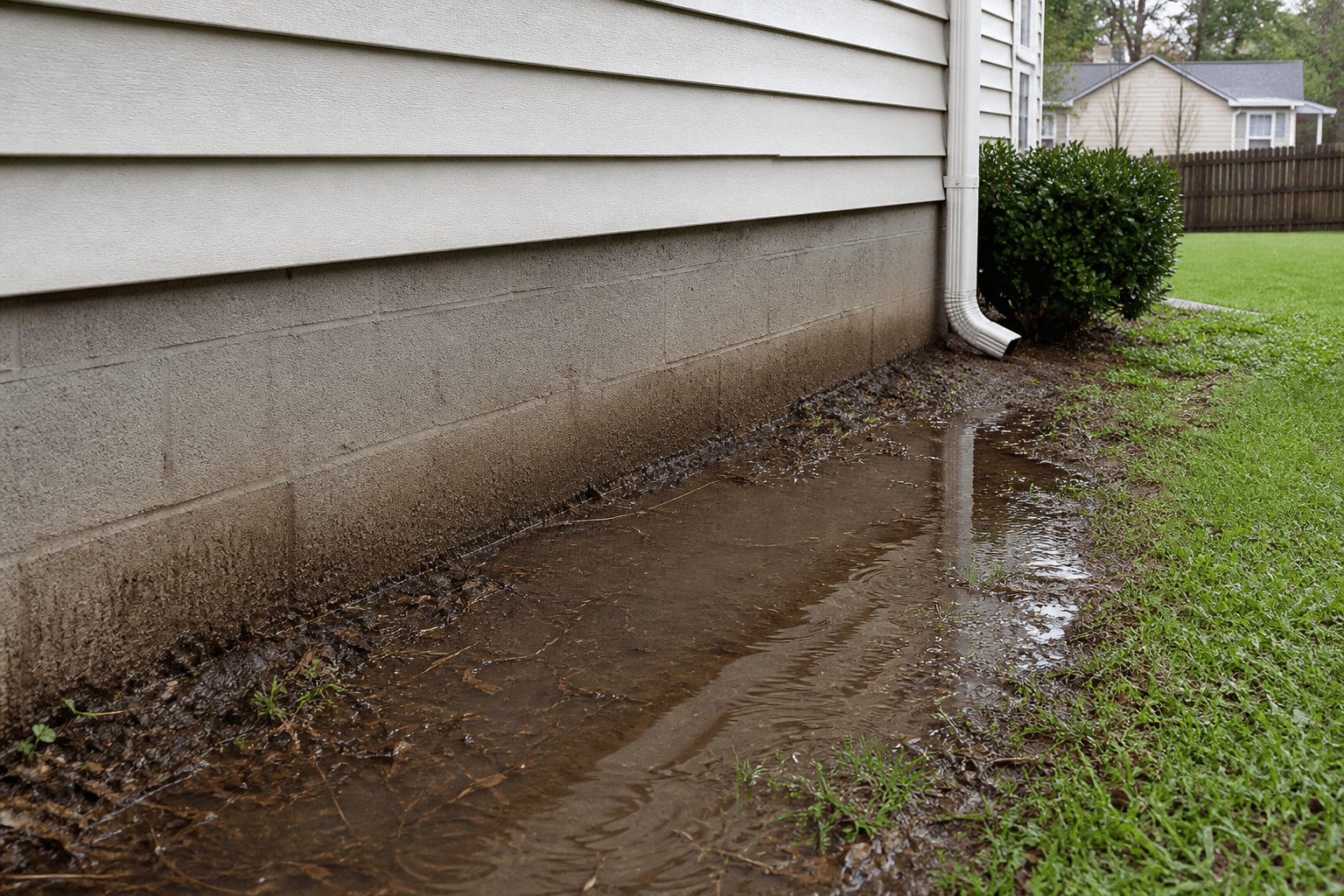
For a Rocky Mount-area homeowner, that means drainage clues should be part of the first review. Look at where downspouts discharge, whether soil slopes toward the house, whether water stands near the foundation, and whether cracks appear wetter or wider after storms. These observations will not identify the repair by themselves, but they help an inspector understand the conditions around the symptom.
When to worry
Foundation cracks: when to worry and when to just monitor
Homeowners ask the same question in different words: when should I worry about foundation cracks? The short answer is that a crack deserves concern when it is changing, leaking, displaced, horizontal or stair-step, or paired with other movement signs around the home. Monitoring is reasonable only when the crack looks stable, dry, narrow, and isolated. If the crack is active, leaking, displaced, horizontal, stair-step, or connected to other changes, waiting too long can make the cause harder to track.
Narrow vertical crack that is dry and unchanged
Monitor with dated photos and periodic measurements.
Crack appears suddenly or changes over weeks or months
Request evaluation before covering or sealing it.
Crack leaks after storms
Check drainage and request help if water keeps returning.
Horizontal, stair-step, or displaced crack
Treat as a higher-priority inspection item.
Crack plus sticking doors, sloping floors, or chimney gaps
Look at the pattern across the home, not the crack alone.
A simple monitoring routine can help: take a clear photo from the same angle, place a ruler or coin nearby for scale, note the date, and record whether the crack is dry or wet. If you can safely do so, look again after heavy rain and after a few weeks. Do not chip away at the crack, widen it, or cover it with finishes before you know whether it is changing.
Avoid mistakes
What not to do when you find a foundation crack
The easiest response is to patch what you can see. Sometimes that is fine for a stable cosmetic crack. But when the crack is active or water-related, a quick patch can hide important evidence while the cause continues.
Do not assume one online photo can identify the cause.
Do not cover a changing crack before taking dated photos.
Do not ignore water intrusion just because the crack is narrow.
Do not accept a repair recommendation that never explains the likely cause.
Do not compare quotes only by price without comparing scope, drainage, warranty, and engineering assumptions.
Do not enter unsafe crawl spaces or areas with electrical, water, pest, or structural hazards.
Inspection expectations
What a foundation crack inspection may include
A useful inspection should look beyond the visible crack. The person evaluating the home may review the foundation wall, crawl space or basement conditions, nearby grading, downspouts, drainage patterns, interior floor levels, door and window operation, masonry gaps, and whether the crack is actively changing.
For more serious or uncertain situations, an independent structural engineer may be appropriate. A contractor can propose a repair, but an engineer can provide a separate evaluation that may help during real estate negotiations, insurance discussions, or large repair decisions. This is especially useful when the repair is expensive, the cause is disputed, or multiple contractors recommend different methods.
Questions to ask before approving a crack repair
- What do you believe caused the crack?
- Is the crack stable or still moving?
- Is the repair cosmetic, waterproofing-related, structural, or a combination?
- Does drainage or grading need to be corrected first?
- Would an engineer's review change the repair plan?
- What is included and excluded from the warranty?
- Will the repair stop water, movement, or both?
- What signs would mean the issue is returning?
Next steps
Related foundation guides
Foundation cracks connect naturally to several other warning signs and repair decisions. If the crack follows brick or block joints, start with the stair-step crack guide. If water appears through the crack, review water intrusion and drainage. If the crack appears with floor movement, compare settlement and support repair topics.
Contact
Seeing a crack and not sure what it means?
Share the basic details: where the crack is, when you noticed it, whether it has changed, and whether water, sticking doors, sloping floors, or other symptoms are present. The first step is organizing the concern clearly, not promising a repair before the home has been reviewed.
Share a Foundation ConcernFoundation crack FAQs
When should I worry about foundation cracks?
Worry less about a narrow, dry vertical crack that has not changed in months, and more about a crack that is widening, leaking, displaced, horizontal, or stair-step, or that appears alongside sticking doors, sloping floors, or a chimney gap. Any of those signs is a reason to document the crack and request a professional inspection rather than keep monitoring.
Does a crack in the ceiling mean foundation problems?
Not by itself. Many ceiling and drywall cracks come from normal framing movement, humidity swings, or settling of finishes. A ceiling crack is more likely to relate to the foundation when it is paired with foundation-wall cracks, doors or windows that stick, floors that slope, or exterior masonry gaps. Look at the pattern across the home before assuming a structural cause.
Are foundation cracks normal?
Some foundation cracks are common and may be related to shrinkage, curing, or minor settlement. A crack becomes more concerning when it is widening, leaking, horizontal, stair-step, displaced, or paired with other symptoms such as sticking doors or sloping floors.
What type of foundation crack is most serious?
Horizontal cracks, stair-step cracks in masonry, cracks with displacement, and cracks that keep growing are usually more concerning than a narrow, stable vertical hairline crack. The overall pattern matters more than a single label.
How wide is too wide for a foundation crack?
Width is only one clue, but wider cracks deserve more attention, especially when the crack is changing, leaking, or paired with movement elsewhere. Many homeowner guides use 1/4 inch as a threshold for professional review, but smaller cracks can still matter if they are active.
Should I seal a foundation crack myself?
Small, stable, non-structural cracks may sometimes be sealed cosmetically, but sealing an active or leaking crack without understanding the cause can hide evidence and allow the underlying problem to continue.
Can foundation cracks get worse after heavy rain?
Yes. Heavy rain can saturate soil, increase pressure near foundation walls, expose drainage problems, or make leaking cracks visible. If a crack changes or leaks after storms, document the timing and check gutters, downspouts, grading, and nearby pooling.
Should I call a structural engineer or a foundation contractor?
A structural engineer can provide an independent opinion, while a foundation contractor can inspect and propose repairs. If the issue looks structural, costly, disputed, or tied to a home sale, an engineer's report can help you compare repair recommendations.
Sources and review note
Last reviewed: July 31, 2026. This page should be reviewed by a qualified foundation professional or structural engineer before being treated as technical guidance.