Quick answer: are stair-step cracks serious?
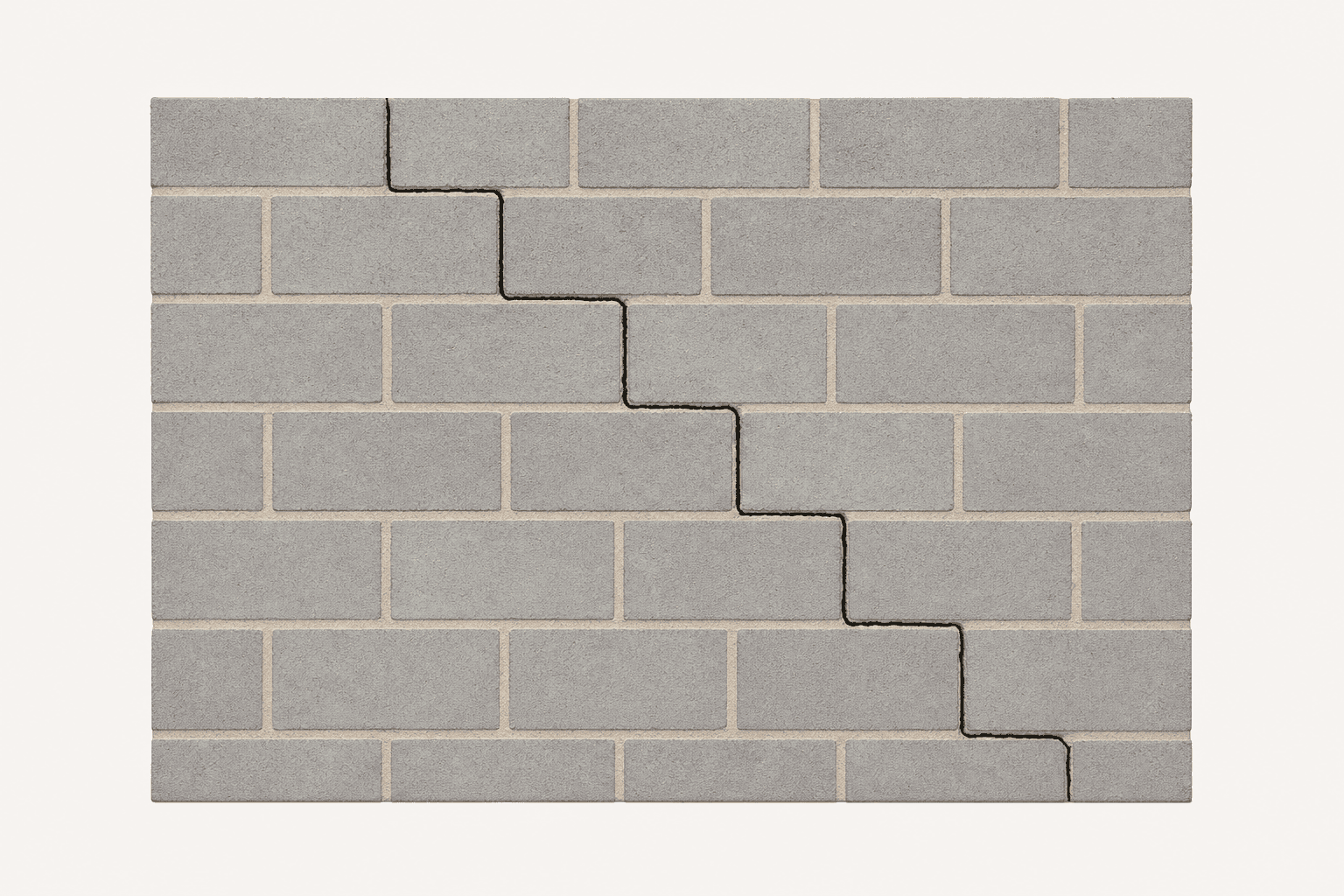
Stair-step cracks are diagonal cracks that travel up and across through the mortar joints in brick, concrete block, or other masonry. They are not automatically an emergency, but they deserve more attention than a random hairline surface crack because the pattern often appears when part of a wall or foundation moves differently than the area beside it.
A small, old, dry stair-step crack with no displacement may be monitored. A crack that is widening, leaking, displaced, appearing in several locations, or showing up with sticking doors, sloping floors, wall bowing, or chimney separation should be reviewed by a qualified professional.
Visible pattern
What stair-step cracks look like
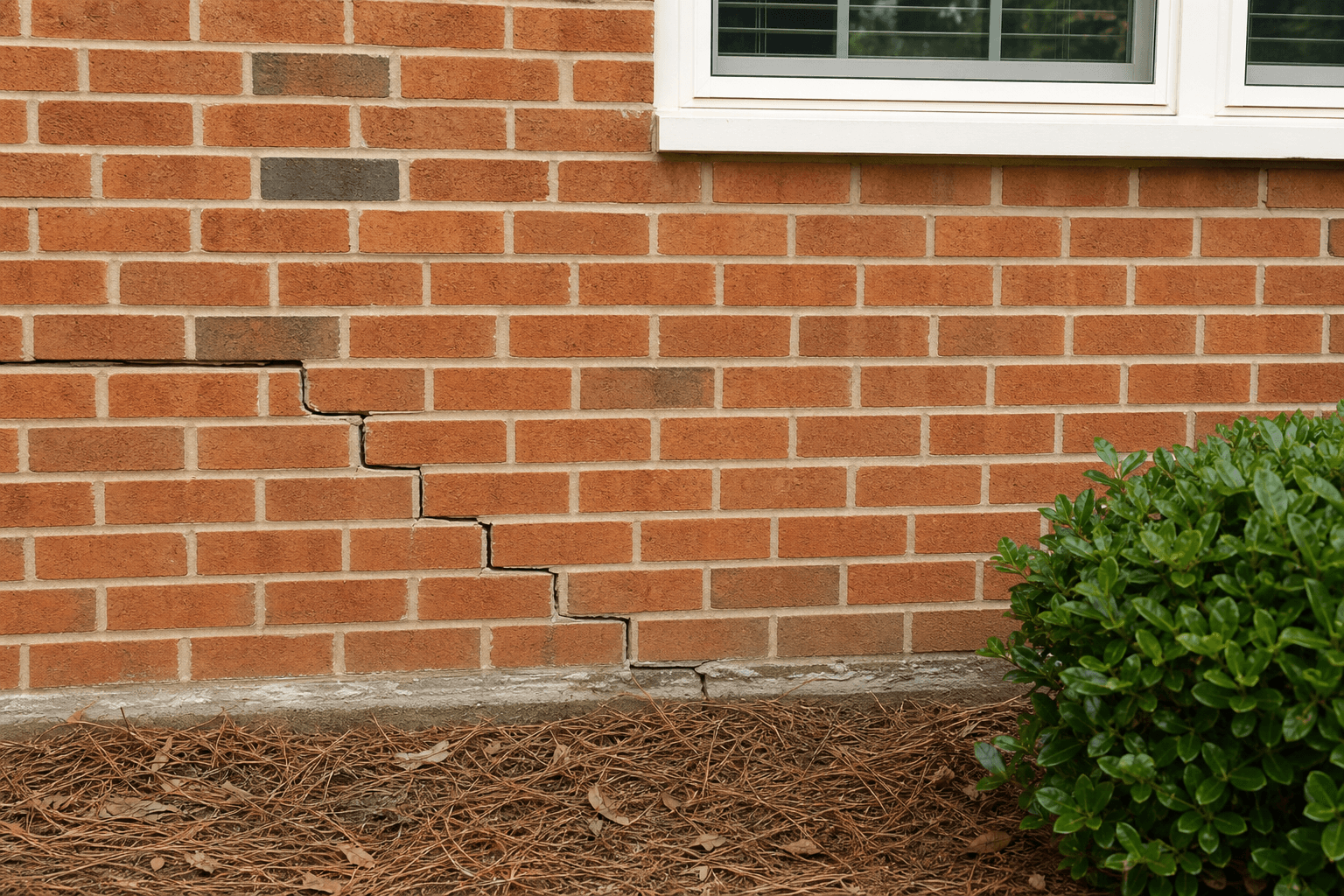
A stair-step crack moves through mortar joints in a stepped path: across one horizontal joint, up a vertical joint, across another horizontal joint, then up again. Homeowners often notice the shape in exterior brick veneer, concrete block foundation walls, brick foundation walls, basement walls, or crawl-space perimeter walls.
The pattern matters because masonry units are strong in compression, but the mortar joints between those units are weaker. When movement or pressure stresses the wall, the crack often follows the easier path through the joints instead of breaking a straight line through every brick or block.
Warning signs
When stair-step cracks are more concerning
The shape alone does not tell the whole story. A stair-step crack becomes more concerning when it is active, wide, displaced, wet, or part of a larger movement pattern. Look around the crack, not only at the crack.
The crack is wider than a hairline gap or continues to widen.
One side of the crack is raised, pushed in, or no longer flush with the other side.
The crack extends through brick or block units, not only through mortar joints.
Several stair-step cracks appear on the same wall or in different parts of the home.
The wall is bowing, leaning, shearing, or rotating near the crack.
Water enters through the crack or shows up along the same wall after rain.
Doors or windows nearby stick, rub, or no longer latch cleanly.
Floors slope, dip, bounce, or feel different near the cracked area.
A chimney, porch, brick veneer, or exterior wall appears to be separating.
If the crack is old and unchanged, you may have time to document and monitor it. If it is new, spreading, or paired with other symptoms, do not rush to cover it with mortar or paint. The crack is evidence. Repair decisions are better when the evidence is still visible.
Watch
Why you shouldn't ignore stair-step cracks
How the pattern forms
Why brick and block crack in a stair-step pattern
Masonry walls — brickwork, brick veneer, or concrete block — are made of individual units held together by mortar. When the wall is loaded evenly, that system can perform well for a long time. When one section moves differently, stress concentrates along the mortar joints in the brickwork or block. A stair-step crack is often the visible path of that stress.
One common cause is differential settlement. That simply means one area of the foundation or soil support moves more than another area. A corner may settle, a section of wall may lose support, or repeated wet-and-dry soil changes may cause uneven movement. The rigid wall cannot bend like a flexible material, so it opens along the mortar.
Another common contributor is pressure from wet soil. When water collects near the foundation, soil can become heavier and push against the wall. In a block wall, that pressure may show up as a stair-step crack, horizontal crack, bowing wall, or shearing near the lower courses. In brick veneer, water and movement may reveal gaps near windows, doors, lintels, or corners.
Likely causes
Common causes of stair-step cracks
The same crack pattern can come from different causes, which is why it is risky to diagnose from a photo alone. The most useful first step is to collect observations: where the crack is, how wide it is, whether it changes, whether water is present, and whether other parts of the home show movement.
Differential settlement
Stair-step cracks often appear when one part of a foundation or masonry wall moves differently than the area beside it. The wall cannot bend evenly, so stress opens along the mortar joints.
Drainage and saturated soil
Water that collects near the foundation can soften soil, increase pressure against the wall, or make settlement more visible. Short downspouts, clogged gutters, and negative grading are common clues to check.
Shrink-swell soil movement
Clay-rich soils can expand when wet and shrink when dry. North Carolina geological guidance notes that shrink-swell clays can contribute to foundation cracks and uneven floors in affected areas.
Masonry expansion and contraction
Brick and mortar move with temperature and moisture changes. Some small, old, stable cracks may reflect historical or seasonal movement rather than active foundation failure.
Weak mortar, age, or construction details
Older mortar, poor support over openings, veneer movement, or inadequate footing support can influence where cracks appear and whether they follow mortar joints.
A cosmetic mortar issue, a brick veneer movement issue, and a foundation settlement issue may all create cracking that looks similar at first glance. The difference comes from context: displacement, wall alignment, interior symptoms, drainage, and whether the crack continues to move.
Important distinction
Brick veneer vs. foundation wall cracks
A stair-step crack in exterior brick does not always mean the brick is the structural wall. Many homes use brick veneer, which is an exterior finish tied back to the structure. Veneer can crack because the veneer itself is moving, because the structure behind it is moving, because the foundation below it has shifted, or because water and temperature cycles stress the masonry.
A stair-step crack in a concrete block foundation wall is different. That wall may be part of the load path and may also resist soil pressure. If a block wall crack is paired with bowing, leaning, water intrusion, or displacement, the concern is not just appearance. It may involve settlement, lateral pressure, drainage, or stabilization decisions.
Brick veneer
A non-structural exterior brick layer can crack when the wall behind it, the foundation below it, or the veneer support moves.
Look for gaps around windows, doors, corners, lintels, and the foundation line. Veneer cracks still deserve context.
Brick or block foundation wall
A stair-step crack in a load-bearing masonry foundation wall may point more directly to settlement, wall pressure, or support movement.
Check the interior side if accessible, wall alignment, water entry, and whether the crack passes through the wall.
Interior masonry or basement wall
A visible stair-step pattern inside a basement or crawl-space wall can reveal movement that exterior finishes may hide.
Look for moisture, bowing, displacement, patched areas that reopened, and related floor or door symptoms above.
Local context
Rocky Mount and Eastern North Carolina considerations
North Carolina Foundation Guide is starting with Rocky Mount, Wilson, Tarboro, and Nashville because homeowners in these areas may be dealing with a practical mix of crawl spaces, masonry, rainfall, drainage, and soil-moisture changes. That does not mean every property has the same soil or the same foundation risk. It means the first review should include local conditions around the home, not only the visible crack.
North Carolina geological guidance describes shrink-swell clays as clay-rich soils that change volume with moisture. When wet, they can expand; when dry, they can shrink. That kind of movement can contribute to cracked walls, foundation cracks, uneven floors, and related symptoms in affected areas. NC State Extension also notes that construction around homes can leave compacted subsoil and drainage limitations.
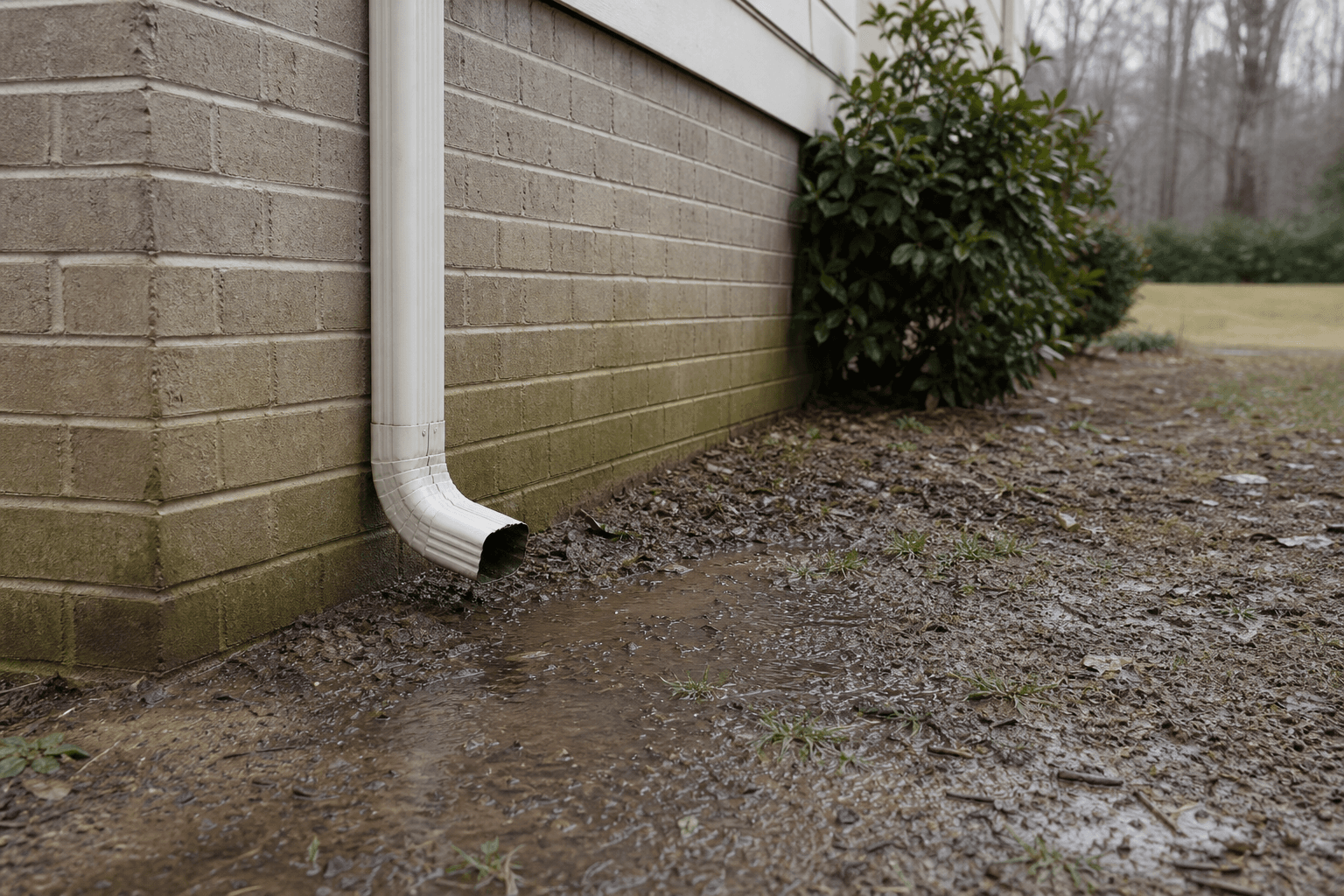
For a Rocky Mount-area homeowner, useful observations include whether the crack appears after heavy rain, whether the ground holds water near the wall, whether downspouts discharge close to the foundation, and whether nearby interior floors or doors have changed. Those details help separate a masonry maintenance issue from a broader foundation or drainage concern.
Decision table
When to monitor and when to request an inspection
Monitoring can be reasonable for an old, hairline, dry stair-step crack that has not changed and has no related symptoms. Inspection becomes more important when the crack is active, wide, displaced, wet, or connected to other signs of movement.
Hairline stair-step crack, old mortar, no water, no displacement
Photograph and monitor, especially if old repairs appear stable and no nearby symptoms are present.
Crack is growing, newly visible, or wider than before
Request evaluation before repointing, sealing, painting, or covering the area.
Crack has displacement or brick/block faces are no longer flush
Treat as a higher-priority structural review item.
Crack appears with water intrusion or recurring wet soil
Review drainage and foundation conditions together, not the crack alone.
Crack plus sticking doors, sloping floors, or chimney separation
Look at the whole movement pattern across the home and consider an engineer's opinion.
If you monitor the crack, take a straight-on photo, include a ruler or coin for scale, and record the date. Check again after a few weeks and after heavy rain. If the crack grows, the mortar crumbles, the wall shifts, or water appears, do not simply repoint the crack and move on.
Avoid mistakes
What not to do when you find stair-step cracks
Stair-step cracks are tempting to treat as a masonry maintenance problem. Sometimes repointing is part of the final repair, but it should not be the first assumption when the crack may be caused by settlement, wall pressure, or drainage.
Do not repoint or caulk an active crack before documenting it.
Do not ignore displacement where one side of the wall has shifted.
Do not assume exterior brick veneer is the only issue without checking related symptoms.
Do not accept a repair quote that does not explain the likely cause.
Do not compare repairs only by price without comparing drainage, stabilization, warranty, and engineering assumptions.
Do not enter unsafe crawl spaces or areas with water, electrical, pest, or structural hazards.
Inspection expectations
What an inspection may check
A useful inspection should look beyond the visible stair-step pattern. The inspector may measure the crack, check whether the wall faces are flush, look for bowing or leaning, compare interior and exterior conditions, inspect accessible crawl-space or basement walls, and review grading, gutters, downspouts, and water patterns around the foundation.
If the crack looks structural, active, or tied to a real estate decision, an independent structural engineer may be helpful. A foundation contractor can propose repair methods, but an engineer can provide a separate opinion that helps you compare contractor recommendations, understand whether the concern is structural, and document the condition before a sale or major repair.
Questions to ask before approving a stair-step crack repair
- Is the crack in brick veneer, a block foundation wall, or another masonry wall?
- What evidence suggests the crack is stable or active?
- Is there displacement, bowing, leaning, or shearing?
- Does water or drainage contribute to the condition?
- Is repointing enough, or is stabilization needed first?
- Would an engineer's report change the scope?
- What is included in the warranty?
- What should I monitor after the repair?
Next steps
Related foundation guides
Stair-step cracks are one crack pattern within the larger foundation-warning-sign picture. Review the broader foundation crack guide if you are comparing multiple crack types. If the wall is bowing or water is present, those pages may be more relevant than a masonry-only repair path.
Contact
Seeing stair-step cracks in brick or block?
Share where the crack is, when you noticed it, whether it has changed, and whether water, sticking doors, sloping floors, wall movement, or exterior gaps are present. The first step is organizing the concern clearly before repair decisions are made.
Share a Foundation ConcernStair-step crack FAQs
Are stair-step cracks always foundation problems?
No. Some stair-step cracks are old, small, and stable. They become more concerning when they widen, show displacement, leak, appear in multiple locations, or show up with other movement signs such as sticking doors, sloping floors, or chimney separation.
What causes stair-step cracks in brick?
Stair-step cracks usually follow mortar joints because mortar is weaker than brick or block. Common causes include differential settlement, drainage problems, soil movement, wall pressure, masonry expansion and contraction, or older weakened mortar.
Why does a brick house develop stair-step cracks in the brickwork?
In a brick house, stair-step cracks appear when the brickwork moves unevenly — usually from differential foundation settlement, soil movement, or drainage pressure — and the stress follows the weaker mortar joints in a stair-step line. The brickwork itself is rarely the underlying problem; it is showing movement in the foundation or soil beneath the home, which is why the cause should be reviewed before the cracks are repointed.
How wide is too wide for a stair-step crack?
Width is only one clue, but a crack that is widening, large enough to measure clearly, or approaching common concern thresholds such as 1/8 inch to 1/4 inch deserves professional review, especially when displacement or water is present.
Can stair-step cracks be repaired by repointing mortar?
Repointing may improve the appearance of a stable masonry crack, but it does not correct settlement, drainage pressure, wall movement, or soil problems. The cause should be understood before the crack is cosmetically repaired.
Should I call a structural engineer for stair-step cracks?
An engineer may be useful when the crack is wide, active, displaced, tied to a real estate transaction, or when contractors disagree about the cause or repair method. A contractor can propose repairs; an engineer can provide an independent structural opinion.
Can stair-step cracks get worse after heavy rain?
Yes. Heavy rain can reveal drainage problems, saturate soil, increase pressure near the foundation, or make existing movement more visible. If the crack changes or leaks after rain, document the timing and check gutters, downspouts, grading, and nearby pooling.
Do stair-step cracks in block walls or stucco mean the same thing as in brick?
Usually, yes. In concrete block or cinder block walls, and in stucco over block or masonry, step cracking follows the mortar or control joints in the same diagonal stair-step line for the same reasons — differential settlement, soil movement, or drainage pressure beneath the wall. The material showing the crack (brick, block, or stucco) is rarely the underlying problem; these are sometimes called staircase cracks, but the cause to review is the movement in the foundation or soil below.
Sources and review note
Last reviewed: July 31, 2026. This page should be reviewed by a qualified foundation professional, mason, home inspector, or structural engineer before being treated as technical guidance.