Start here
What does it mean when a chimney separates from the house?
A chimney pulling away from the house is one of the foundation warning signs that deserves more caution than a small drywall crack or a single sticky door. Chimneys are heavy masonry structures, and many are supported by a footing that behaves differently from the rest of the home. If that footing settles, rotates, or loses soil support, a gap can open between the chimney and the house.
Not every visible gap has the same cause. Some gaps come from failed caulk, loose flashing, siding movement, or old masonry deterioration. Others are signs that the chimney is leaning or moving away from the structure. The difference matters because cosmetic sealing will not stop active movement.
The most useful first step is to look for a pattern. A narrow, old gap that has not changed is different from a widening gap with stair-step cracks, displaced brick, roof flashing separation, water entry, or interior fireplace cracks. If the chimney appears to lean or the masonry looks unstable, avoid using the fireplace until the condition is reviewed.
Lower concern
Old stable gap
Needs review
Visible separation
Act faster
Leaning or displaced brick
Visible clues
What chimney separation can look like
Chimney movement can show up in several places at once. The gap between the chimney and the wall may be the most obvious symptom, but the roofline, flashing, mortar joints, interior fireplace, and nearby foundation area can all add important context.
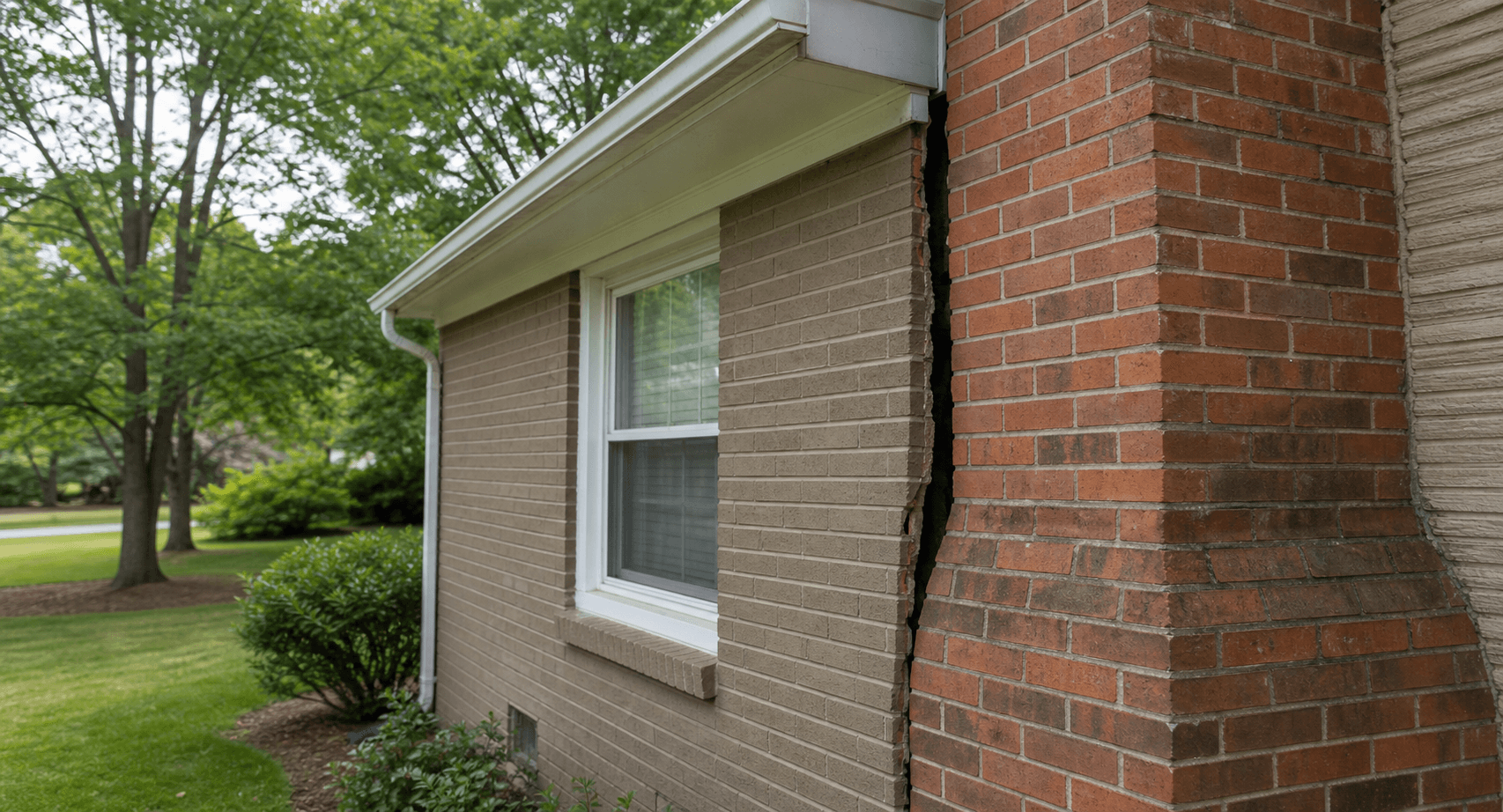
Gap between chimney and house
The chimney may be rotating, settling, or moving separately from the main structure.
A gap that widens over time can affect masonry, flashing, siding, and the chimney footing.
Leaning chimney
The chimney footing or supporting soil may be moving, or the masonry stack may be out of plumb.
Leaning masonry deserves prompt review because chimneys are heavy and can create safety concerns.
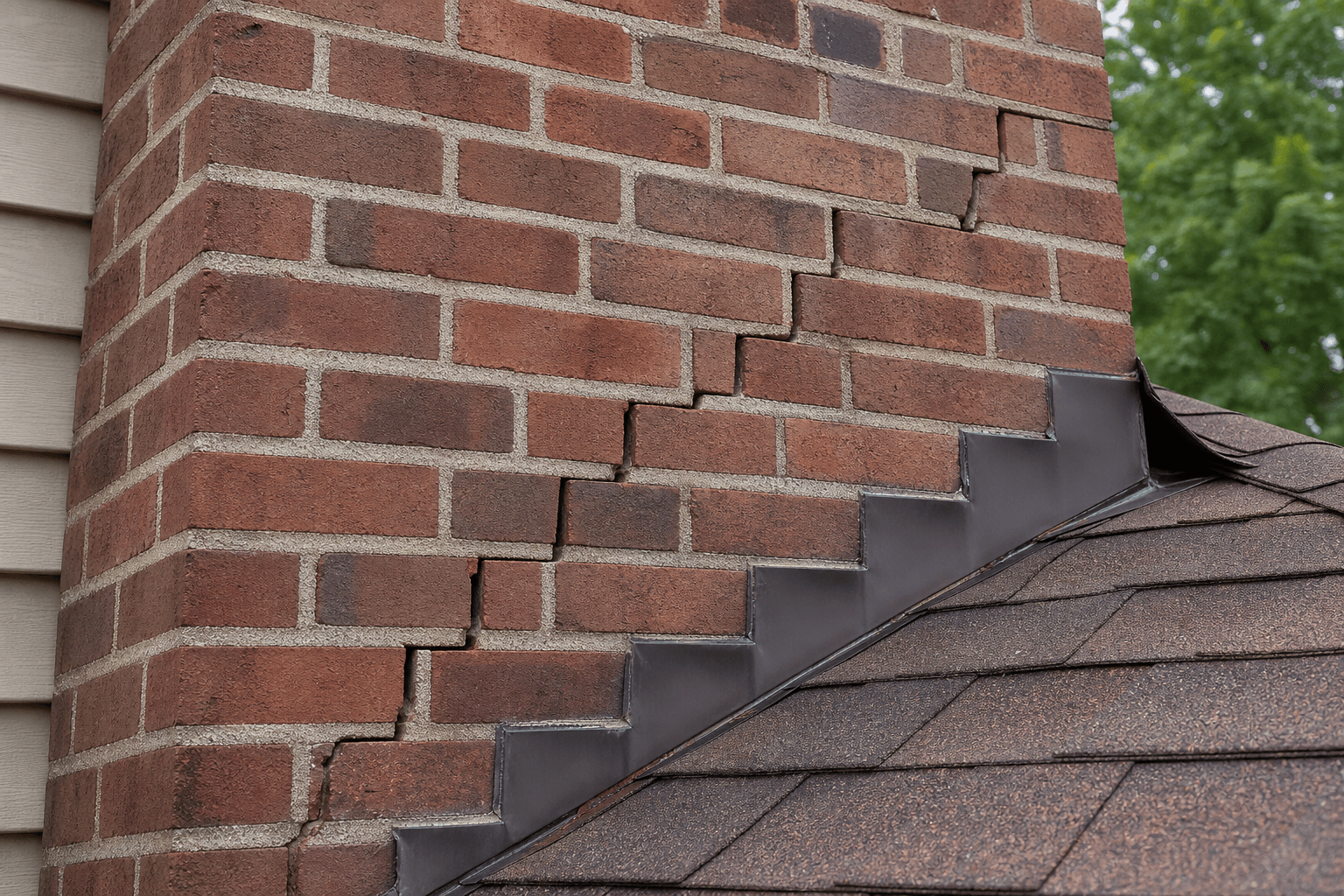
Stair-step cracks in chimney brick
Mortar joints may be opening as the chimney shifts, settles, or twists.
The crack pattern helps separate surface deterioration from possible movement.
Flashing pulls away at the roofline
Movement between the roof and chimney can open a water path.
Water entry can damage framing and may also worsen soil or masonry problems.
Fireplace or interior wall cracks nearby
Movement may be showing both outside and inside the home.
Interior and exterior symptoms together are more useful than one isolated clue.
Causes
Why a chimney may move differently from the home
A chimney can behave like its own small structure attached to the side or interior of the house. That is why a chimney may separate while nearby doors and windows still look normal. The footing, soil, drainage, masonry condition, and roof connection all matter.
Separate chimney footing
Many masonry chimneys are supported by their own footing rather than being fully tied to the main house foundation. If the chimney footing settles differently, the chimney can pull away even when the rest of the home looks mostly stable.
Heavy masonry load
Brick, block, stone, and flue materials create a concentrated load. If soil below the chimney loses support, compresses, washes out, or changes moisture content, the chimney can move more noticeably than lighter framed walls.
Poor drainage near the chimney
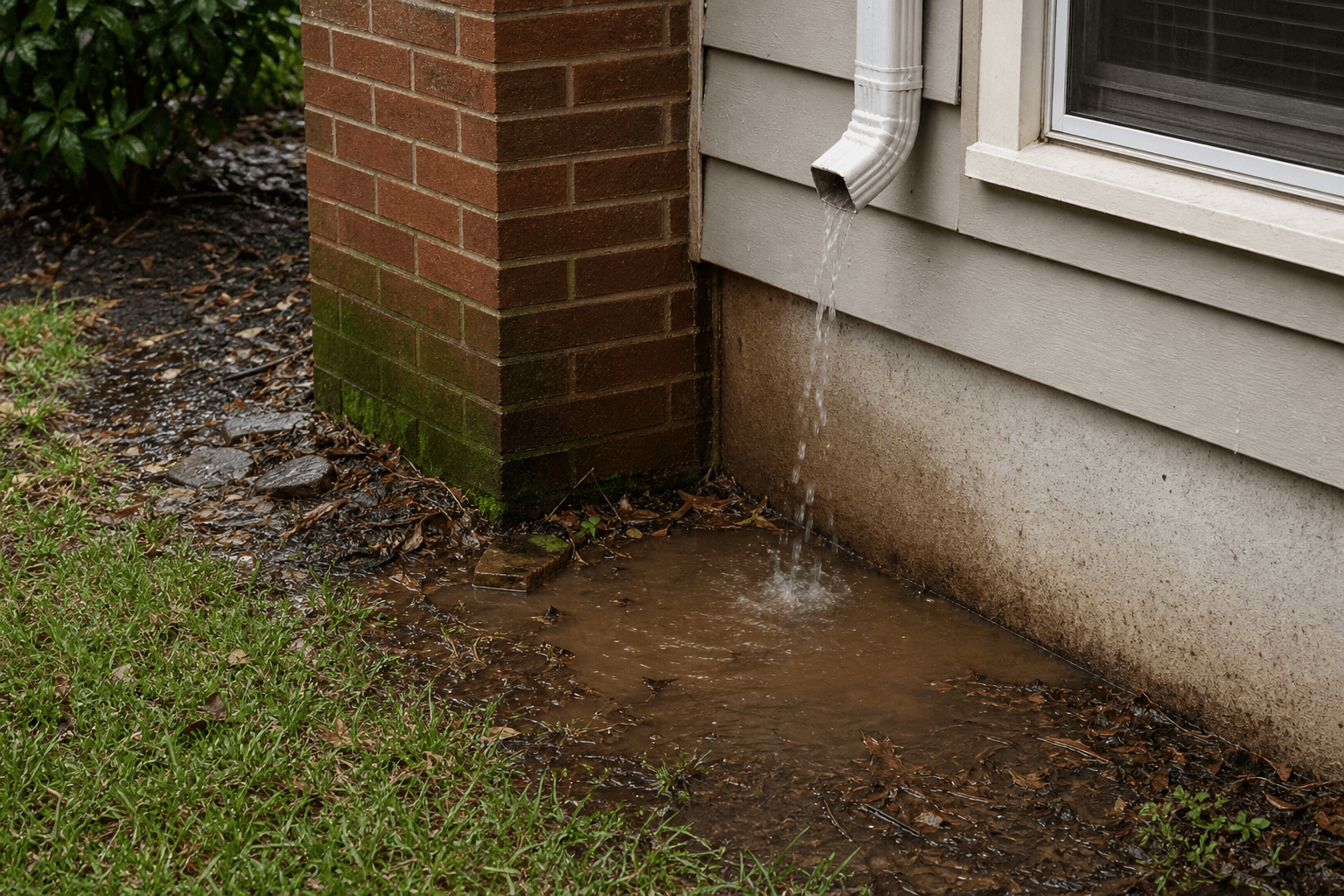
Downspouts, roof valleys, negative grading, clogged gutters, and compacted soil can keep water near the chimney footing. Repeated saturation can contribute to settlement, erosion, and movement.
Soil moisture changes
Soils that expand when wet and shrink when dry can move foundations and footings. North Carolina officials note that shrink-swell clay can contribute to foundation cracks and uneven movement where those soils are present.
Masonry deterioration
Old mortar, freeze-thaw exposure, water entry, and prior patching can weaken masonry. Deterioration may exist by itself or appear alongside footing movement.
Roof or flashing leaks
A chimney gap can let water enter at the roofline. In other cases, a flashing problem may look like separation even if the chimney itself has not moved much. Both conditions deserve careful inspection.
For Rocky Mount and nearby eastern North Carolina communities, the drainage piece is especially practical. Heavy rain, roof runoff, short downspouts, low soil near the foundation, and wet planting beds can keep water where the chimney footing needs stable support.
Severity
How urgent is a chimney gap?
Urgency depends on size, change, and the surrounding symptoms. A chimney that appears to lean, has displaced brick, or is letting water in deserves faster attention than an old, hairline gap that has not changed for years.
Level
Monitor and document
Very narrow, old gap that has not changed; no leaning; no cracks; no water entry; no related floor or wall symptoms.
Photograph the area and re-check after heavy rain and season changes.
Level
Schedule a review
Visible gap, minor stair-step cracking, loose caulk or flashing, damp soil near chimney, or uncertainty about whether it is changing.
Ask for a foundation, masonry, or structural review before cosmetic sealing.
Level
Move faster
Gap is widening, chimney appears to lean, bricks are displaced, roofline is opening, water is entering, or interior fireplace/wall cracks are present.
Avoid using the fireplace and get professional evaluation promptly.
Local context
Why rain and soil conditions matter near chimneys
Chimney footings are vulnerable to water because rooflines and valleys often direct runoff toward chimney areas. If a downspout empties beside the chimney, gutters overflow, or the ground slopes toward the house, the soil below the footing can experience repeated wetting. Over time, that can contribute to settlement or rotation.
North Carolina guidance also notes that shrink-swell clay can contribute to foundation cracks and uneven movement where those soils are present. Moisture changes do not affect every property the same way, but they are relevant when a heavy masonry chimney begins separating from the house.
Homeowner checks
What you can safely check from the ground
You do not need to climb a ladder or diagnose the footing to collect useful information. Stay on the ground, photograph what you can see, and note whether the gap appears stable or changing.
Stand back and look from multiple angles to see whether the chimney appears out of plumb.
Take photos of the gap from the same distance and angle so changes are easier to compare.
Look for stair-step cracks in chimney brick, nearby brick veneer, or block walls.
Check whether metal flashing, siding, trim, or caulk has pulled away at the roofline.
After rain, look for water collecting at the chimney base or downspouts discharging nearby.
Inside the home, look for cracks around the fireplace, ceiling, walls, mantel, or nearby trim.
Note whether doors stick, floors slope, or foundation cracks appear on the same side of the house.
Avoid climbing on the roof or pushing on loose masonry.
If you see loose brick, falling mortar, an obvious lean, or a chimney that appears unstable, keep people away from the area and request professional evaluation. Photos are useful; physical testing by pushing, pulling, or climbing near damaged masonry is not.
Avoid
What not to do too early
The common mistake is treating chimney separation as a surface gap. Sometimes the surface repair is needed, but only after the underlying condition is understood. Otherwise, the same gap or crack may reopen.
Do not simply caulk a widening gap
Caulk can keep water out for a short time, but it does not explain why the gap opened. If movement is active, the caulk will usually split again.
Do not keep repointing without checking movement
Fresh mortar may improve appearance, but repeated stair-step cracking often means the underlying movement or water problem has not been addressed.
Do not ignore water at the chimney base
Water near a chimney footing can affect soil support and masonry condition. Drainage is often part of the first review.
Do not use a fireplace when the chimney looks unstable
Visible leaning, displacement, interior cracking, or flue concerns should be reviewed before use. A qualified chimney or structural professional may be needed.
Inspection
What a professional review may include
A careful review should not assume the chimney, roof, or foundation is the only issue. The goal is to understand whether the chimney is stable, whether water is entering, whether the footing is moving, and whether other parts of the home show related movement.
Whether the chimney is plumb or leaning.
Whether the gap is cosmetic, water-related, or connected to movement.
The condition of mortar joints, brick, block, flashing, cap, and roofline details.
Whether the chimney footing is settling or rotating.
Whether nearby foundation walls, floors, doors, windows, or brick veneer show related symptoms.
Whether gutters, roof valleys, downspouts, grading, or landscaping direct water toward the chimney.
Whether a structural engineer, masonry contractor, chimney specialist, or foundation contractor should be involved.
Repair paths
Possible repair paths after inspection
The right repair depends on the cause. A flashing leak, deteriorated mortar, and settling chimney footing are different problems. They can look similar from the ground, which is why the sequence matters: observe, inspect, correct the cause, then repair finishes.
Drainage correction
If water is collecting near the chimney, the first step may include extending downspouts, correcting grading, cleaning gutters, or managing roof runoff. Drainage work may be needed before or alongside structural repair.
Masonry repair
Repointing, flashing repair, chimney cap repair, or brick replacement may be appropriate when the chimney is stable and the issue is deterioration or water entry rather than ongoing movement.
Foundation stabilization
If the chimney footing has settled or rotated, repair may involve underpinning or pier support designed for the load and soil conditions. The exact method depends on inspection findings.
Engineering review
A structural engineer may be useful when the chimney is leaning, movement is significant, the home is being bought or sold, or repair options need independent review.
Related guidance
Pages that help complete the picture
Stair-Step Cracks
Compare chimney cracking with stair-step brick and block cracks elsewhere.
Read nextFoundation Cracks
Understand when cracks are monitor-only versus inspection-worthy.
Read nextSticking Doors and Windows
See how opening movement can connect with broader settlement patterns.
Read nextFoundation Settlement Repair
Learn how settlement may be evaluated and stabilized.
Read nextWhen Are Push Piers Needed?
Understand when chimney movement can lead to a pier-support discussion.
Read nextFAQ
Common questions about chimney separation
Is a chimney pulling away from the house serious?
It can be. A small, old, stable gap may not be urgent, but a widening gap, leaning chimney, stair-step cracks, displaced brick, water entry, or interior fireplace cracks should be reviewed promptly because masonry chimneys are heavy and may move separately from the main home.
Why would a chimney separate from the house?
A chimney may separate because it sits on its own footing, carries a heavy masonry load, has poor drainage around the base, or is affected by soil moisture changes. Masonry deterioration and roof flashing problems can also contribute or make the separation more visible.
Can I just caulk the gap between the chimney and house?
Caulk may temporarily reduce water entry, but it should not be the only response if the gap is widening or paired with cracks or leaning. The cause of the separation should be understood before permanent cosmetic repair.
Who should inspect a chimney that is separating?
Depending on the symptoms, the right professional may be a foundation contractor, structural engineer, masonry contractor, or chimney specialist. If the chimney appears to lean or masonry is displaced, a structural review is especially important.
Can poor drainage make chimney settlement worse?
Yes. Water that collects near the chimney footing can soften or move soil, contribute to settlement, and worsen masonry deterioration. Downspouts, grading, gutters, and roof runoff should be checked.
Should I use the fireplace if the chimney is pulling away?
If the chimney is leaning, cracked, displaced, leaking, or separating noticeably, avoid using the fireplace until the condition is evaluated. Flue and masonry conditions are safety issues that cannot be confirmed from photos alone.
Sources
How this guide was reviewed
Last reviewed: July 31, 2026. This page is educational and does not diagnose chimney, fireplace, masonry, or structural conditions remotely. A visibly leaning or damaged chimney should be evaluated in person.