Start here
Push piers are considered when settlement needs structural support
Push piers may be discussed when part of a foundation has settled and needs support below weak or shifting near-surface soil. The structure must be able to provide enough resistance for installation, the footing must be suitable for brackets, and the repair goal should be clear: stabilization, possible controlled lift, or both.
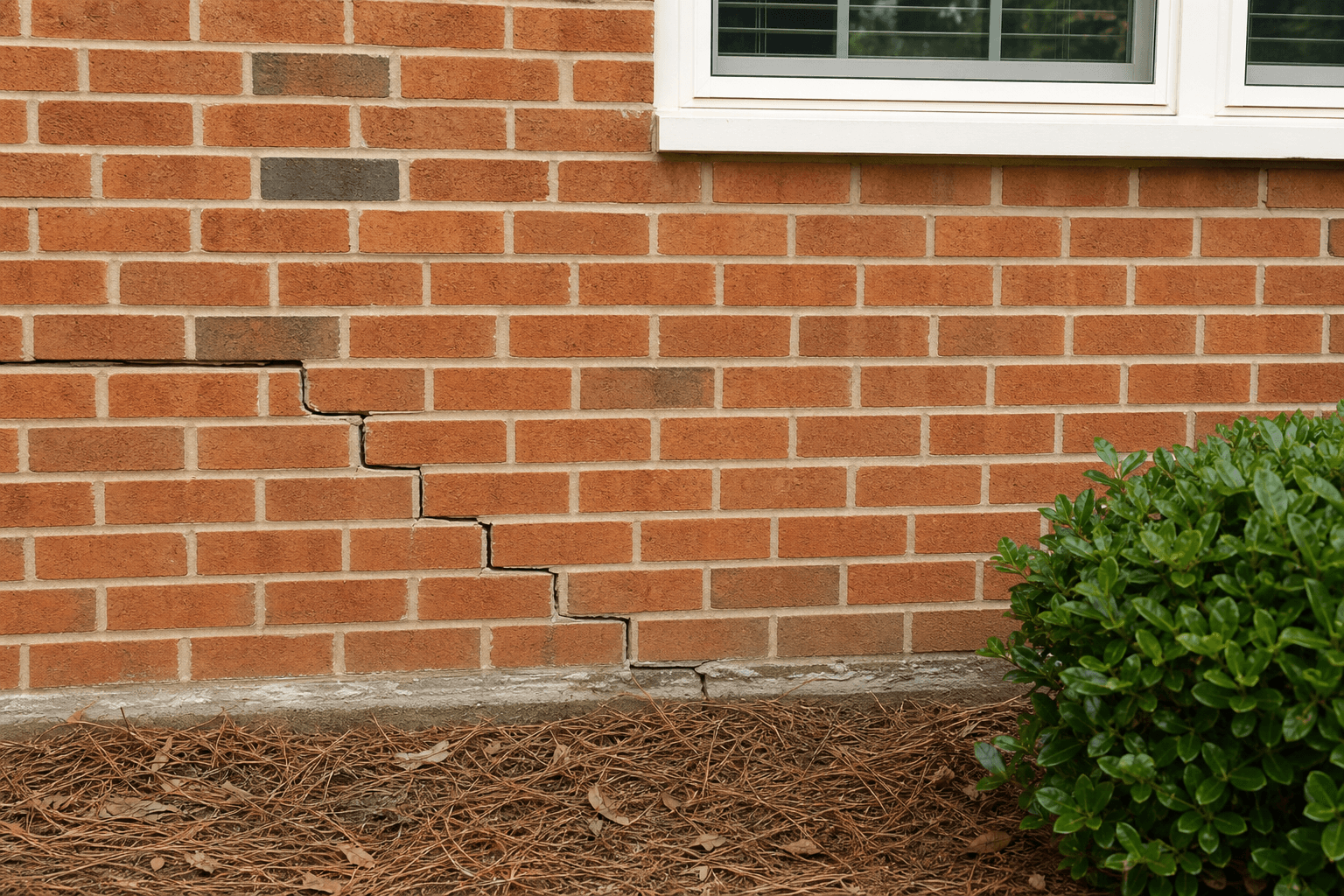
Symptoms alone do not prove push piers are needed. Stair-step cracks, chimney gaps, sloping floors, sticking doors, and recurring cracks are clues that should be mapped and compared with measurements, drainage conditions, crawl-space findings, and footing access.
If a wall is visibly unstable, masonry is displaced, a chimney appears unsafe, or part of the home feels hazardous, treat that as a prompt for urgent professional review rather than online troubleshooting.
Watch
Do you actually need push piers?
Symptoms
Symptoms that can lead to a push-pier conversation
| Symptom | Why it can matter | Inspection question |
|---|---|---|
| Stair-step brick or block cracks | May point toward differential settlement when widening, displaced, or paired with other movement signs. | Where is the crack, is it changing, and does the same area show floor, door, or exterior gaps? |
| Uneven floors near an exterior wall | May relate to perimeter settlement, crawl-space support movement, or both. | Is the low area tied to a wall, beam, joist, post, moisture problem, or footing? |
| Chimney or porch separation | Heavy or separately supported structures may move differently from the main home. | Is the chimney or porch footing settling, rotating, or affected by water? |
| Sticking doors and windows | Can be humidity or hardware, but becomes more relevant when paired with cracks or sloping floors. | Do openings stick seasonally, after rain, or near visible foundation movement? |
| Cracks that return after patching | Repeated cracking may mean the cause was not corrected. | Was the crack only sealed, or was movement, drainage, or support reviewed? |
Alternatives
What might be needed instead of, or alongside, push piers
Monitoring
Older or uncertain movement may need measurements over time before a structural repair is chosen.
Drainage correction
Downspouts, grading, erosion, and wet soil may need correction when water is affecting support.
Crawl-space support repair
Sagging floors may come from beams, posts, joists, or interior footings rather than perimeter settlement.
Helical piers
Lighter structures, additions, porches, chimneys, or design-specific conditions may call for helical piers instead.
Engineering review
An engineer may help when movement is significant, quotes conflict, documentation is needed, or the repair is expensive.
Crack or finish repair
Masonry, drywall, trim, doors, or waterproofing may still need separate work after stabilization.
A trustworthy recommendation should explain why push piers fit better than these alternatives or why they belong in the same repair plan. Piers can support a settled area, but they do not automatically fix drainage, crawl-space moisture, finish damage, or every symptom above the repair area.
When not
When push piers may not be needed
Push piers are a structural repair, so the recommendation should be tied to evidence of foundation settlement and a support path that fits the method. Some foundation symptoms are real concerns but still point to a different first step.
| Situation | Why push piers may not be first | What to ask |
|---|---|---|
| Old, stable symptoms | Cracks or slopes that have not changed may need monitoring rather than immediate pier work. | Ask what measurements will confirm whether movement is active. |
| Drainage-only issue | Water entering a crack or pooling near the foundation may need water control before structural support is considered. | Ask whether gutters, grading, discharge, or erosion are part of the repair scope. |
| Crawl-space framing problem | Sagging floors can come from beams, joists, posts, or interior footings instead of perimeter foundation settlement. | Ask what was observed below the floor and whether perimeter settlement was measured. |
| Light or separate structure | A porch, addition, or chimney may not provide the same installation resistance as the main house. | Ask whether helical piers, masonry work, or engineering review are more appropriate. |
| Unclear diagnosis | If the recommendation skips measurements, symptom mapping, or cause explanation, the repair path may be premature. | Ask for a clearer written diagnosis before approving structural work. |
Inspection sequence
A simple sequence before choosing a repair method
Map symptoms
Mark cracks, door or window issues, floor slope, chimney gaps, porch movement, water signs, and dates noticed.
Take measurements
Ask whether elevation readings, crack measurements, photos, plumb checks, or other reference points will be used.
Review drainage
Look at downspouts, grading, pooling water, wet crawl-space soil, erosion, and whether symptoms change after storms.
Check footing and access
Footing condition, bracket access, utilities, patios, landscaping, and crawl-space limits can change the repair method.
Choose the repair path
Only after the cause and affected area are clearer should the scope compare push piers, helical piers, drainage, support repair, monitoring, or engineering.
Decision path
Questions to ask before approving push piers
What evidence shows settlement?
Ask for measurements, symptom patterns, photos, crack changes, or footing observations.
Why push piers instead of helical piers?
Ask how structure weight, footing condition, access, and design criteria led to this method.
What is the pier layout?
Ask where each pier goes, what it supports, and what could change after excavation.
What is outside the scope?
Drainage, masonry, drywall, doors, landscaping, utilities, and engineering may be separate.
An independent structural engineer may be worth considering when the home has significant movement, visible chimney or masonry displacement, conflicting contractor opinions, a major real estate transaction, insurance documentation needs, or a high-cost repair recommendation. An engineer does not replace the contractor, but can help define the problem before bids are compared.
Related guidance
Useful next pages
FAQ
When push piers are needed FAQs
When are push piers needed?
Push piers may be considered when inspection findings show a settled foundation area that needs support below weak near-surface soil and the structure can provide enough resistance for installation.
What symptoms can point toward push piers?
Stair-step cracks, widening exterior gaps, chimney movement, sticking doors, sloping floors near an exterior wall, and cracks that return after patching can all raise settlement questions. They do not prove push piers are needed by themselves.
Can drainage work be needed instead of push piers?
Yes. If the main issue is water entry, roof runoff, poor grading, or soil erosion without verified structural settlement, drainage correction or monitoring may come before any pier recommendation.
Can crawl-space supports be confused with push piers?
Yes. Sagging floors may come from crawl-space beams, posts, joists, or interior footings rather than perimeter foundation settlement. Those repairs are different from push pier stabilization.
Should I get an engineer before approving push piers?
Consider an engineer when the recommendation is expensive, quotes conflict, movement appears significant, a chimney or major masonry area is involved, or you need independent documentation before repair.
Sources
How this guide was reviewed
Last reviewed: July 31, 2026. This guide is educational and should not replace a licensed professional evaluation, contract review, insurance review, or legal advice.