Start here
What foundation settlement repair should accomplish
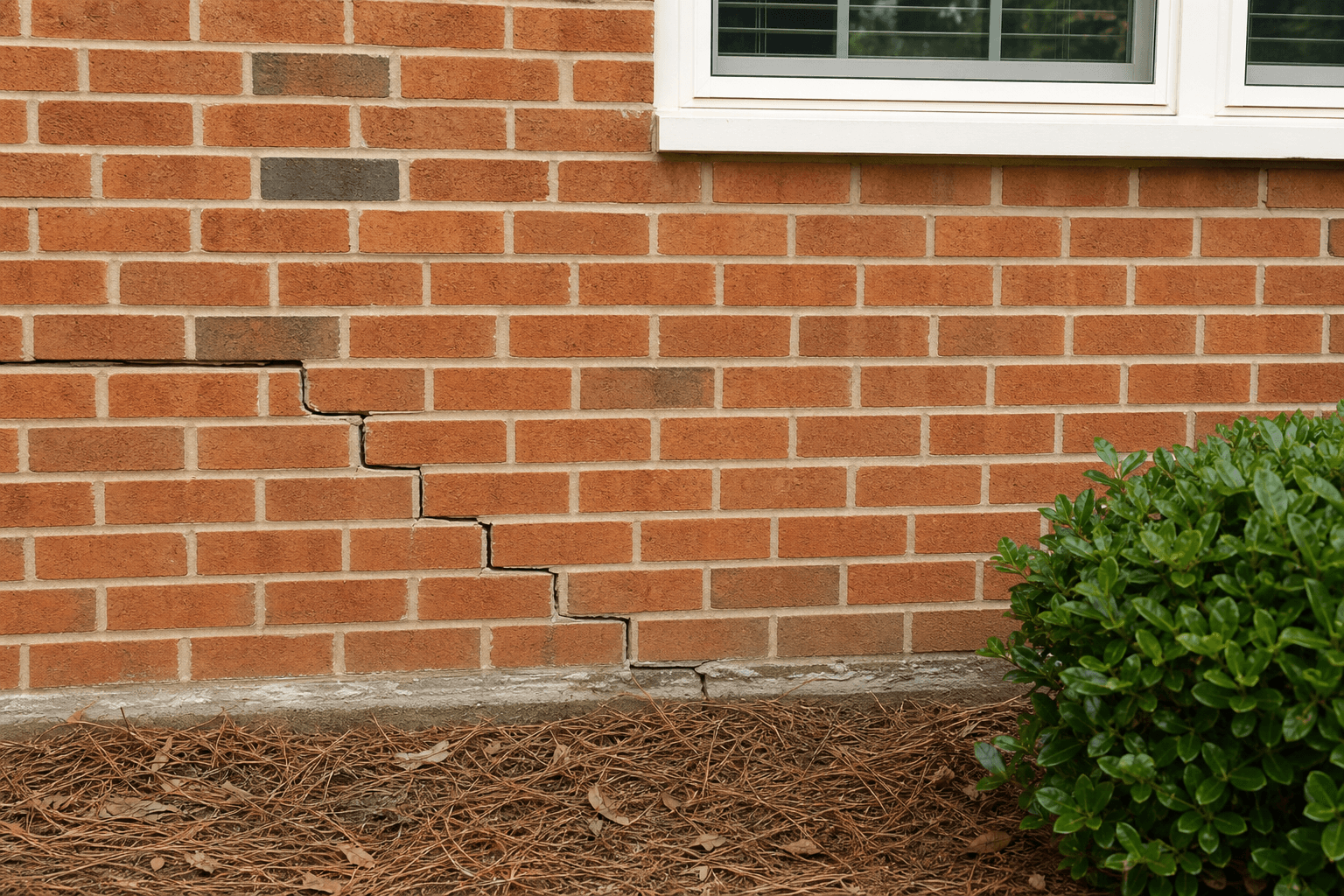
Foundation settlement repair is used when part of a home has moved downward because the support below it changed. That support may be soil under a footing, compacted fill, crawl-space piers, post footings, or a combination of foundation and framing elements. The visible symptoms can include stair-step cracks, sticking doors, uneven floors, chimney separation, gaps at trim, or cracks that return after patching.
The goal is usually stabilization first. Some projects also include controlled lift, but lift is not guaranteed and is not always wise. Older movement, brittle finishes, plumbing, utilities, framing stress, and masonry conditions can limit how much correction is safe.
In eastern North Carolina, settlement discussions should include water and soil. Poor downspout discharge, heavy rain, saturated soil, erosion, and moisture-sensitive soils can contribute to movement. A repair plan that ignores drainage may stabilize one symptom while leaving the cause active.
Methods
Common settlement repair paths
Helical piers
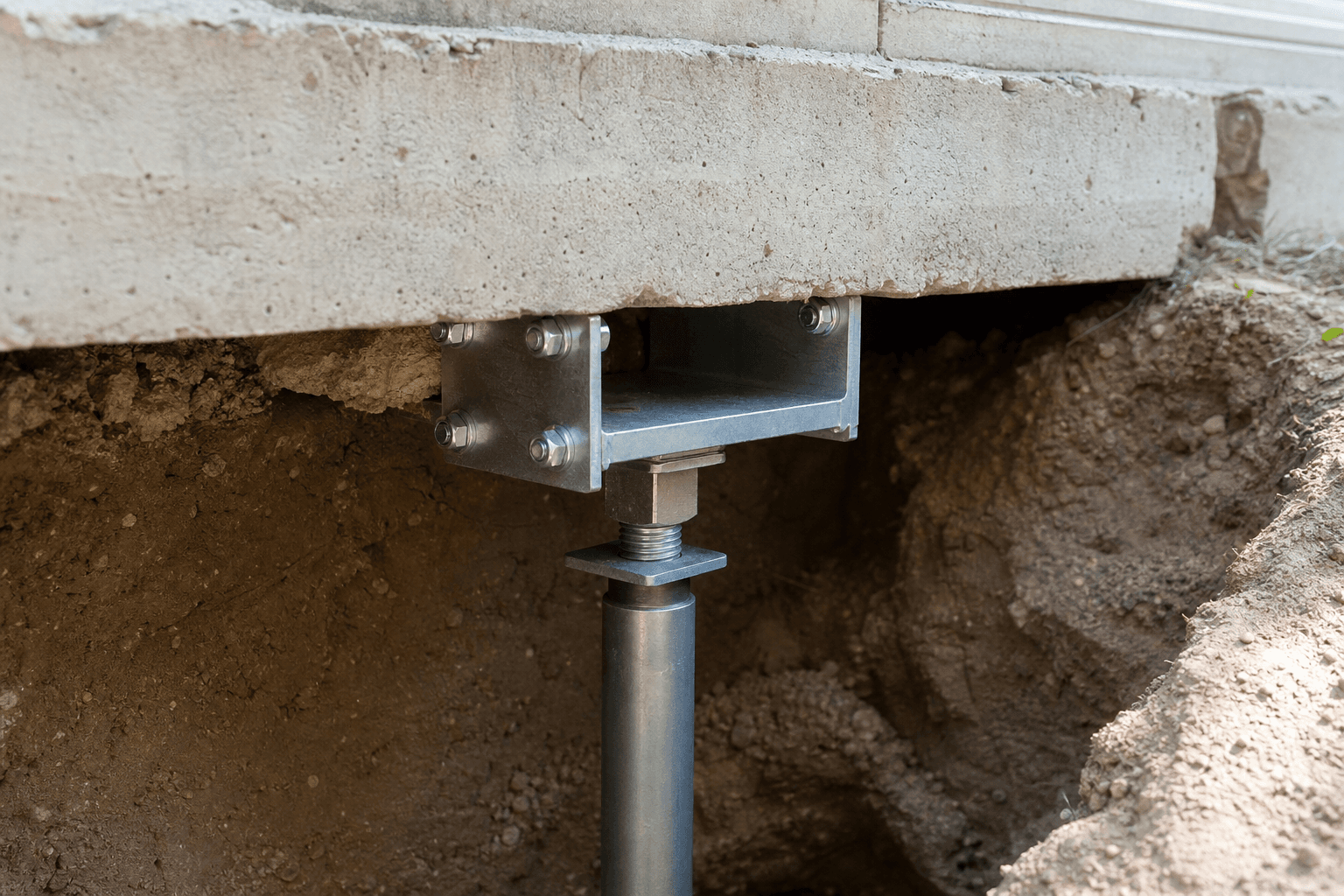
Helical piers are screwed into suitable load-bearing soil and connected to the foundation with brackets. They are often discussed when lighter structures, limited access, or specific soil conditions make them appropriate.
Push piers
Push piers are driven using the structure's weight and can transfer load to deeper bearing strata. Suitability depends on structure weight, soil, access, and engineering judgment.
Crawl-space support correction
Some apparent settlement symptoms come from beams, posts, piers, joists, or footings under a crawl-space floor rather than the perimeter foundation alone.
Drainage and soil correction
If water is softening soil or eroding support near the foundation, drainage correction may be needed before or alongside stabilization.
Monitoring or engineering review
Not every settlement concern requires immediate piers. Measurements, elevation readings, or a structural engineer's opinion may be useful when scope is unclear.
When needed
Signs settlement repair may belong in the scope
Cracks line up across materials
Brick cracks, drywall cracks, and foundation cracks in the same area may suggest a movement pattern.
Floors slope toward one side
Sloping floors can point to perimeter settlement, crawl-space support movement, or both.
Chimney or porch separates
Heavy masonry and attached structures may settle differently from the main home.
Symptoms worsen after storms
Rain-related movement can point toward drainage and soil support issues.
Planning
How a settlement repair should be planned
A settlement plan should start with measurements and a symptom map. The contractor or engineer should identify the affected area, explain why the movement is suspected, and describe how the proposed repair transfers load or improves support. If piers are recommended, ask how many, where they go, what depth or refusal criteria are used, and whether lift is included.
A good recommendation also explains what it will not fix. Piers may stabilize a settled footing, but they do not automatically repair cracked brick, warped trim, stuck doors, drainage problems, or crawl-space framing damage. Those items may require separate steps after stabilization.
Related guidance
Pages that help compare pier options
Questions
Questions to ask before approving settlement repair
What is moving?
Ask whether the concern is the perimeter foundation, slab, crawl-space supports, chimney footing, porch, or floor framing.
Why this method?
The recommendation should explain why piers, drainage, support repair, monitoring, or engineering review fits the findings.
What lift is expected?
Ask whether the goal is stabilization only or lift, and what risks or limits apply.
What is excluded?
Masonry repair, drainage work, interior finish repair, and engineering may be separate.
FAQ
Foundation settlement repair FAQs
What is foundation settlement repair?
Foundation settlement repair stabilizes or supports areas of a home that have moved downward because the soil or support below the foundation has changed. Repair may involve piers, underpinning, drainage correction, or support work depending on the cause.
Do all settling foundations need piers?
No. Some homes need drainage correction, monitoring, or localized support work. Piers are considered when inspection shows settlement that needs deeper or more stable support.
Can foundation settlement be reversed?
Sometimes a settled area can be lifted, but the goal is usually stabilization first. How much lift is safe depends on the structure, age of movement, utilities, finishes, and engineering judgment.
What causes foundation settlement in eastern North Carolina?
Possible contributors include wet soil, poor drainage, compacted fill, erosion, shrink-swell soil behavior where present, tree or root effects, and original construction conditions.
Should I get an engineer for settlement repair?
An engineer may be useful when symptoms are significant, repairs are costly, the home is being bought or sold, or several contractors recommend different repair scopes.
Sources
How this guide was reviewed
Last reviewed: July 31, 2026. This page is educational and does not diagnose a foundation condition, provide engineering advice, or quote repair pricing without an inspection.