Quick answer: are uneven floors a foundation problem?
Uneven or sloping floors can be related to foundation settlement, but they can also come from crawl-space supports, floor joists, beams, posts, subfloor damage, moisture, old framing, or original construction. The floor itself is the visible symptom. The cause is usually below it or around it.
A slight, old, stable slope in an older home may only need monitoring. A floor that is getting worse, feels soft or bouncy, slopes toward one corner, appears with foundation cracks or sticking doors, or sits above a damp crawl space should be evaluated before cosmetic repairs are made.
Visible pattern
What kind of uneven floor are you noticing?
Homeowners use “uneven floor” to describe several different conditions. A long gentle slope across an older room is different from a soft spot near a bathroom, a bouncy living room floor, or a floor that suddenly dips toward one exterior wall. Naming the pattern helps narrow the next question.
General slope across a room
May be old settlement, framing deflection, foundation movement, or a floor system that was never perfectly level.
Look for whether the slope is new, worsening, or strongest near one wall, corner, or support line.
Dip in the middle of the room
Often points toward joist, beam, subfloor, or support-post issues below the floor rather than the finish flooring alone.
Check for bounce, soft spots, crawl-space moisture, damaged joists, or an unsupported beam.
Bouncy floor
Can indicate undersized framing, long joist spans, loose subfloor, weakened wood, or support movement.
Notice whether the bounce is localized or spreads across a larger section of the house.
Soft spot
May involve subfloor damage, moisture, wood deterioration, plumbing leaks, or localized framing damage.
Avoid loading the area heavily until the condition below the floor is understood.
Floor slopes toward one wall or corner
Can be a sign of differential settlement, support pier movement, beam movement, or soil changes below the home.
Look for nearby foundation cracks, sticking doors, brick cracks, or gaps at trim and walls.
Cracked tile or separated flooring
Rigid finishes can reveal movement, subfloor flex, or uneven support that carpet may hide.
Check whether the flooring issue follows a line, appears near a doorway, or returns after repair.
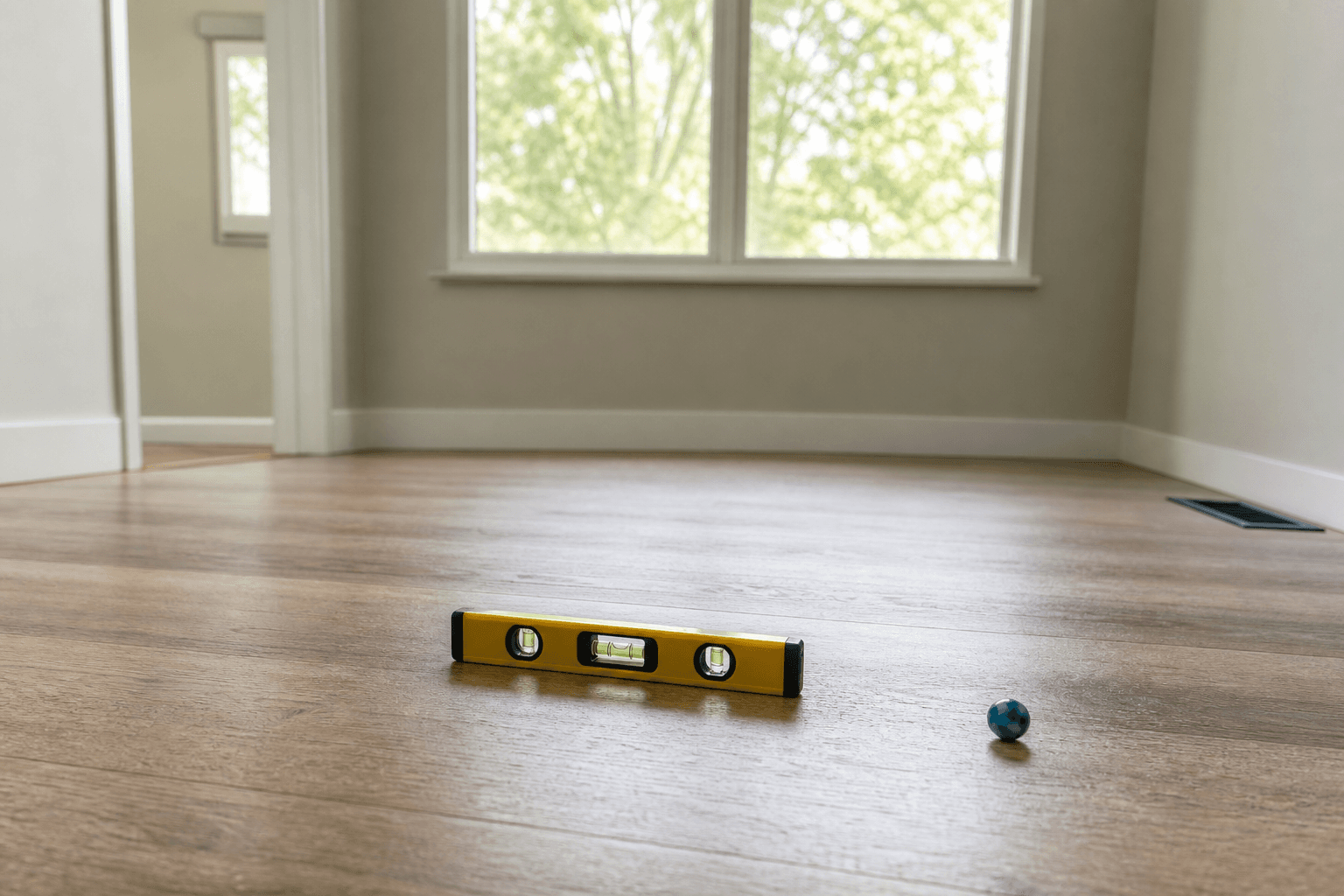
If you are unsure what you are seeing, start with observations: where the floor changes, whether the change is new, whether the floor feels soft or springy, and whether the same area has wall cracks, sticking doors, or exterior foundation cracks nearby.
Warning signs
When uneven floors are more concerning
Uneven floors become more important when they are changing or when they show up with other foundation, framing, or moisture symptoms. The goal is to understand whether the floor is a stable old condition, a localized framing issue, or part of broader movement.
The slope, dip, or bounce is new or getting worse.
The floor feels soft, spongy, or unsafe underfoot.
Doors or windows nearby stick, rub, or no longer latch cleanly.
Foundation cracks, stair-step brick cracks, or wall gaps appear in the same area.
There is damp soil, standing water, wood staining, or musty odor in the crawl space.
A beam, post, pier, or joist below the floor looks damaged, loose, tilted, or patched.
Cracked tile, separated flooring, or pulled baseboards appear near the uneven area.
The floor slopes toward one corner, chimney, porch, or exterior wall.
Several rooms appear to slope in the same direction.
Several mild symptoms together may matter more than one dramatic symptom by itself. A floor slope near a wall crack, a sticking door, and damp crawl-space soil should be reviewed as a pattern, not as three unrelated annoyances.
Likely causes
Common causes of uneven or sloping floors
The repair path depends on the cause. Some floors need framing repair. Some need better support under a beam. Some need moisture correction before wood repairs. Some need foundation settlement evaluation. A useful inspection should separate those possibilities.
Foundation settlement
When part of a foundation or support system moves downward, the floor above may slope toward that area. Settlement can show up with foundation cracks, stair-step brick cracks, sticking doors, or gaps at walls and trim.
Crawl-space support problems
Many North Carolina homes have crawl spaces with joists, beams, posts, piers, and footings supporting the floor. If one part of that chain moves, weakens, or loses bearing, the floor above can sag or bounce.
Damaged joists, beams, or subfloor
Wood framing can be damaged by age, moisture, insects, leaks, poor repairs, overloaded areas, or past modifications. A soft spot may be more about subfloor or joist condition than foundation movement.
Moisture and drainage
Damp crawl spaces can affect wood framing and soil support. Exterior drainage that keeps water near the foundation may also contribute to movement, settlement, and recurring floor symptoms.
Old-house framing and renovation changes
Older homes may have some unevenness from original construction, long-term settlement, or past alterations. A stable old slope is different from a slope that is changing or paired with new cracks.
Soil movement
Clay-rich soils can expand and shrink as moisture changes. North Carolina officials note that shrink-swell clays can contribute to foundation cracks, uneven floors, and related movement where those soils are present.
Support chain
Crawl-space support problems are common clues
In a crawl-space home, the finished floor rests on a chain of support: subfloor, joists, beams, posts or piers, footings, and soil. If one part of that chain weakens or moves, the floor above can sag, dip, or bounce. That is why a floor problem often needs a crawl-space review rather than only a flooring contractor.
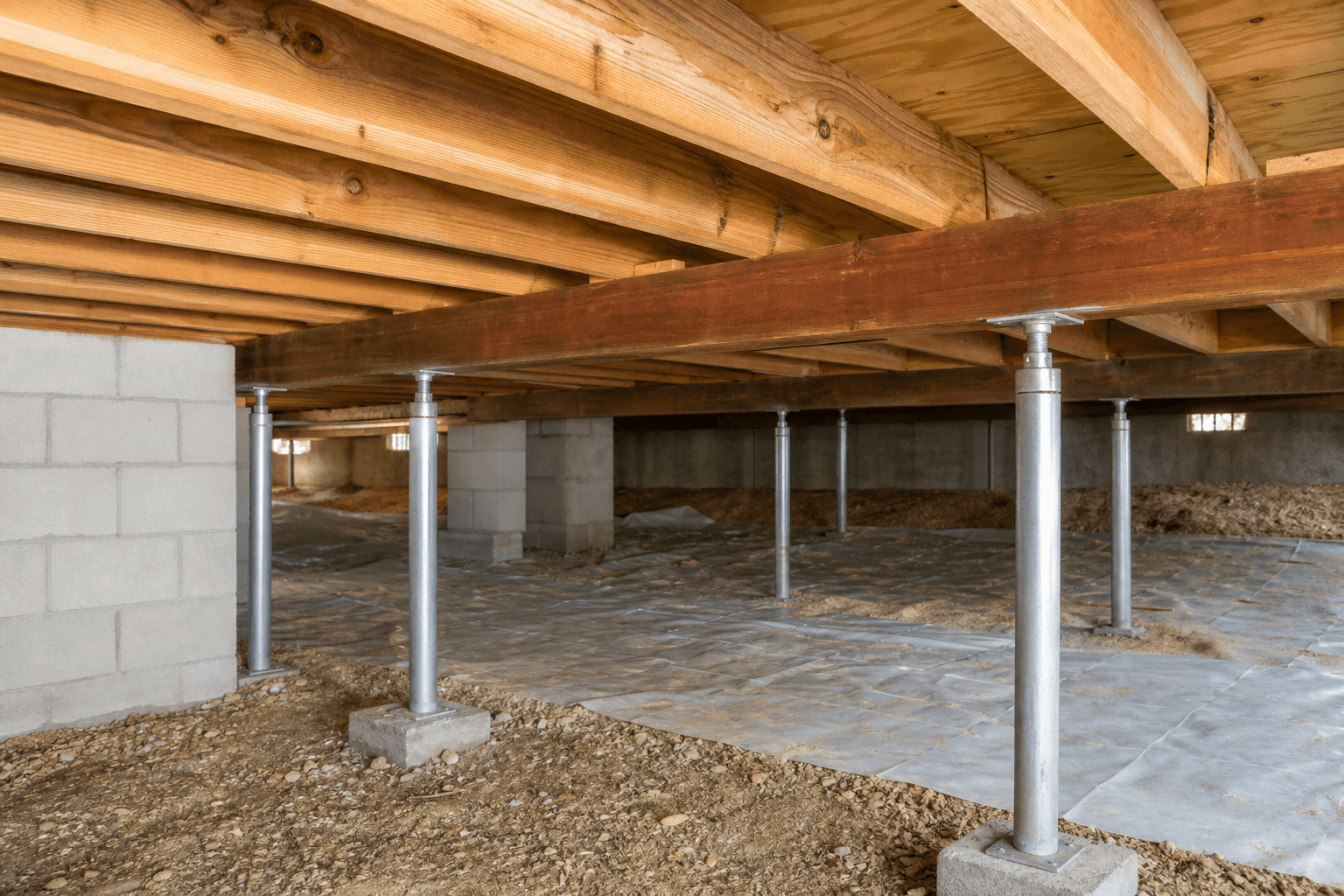
A support post placed on weak soil, a beam that has shifted, a joist damaged by moisture, or a footing that was never sized correctly can each produce a floor symptom. Randomly adding jack posts without understanding bearing, footing, moisture, and load paths can create new problems.
Foundation type
Crawl space vs. slab foundation clues
The same symptom can mean different things depending on the foundation type. A crawl-space floor dip often sends the inspection below the floor. A slab-home floor issue may point to slab movement, soil support, drainage, or original finish quality. A basement or masonry foundation may require wall and framing review together.
Crawl-space home
Look below the floor for joists, beams, posts, piers, footings, moisture, wood damage, soil erosion, and temporary or poorly supported repairs.
Uneven floors may come from floor framing, support movement, moisture damage, foundation settlement, or a combination.
Slab foundation home
Look for cracks in tile, interior wall cracks, doors out of square, slab cracks, exterior brick cracks, and changes across the whole floor surface.
Floor unevenness may relate to slab movement, soil support, settlement, drainage, or original slab finish quality.
Basement or masonry foundation
Look for wall cracks, bowing, water entry, settlement signs, and whether the floor above slopes near the affected wall.
Floor symptoms may connect to wall movement, soil pressure, water intrusion, or structural framing above.
Local context
Rocky Mount and Eastern North Carolina considerations
North Carolina Foundation Guide is starting with Rocky Mount, Wilson, Tarboro, and Nashville, where many homeowners may be dealing with crawl spaces, humid weather, drainage issues, and soil-moisture changes. That does not mean every home has the same conditions. Lot drainage, foundation type, age, grading, gutters, and past repairs all matter.
North Carolina geological guidance describes shrink-swell clays as clay-rich soils that change volume with moisture. Where those soils are present, wet and dry cycles can contribute to foundation cracks, uneven floors, and related movement. NC State Extension also notes that soil around homes can be compacted or poorly drained after construction, which can affect water behavior near foundations.
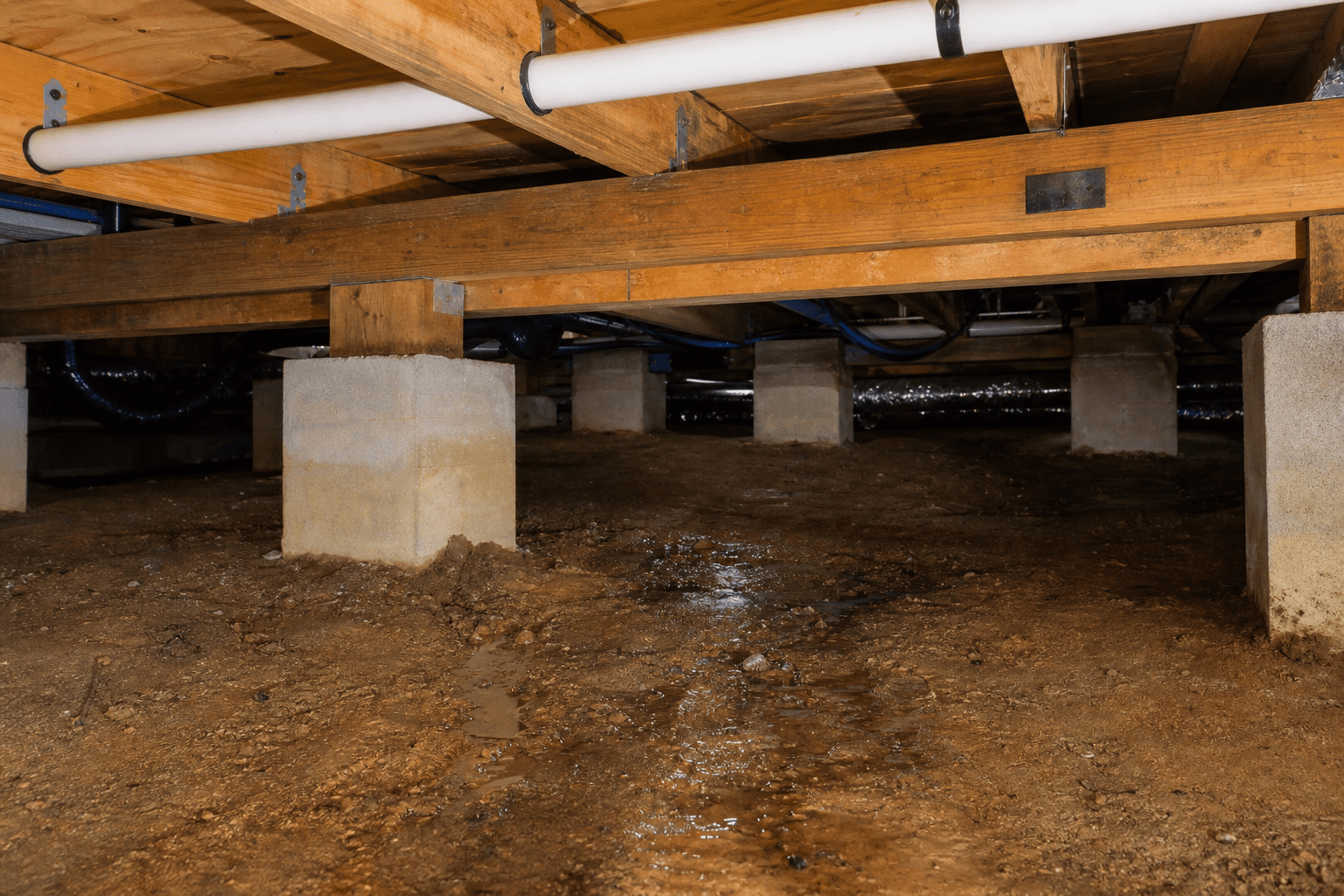
For a Rocky Mount-area homeowner, useful observations include whether the floor feels different after wet seasons, whether crawl-space soil stays damp, whether downspouts discharge near the home, and whether floor slope appears near exterior cracks or masonry movement.
Decision table
When to monitor and when to request an inspection
Monitoring is reasonable only when the floor condition is slight, old, stable, and isolated. Inspection becomes more important when the floor is changing, soft, bouncy, paired with other symptoms, or located over damp or damaged crawl-space conditions.
Old, slight slope with no change and no related symptoms
Document it and monitor periodically, especially before renovations or listing the home.
Slope or dip is new, worsening, or easy to feel
Request evaluation before covering it with new flooring or cosmetic repairs.
Bouncy floor over a crawl space
Check support framing and moisture conditions below the floor before assuming the finish floor is the issue.
Soft spot, staining, or musty crawl-space conditions
Treat moisture and framing condition as part of the first review.
Uneven floor plus cracks, sticking doors, or exterior gaps
Look at the whole movement pattern and consider a foundation or structural evaluation.
You can document the condition without diagnosing it. Note when you first noticed the slope, whether it changes after rain, whether a marble or ball rolls the same direction each time, and whether nearby doors, trim, walls, or exterior masonry have also changed.
Avoid mistakes
What not to do when floors feel uneven
Uneven floors are often covered cosmetically because new flooring feels like the obvious fix. That can be the wrong order. If the floor is moving because of support, moisture, or foundation issues, the finish floor may crack, separate, or slope again.
Do not install new flooring over active movement without understanding the cause.
Do not add random jack posts without proper footing and load-path review.
Do not ignore crawl-space moisture, wet soil, or wood staining.
Do not assume an old-house slope is harmless if it is changing.
Do not compare repair options only by price without comparing scope and cause.
Do not enter unsafe crawl spaces with water, electrical, pest, or structural hazards.
Inspection expectations
What an inspection may check
A useful uneven-floor inspection should connect the floor symptom to the structure below it. That may include checking floor elevations, joist size and condition, beam alignment, post and pier support, footing conditions, subfloor damage, moisture, foundation walls, exterior drainage, interior cracks, door and window operation, and whether the issue is isolated or widespread.
A foundation contractor can propose repairs such as support posts, beam repair, crawl-space support repair, house leveling, drainage correction, or settlement stabilization. A structural engineer may be useful when the cause is uncertain, the floor movement is significant, the home is being bought or sold, or multiple contractors recommend different solutions.
Questions to ask before approving uneven-floor repairs
- What do you believe is causing the slope or sag?
- Is the problem in the foundation, supports, joists, beam, subfloor, or moisture conditions?
- Is the floor still moving or mostly stable?
- Will the repair address moisture or drainage if present?
- Are new footings included for support posts?
- Would an engineer's review change the scope?
- What movement or performance is covered by the warranty?
- What should I monitor after the repair?
Next steps
Related foundation guides
Uneven floors often connect to other warning signs. If doors or windows also stick, review that symptom next. If the slope appears near a visible crack, start with the foundation cracks guide. If the issue is below a crawl-space home, compare support repair and house leveling topics before choosing a repair path.
Contact
Noticing floors that slope, dip, bounce, or feel soft?
Share where the uneven floor is, when you noticed it, whether it has changed, and whether cracks, sticking doors, crawl-space moisture, or exterior drainage issues are present. The first step is organizing the symptom clearly before repair decisions are made.
Share a Foundation ConcernUneven floor FAQs
Are uneven floors always foundation problems?
No. Uneven floors can come from old-house settling, framing deflection, subfloor damage, moisture, joist or beam problems, support-post movement, slab issues, or foundation settlement. The pattern and whether it is changing matter most.
How much floor slope is normal?
Some older homes have minor, stable slope. There is no single online measurement that proves a floor is safe or unsafe. A slope is more concerning when it is new, worsening, localized near one support area, or paired with cracks, sticking doors, soft spots, or crawl-space moisture.
Why do floors sag over a crawl space?
Floors over crawl spaces can sag when joists, beams, posts, piers, footings, or soil support are damaged or moving. Moisture, wood deterioration, undersized framing, poor repairs, and settlement can all contribute.
Can moisture cause uneven floors?
Yes. Moisture can contribute to wood damage, subfloor problems, joist weakening, and soil movement. If a crawl space is damp or water appears after rain, moisture should be reviewed before the floor is cosmetically corrected.
Should I fix the floor or the foundation first?
Fix the cause before the finish. New flooring, shims, or cosmetic leveling may fail if the underlying support, moisture, drainage, or foundation movement is still active.
Should I call a structural engineer for uneven floors?
An engineer may be useful when floors are significantly sloped, changing, tied to a home sale, or paired with structural symptoms. A contractor can propose repairs, while an engineer can provide an independent structural opinion.
Sources and review note
Last reviewed: July 31, 2026. This page should be reviewed by a qualified foundation professional, home inspector, or structural engineer before being treated as technical guidance.