Start here
Do sticking doors and windows mean foundation trouble?
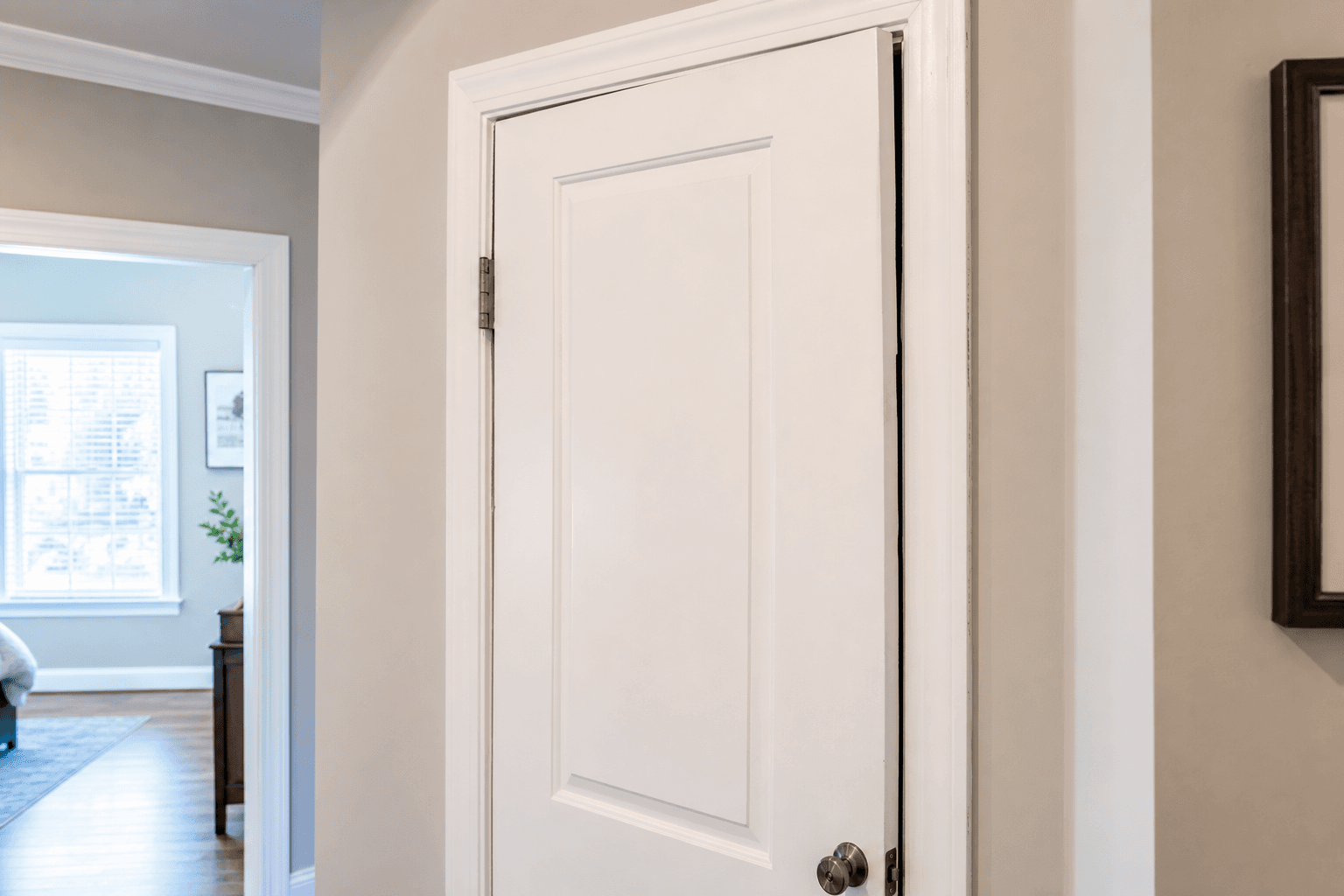
Sticking doors and windows can be frustrating, but they do not automatically mean the foundation is failing. A single door that rubs during humid weather may be reacting to swelling wood, paint buildup, loose hinges, or a latch plate that needs adjustment. A window that is difficult to open may have old hardware, paint in the track, dirt, moisture swelling, or normal age-related wear.
The concern rises when the symptom becomes part of a pattern. If several doors or windows start sticking in the same side of the home, if the issue keeps getting worse, or if the sticking appears with diagonal drywall cracks, stair-step brick cracks, uneven floors, gaps around trim, or water collecting near the foundation, the opening may be reacting to movement in the frame or foundation support system.
For Rocky Mount-area homeowners, moisture patterns matter. Long humid stretches, heavy rain, poor downspout discharge, damp crawl spaces, and soil movement can all affect how a home behaves. The useful question is not simply, “Does my door stick?” It is, “What else is happening around this door, and is the pattern changing?”
Lower concern
One seasonal door
Watch closely
Worsening frame gap
Higher concern
Sticking plus cracks
Likely causes
Why doors and windows start sticking
Door and window openings are sensitive because they are built into framed walls. If the door slab swells, the hinge loosens, the frame shifts, or the floor below moves, the opening may stop behaving like a clean rectangle. That does not tell you the cause by itself, but it gives you a place to start.
Seasonal humidity
Wood doors, trim, and framing can swell during humid months. A door that rubs in summer and improves in drier weather may be reacting to moisture rather than foundation movement.
Track whether the problem appears during damp weather, after long rainy periods, or when indoor humidity is high.
Hinge or hardware movement
Loose hinges, worn screws, swollen paint, or a latch plate that has shifted can make one door hard to close even when the house frame is stable.
Look for sagging at the hinge side, loose screws, rubbed paint at one point, or a latch that misses the strike plate slightly.
Door or window frame movement
If the rectangular opening has moved out of square, the door or sash may rub at a corner, leave uneven gaps, or stop latching cleanly.
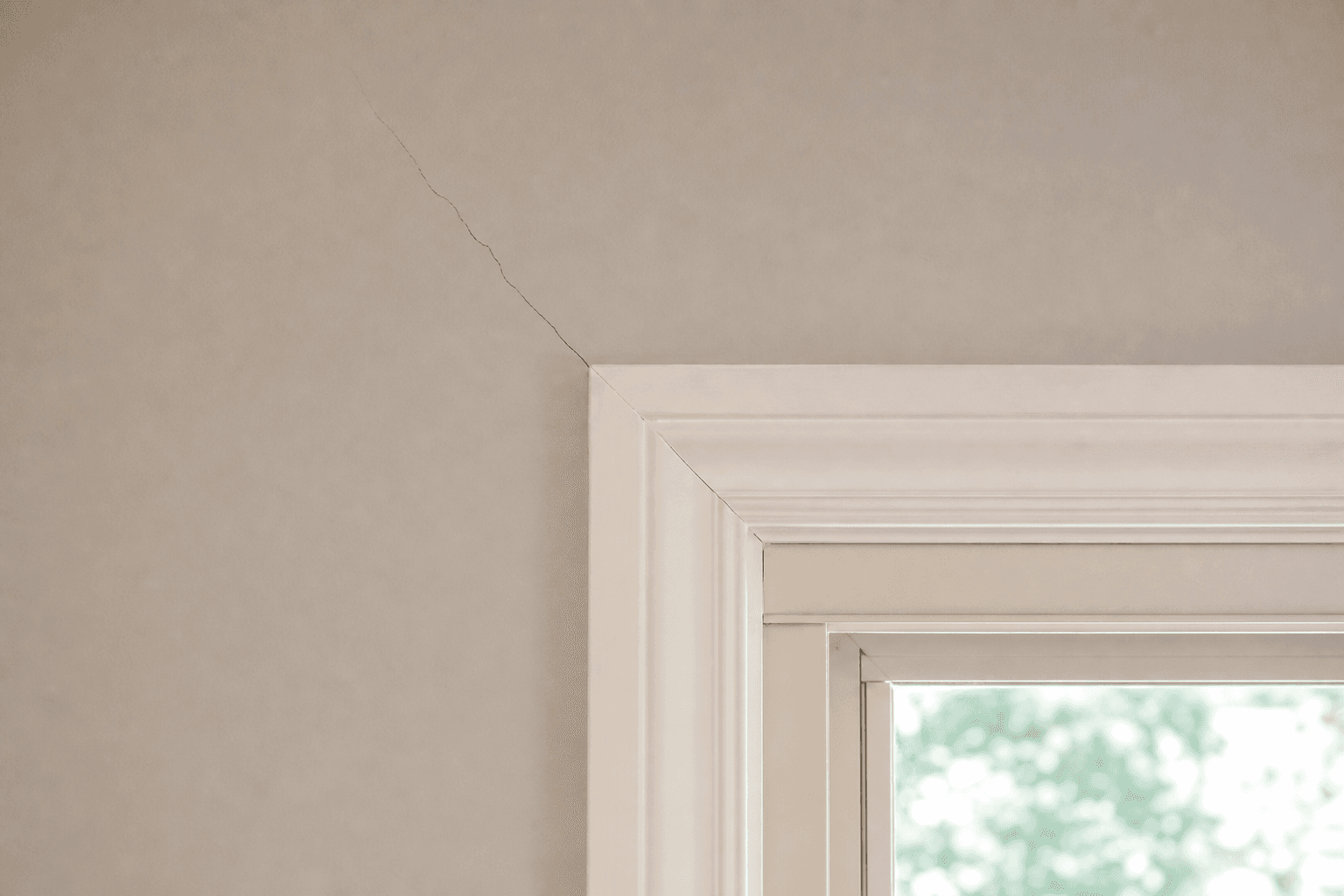
Look for a diagonal crack from the corner of the frame, trim gaps, or a reveal that is wider on one side than the other.
Floor or wall framing movement
A door or window can stick when the framing around it twists, settles, bows, or loses support. This may happen above a crawl space, near a load-bearing wall, or close to a foundation area that has moved.
Compare the sticky opening with nearby sloping floors, cracked drywall, baseboard gaps, or crawl-space support concerns.
Foundation settlement or soil movement
When one part of the home settles more than another, openings can become racked out of square. Sticking doors and windows can be one clue in a larger movement pattern.
Look for repeated symptoms in the same direction: stair-step brick cracks, foundation cracks, exterior gaps, and floors sloping toward one area.
A normal maintenance issue usually stays local. A movement issue often repeats itself: a sticky door, then a diagonal crack nearby, then a floor that slopes toward the same wall, then an exterior crack on the same side of the home. The more the clues line up, the more useful a professional review becomes.
Patterns
What the sticking pattern can tell you
The exact way a door or window sticks can be more helpful than the symptom alone. A door that drags on carpet after new flooring is installed is different from a door that suddenly rubs at the top corner while the frame gap changes. A window painted shut is different from several windows that are hard to lock on the same exterior wall.
Pattern
One interior door sticks slightly
Often a door, hinge, paint, latch, or seasonal humidity issue.
Check hardware and timing. Monitor unless other movement signs appear.
Pattern
Several doors or windows stick in the same part of the home
More concerning because the issue may involve framing, floor support, settlement, or wall movement in that area.
Look for nearby cracks, floor slope, exterior gaps, and crawl-space moisture.
Pattern
The top corner rubs and the reveal is uneven
The frame may be out of square. That can happen from normal framing movement, moisture, or structural movement.
Photograph the reveal and check whether the condition is changing.
Pattern
Door will not latch after rain
Moisture may be swelling wood, affecting soil support, or exposing a drainage problem around the foundation.
Check gutters, downspouts, grading, crawl-space dampness, and whether the symptom improves after dry weather.
Pattern
Sticky opening plus diagonal wall crack
A diagonal crack from a door or window corner can point toward movement around the opening.
Treat the combination as more important than either symptom alone.
Pattern
Sticky openings plus uneven floors or brick cracks
This may indicate a broader foundation or support pattern.
Consider a foundation or structural evaluation before cosmetic repairs.
Watch
Your sticking doors may be a foundation warning
Warning signs
When a sticky door or window deserves a closer look
The strongest foundation clues usually come in groups. A sticky door by itself may be ordinary. A sticky door with a diagonal crack, a sloping floor, and a stair-step crack outside is more meaningful because those symptoms may all be responding to the same movement.
Multiple doors or windows begin sticking within a short period of time.
The problem is getting worse instead of staying seasonal or stable.
A door rubs at the top corner and the frame gap looks uneven.
A window is hard to open, hard to lock, or appears out of square.
Diagonal drywall cracks appear from door or window corners.
Baseboards, trim, or crown molding pull away near the same area.
Floors nearby slope, sag, bounce, or feel soft.
Exterior brick has stair-step cracks or gaps near windows, doors, porches, or chimneys.
Foundation cracks, crawl-space moisture, or drainage problems appear near the same side of the house.
The symptom becomes noticeably worse after heavy rain.
Urgency also depends on change. A door that has rubbed lightly for years may not need the same response as a door that stopped latching over a few weeks. New, spreading, or storm-related symptoms deserve better documentation and a broader look at the house.
Local context
Why Rocky Mount-area homes may see seasonal sticking
Eastern North Carolina homes often deal with humid summers, heavy rain events, crawl-space moisture, and soil that can hold water around the foundation when grading and downspouts are not moving runoff away. Those conditions can affect both the wood parts of a home and the soil support below it.
Moisture can make wood components swell. In crawl-space homes, moisture can also contribute to damp framing, soft subfloors, and support problems below the rooms where doors begin rubbing. Outside, water that repeatedly collects near the foundation can contribute to soil movement or settlement patterns. North Carolina officials also note that shrink-swell clays can damage structures where those soils are present, especially as moisture changes.
That does not mean every sticky door in Rocky Mount, Wilson, Tarboro, Nashville, or nearby communities is structural. It means the local weather and drainage context should be part of the checklist. If the door starts sticking after heavy rain, look outside and below the floor before assuming the door itself is the whole problem.
Homeowner checks
What you can safely check before requesting help
You do not need to diagnose the foundation to gather useful information. A few calm observations can help separate a simple door issue from a broader movement pattern and make any later inspection more efficient.
Check whether the issue is seasonal
Write down when the door or window sticks. If it appears only during humid stretches and releases during dry weather, moisture may be the main driver. If it keeps worsening across seasons, look closer.
Look at the reveal
The reveal is the visible gap around a closed door or window. A consistent gap is usually less concerning than a gap that pinches at one corner and widens at the opposite side.
Compare nearby openings
One problem opening can be local. Several problem openings in one room, hallway, or side of the house can suggest a larger movement pattern.
Check cracks near corners
Door and window corners concentrate stress. A diagonal crack from a corner matters more when it appears with sticking, sloping floors, brick cracks, or exterior foundation symptoms.
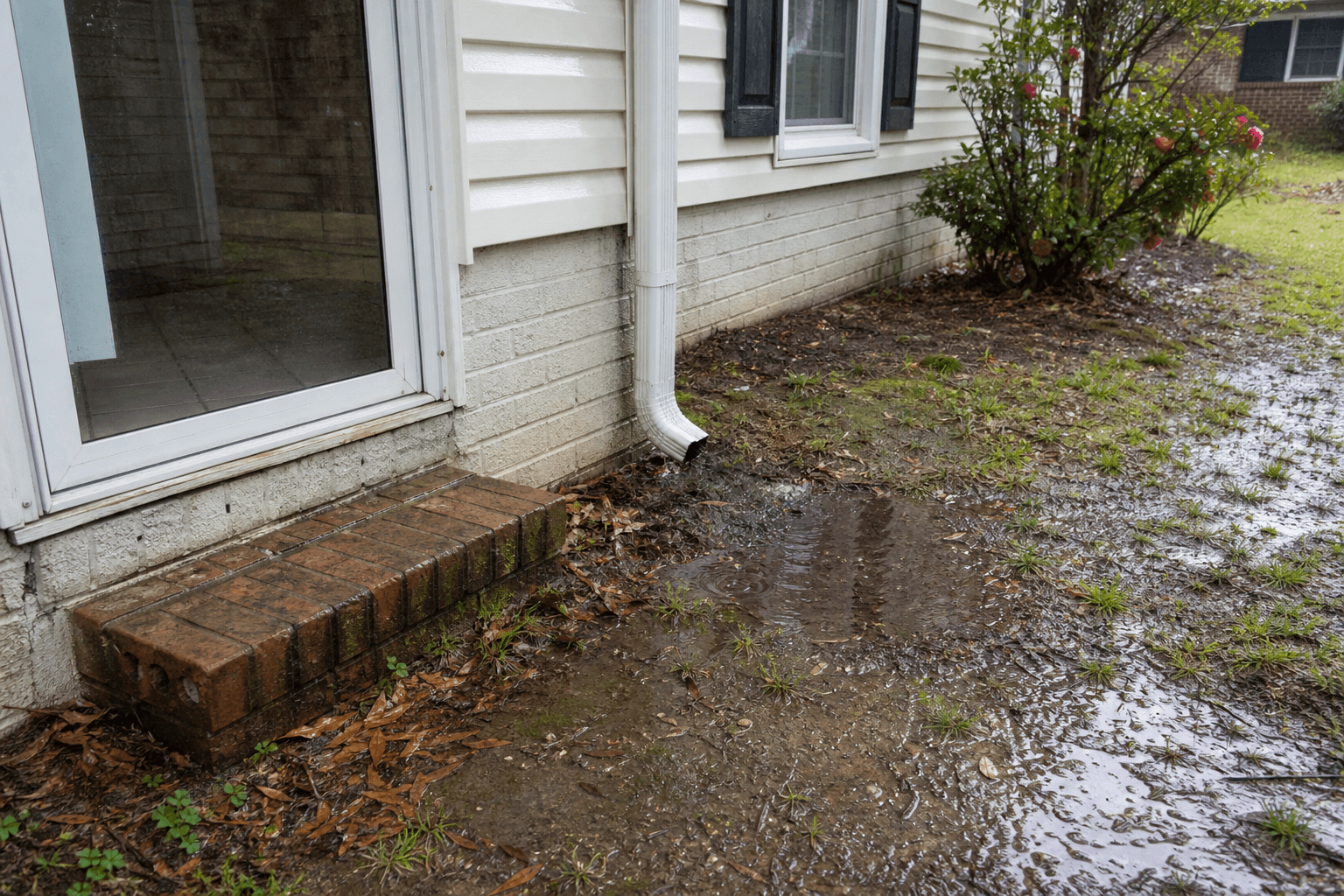
Walk the exterior after rain
Look for downspouts discharging beside the foundation, mulch piled high against siding, low soil near the wall, or water collecting close to the house.
Photograph and measure
Take photos from the same angle every few weeks. A simple note such as 'rubs at top latch corner after rain' can be more useful than trying to diagnose the cause on the spot.
A useful note might read: “Front bedroom door rubs at the top latch corner after heavy rain. Diagonal crack above the frame has grown slightly since May. Floor slopes toward exterior wall.” That type of record is much more helpful than a vague memory that a door has “always been weird.”
Repair timing
What not to fix too early
Cosmetic repair is tempting because a sticky door is annoying every day. But if the frame is moving, the cosmetic repair may not last. It can also remove clues that help explain what changed.
Do not keep shaving the door without understanding why it moved
Planing or sanding can make sense for a stable seasonal door, but repeated trimming can hide evidence if the frame is still moving.
Do not caulk every gap before documenting it
Caulk may improve appearance, but it can make it harder to see whether trim, brick, or drywall gaps are continuing to change.
Do not replace windows first if several openings are distorted
A new window can still bind if the rough opening, wall framing, or foundation support continues to move.
Do not assume every sticky door is structural
Many sticking doors are ordinary maintenance issues. The goal is to recognize the combinations that deserve a broader look.
A simple hinge repair is not a problem when the cause is obvious. The caution is for repeated adjustments. If the same door keeps needing trimming, the latch keeps drifting, or new cracks show up around the frame, the door may be reporting movement somewhere else.
Inspection
What a foundation or structural review may include
A good review does not start by assuming the foundation is the cause. It should connect the visible symptom to the rest of the home. The opening, wall, floor, crawl space, exterior drainage, and foundation should all be considered together.
Whether the door or window frame is out of square.
Whether nearby floors are level, sloping, bouncing, or sagging.
Whether drywall, trim, brick, or foundation cracks line up with the sticky opening.
Whether the crawl space has damp soil, standing water, wood damage, weak posts, or beam movement.
Whether gutters, downspouts, grading, or landscaping are keeping water near the foundation.
Whether the symptom appears connected to settlement, framing movement, drainage, or ordinary door/window maintenance.
In some situations, a neutral structural engineer can be useful, especially before a real estate transaction, when symptoms are significant, or when repair recommendations differ. A contractor can propose repair work; an engineer can provide an independent structural opinion. The right first step depends on how severe and connected the symptoms appear.
Related guidance
Pages that help complete the picture
Foundation Cracks
Compare crack location, direction, width, and change over time.
Read nextStair-Step Cracks
Understand why brick or block cracks can matter when doors also stick.
Read nextUneven or Sloping Floors
Connect door movement with floor slope, crawl-space supports, and settlement clues.
Read nextFoundation Settlement Repair
Learn how settlement is evaluated and what repair paths may be considered.
Read nextWhen Are Push Piers Needed?
See when sticking doors become part of a broader settlement and pier-support conversation.
Read nextFAQ
Common questions about sticking doors and windows
Are sticking doors always a foundation problem?
No. Sticking doors are often caused by humidity, paint, hinges, latch hardware, or normal wood movement. They become more concerning when several doors or windows stick, the issue is getting worse, or the sticking appears with cracks, sloping floors, exterior gaps, or drainage problems.
Why do doors stick after heavy rain?
Heavy rain can raise humidity, swell wood, saturate soil, or expose drainage problems near the foundation. If a door sticks only during damp weather and then improves, moisture may be the main factor. If it keeps worsening or appears with cracks and floor movement, the home should be evaluated more broadly.
What does it mean when a door rubs at the top corner?
A top-corner rub can mean the door has sagged on its hinges, the frame has moved out of square, or the wall/floor system around the opening has shifted. The surrounding clues matter: diagonal cracks, uneven reveals, nearby sloping floors, and exterior cracking make the symptom more important.
Can windows stick because of foundation movement?
Yes, windows can become hard to open, close, or lock if the frame around the opening moves out of square. However, windows can also stick because of paint, dirt, swelling, old hardware, or normal wear. Look for patterns across several openings before assuming a foundation issue.
Should I repair the door before checking the foundation?
If the issue is clearly a hinge or seasonal wood problem, normal door repair may be enough. If the door is part of a larger pattern with cracks, floor slope, or exterior movement, it is better to understand the underlying cause before making cosmetic adjustments.
Who should inspect sticking doors and windows?
A handyman or carpenter may handle a simple door or window issue. A foundation contractor or structural professional is more appropriate when the symptom is widespread, worsening, or paired with cracks, uneven floors, crawl-space support issues, or visible foundation movement.
Sources
How this guide was reviewed
Last reviewed: July 31, 2026. This page is educational and does not diagnose structural movement remotely. It was written to help homeowners document symptoms and understand when a local foundation or structural evaluation may be useful.