Start here
What crawl-space support repair should solve
Crawl-space support repair addresses problems in the structure below the floor: joists, beams, girders, posts, piers, footings, and the soil or pads those supports bear on. Homeowners usually notice the problem from above first: a floor dips in the middle of a room, slopes toward one wall, feels bouncy, or no longer lines up cleanly with doors and trim.
The key is not just adding a post. A floor system works as a chain. If the joists are damaged, a new post may not solve the soft spot. If the beam is cracked, a small jack may not transfer load properly. If the footing is weak, a strong post may still settle. If moisture caused wood damage, the repaired area may fail again unless the crawl-space environment is corrected.
In Rocky Mount and nearby eastern North Carolina communities, many homes have crawl spaces that see humidity, wet soil after storms, short downspouts, plumbing leaks, and older support details. A good repair plan should explain both the structural support and the moisture context before promising that the floor can be leveled.
If you have seen this kind of foundation called a pier and beam foundation, that is the same structure under a different name — the term is more common in Texas and the Gulf South than in North Carolina, where most people simply say crawl space.
Methods
Common crawl-space support repair methods
Steel support posts and piers
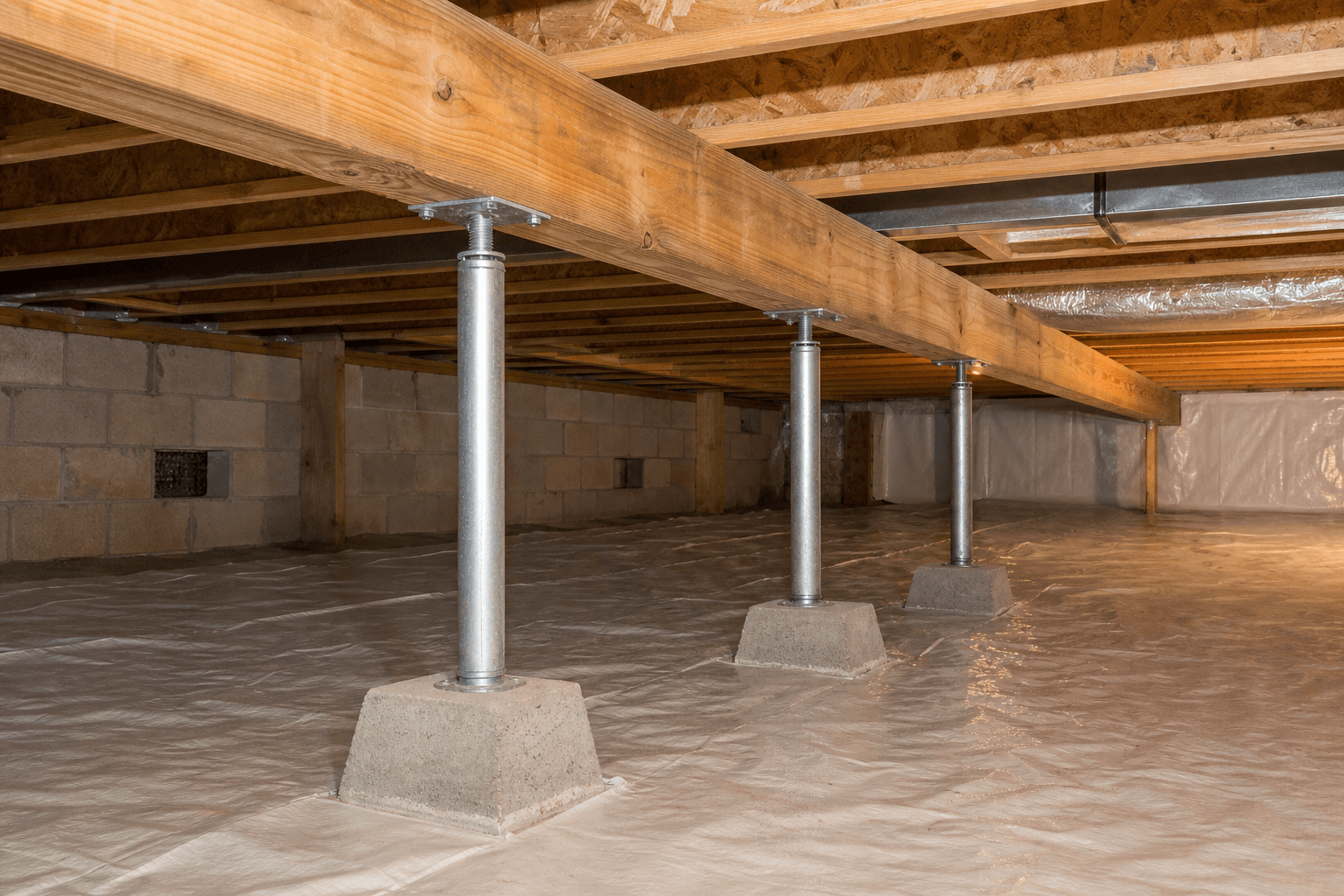
Properly specified steel support posts and adjustable piers can carry beams or girders when installed on stable footings and connected correctly. Rusted, rotted, or undersized posts are often candidates for replacement, and none should be confused with temporary jacks left as permanent supports.
Concrete footings or pads
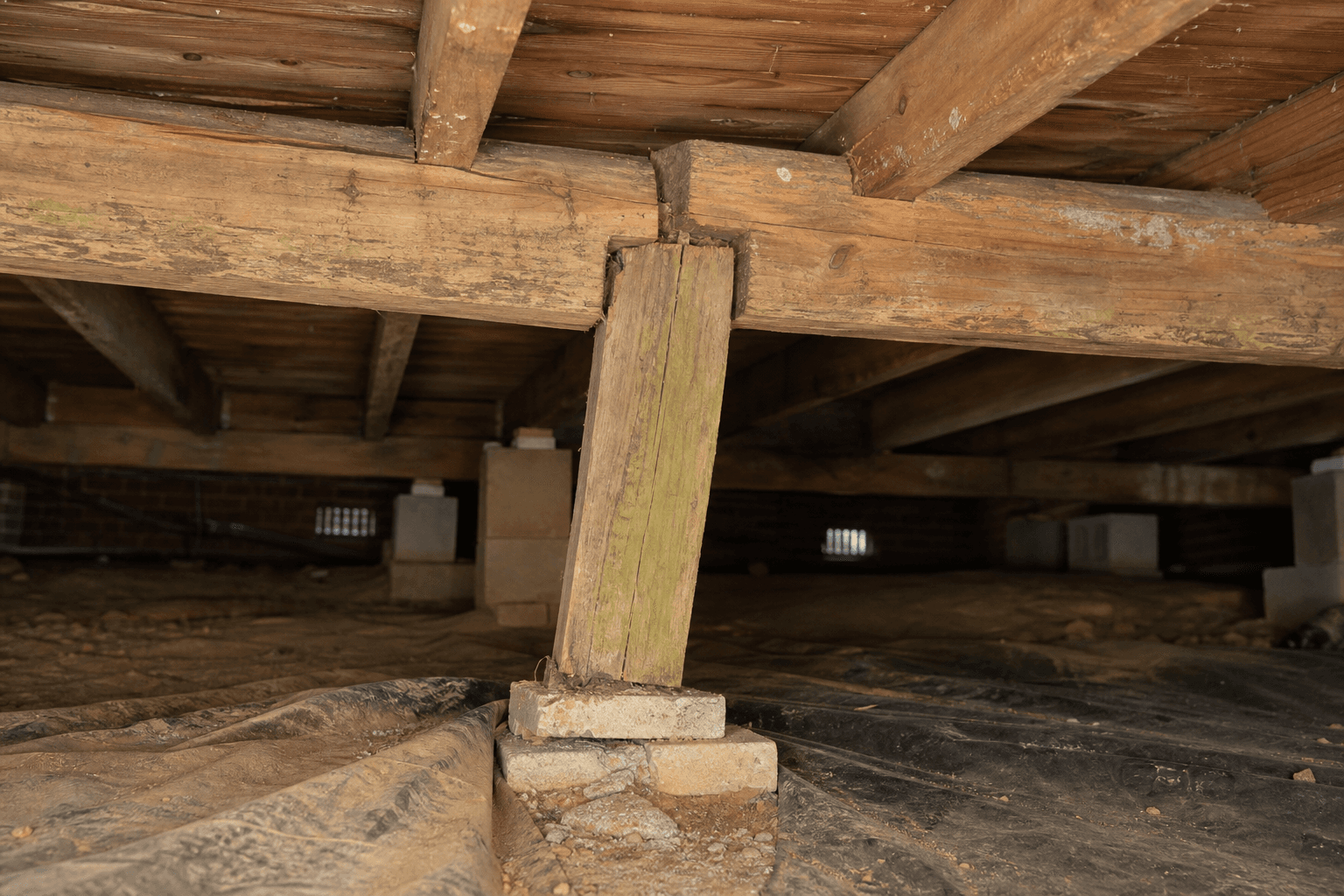
Posts need stable bearing. If a support sits on loose soil, stacked blocks, thin pads, or a settling pier, the footing may need correction before the floor can be stabilized.
Beam or girder repair
A sagging beam may need reinforcement, replacement, supplemental support, or better load transfer depending on span, damage, moisture, and how joists frame into it.
Joist and subfloor repair
If joists or subfloor are rotted, cracked, cut, or undersized, support posts alone may not solve the floor problem.
Moisture and drainage correction
Wet soil, standing water, high humidity, and wood decay can undermine support repairs. The crawl-space environment may need correction before the repair is complete.
When needed
Signs support repair may belong in the scope
Floors sag, dip, bounce, or slope over the crawl space.
A beam looks cracked, undersized, rotted, or patched.
Posts are tilted, rusted, rotted, loose, or sitting on stacked blocks.
A pier or footing has settled, cracked, or lost contact with the beam.
There is damp soil, standing water, musty odor, or wood staining below the affected floor.
A previous repair used temporary jacks, shims, bricks, or unconnected posts.
Planning
How support repair should be planned
Map the floor symptoms
The inspection should connect upstairs symptoms with the support lines below. A dip in one room may point to a beam, joist bay, post, pier, or subfloor issue.
Inspect the full load path
A useful review follows weight from the floor down through subfloor, joists, beams, posts, piers, footings, and soil.
Correct unstable bearing
New posts should bear on stable footings or pads. A strong post on weak soil or a loose block stack can repeat the same problem.
Lift cautiously, if lifting is included
Rapid or excessive lift can crack finishes, bind doors, stress plumbing, or damage older framing. Stabilization may be safer than full leveling.
Address moisture causes
If moisture damaged the support system, drainage, vapor control, or humidity management may be needed to protect the repair.
A support repair quote should say what is being repaired and why. “Add jacks” is too vague. Better scopes identify the beam line, post count, footing type, materials, fastening, lift limits, moisture assumptions, access needs, and what hidden conditions could change the work.
Avoid
What not to do with sagging crawl-space floors
Do not assume a floor can safely be forced level in one visit. Some older floors have settled slowly over many years, and finishes above may have adapted to that shape. Aggressive lifting can crack drywall, bind doors, damage flooring, or stress plumbing and framing.
Do not accept temporary jacks, loose shims, or stacked blocks as a permanent plan unless the contractor clearly explains the load path and footing. A repair should create stable bearing from the beam down to soil that can support the load.
Do not ignore moisture. If damp crawl-space conditions caused rot, rust, or soil movement, support repair alone may leave the cause active. Drainage, vapor control, or humidity management may need to be sequenced with the structural work.
Questions
Questions to ask before approving support repair
Which member is being repaired?
Ask whether the issue is joist, beam, girder, post, pier, footing, soil, subfloor, or several of these.
What supports the new post?
A permanent post needs stable bearing, not loose soil or a thin unsupported block.
Is floor lift included?
Ask how much lift is planned, how it will be measured, and what risks or limits apply.
What moisture work is needed?
If wood damage or wet soil is present, ask what prevents the same support failure from returning.
Related guidance
Related pages
Uneven or Sloping Floors
Use this if you are still sorting the symptom before comparing repair options.
House Leveling
Useful when the main question is whether and how floors can be lifted.
Foundation Settlement Repair
Use this when floor slope may connect to perimeter foundation movement.
Foundation Drainage Solutions
Useful when wet soil or crawl-space moisture is part of the cause.
FAQ
Crawl-space support repair FAQs
What is crawl-space support repair?
Crawl-space support repair restores stable support below the floor system. It may involve beams, girders, joists, posts, piers, footings, shims, connectors, moisture correction, or drainage depending on what has moved or deteriorated.
Are crawl-space jack posts a permanent repair?
Adjustable steel posts can be part of a permanent repair when they are properly sized, installed on stable footings, attached correctly, and protected from moisture. Temporary jacks or posts sitting on loose blocks or soil are not the same thing.
Can support repair level my floors?
Sometimes support repair can improve floor slope or sag, but the goal should be stabilization first. How much lift is safe depends on the home, age of movement, framing condition, finishes, and utilities.
What causes crawl-space supports to fail?
Common causes include moisture, wood rot, undersized beams, poor prior repairs, settling piers, weak footings, rusted posts, pest damage, plumbing leaks, and soil movement below supports.
Should moisture be fixed before support repair?
Moisture should at least be evaluated before support repair. If damp soil, standing water, high humidity, or wood decay caused the damage, moisture correction may be needed to protect the repaired support system.
What is the difference between support repair and foundation pier repair?
They solve different problems. Interior support repair addresses the posts and beams carrying the floor structure, and it is what sagging or bouncy floors usually need. Foundation pier repair — push piers or helical piers — addresses the perimeter foundation itself when the whole structure is settling into weak soil. A floor that sags in the middle while the exterior walls stay level generally points to support, not settlement.
When does a failed support post become a foundation concern?
A post that is rusted, rotted, tilted, undersized, or bearing on loose blocks is a support problem on its own. It becomes a foundation concern when the footing beneath it has settled, when exterior cracking or door and window movement appears at the same time, or when the perimeter is moving too. That combination usually calls for an evaluation of the foundation, not only a replacement post.
Sources
How this guide was reviewed
Last reviewed: July 31, 2026. This page is educational and does not diagnose a foundation condition, provide engineering advice, or quote repair pricing without an inspection.