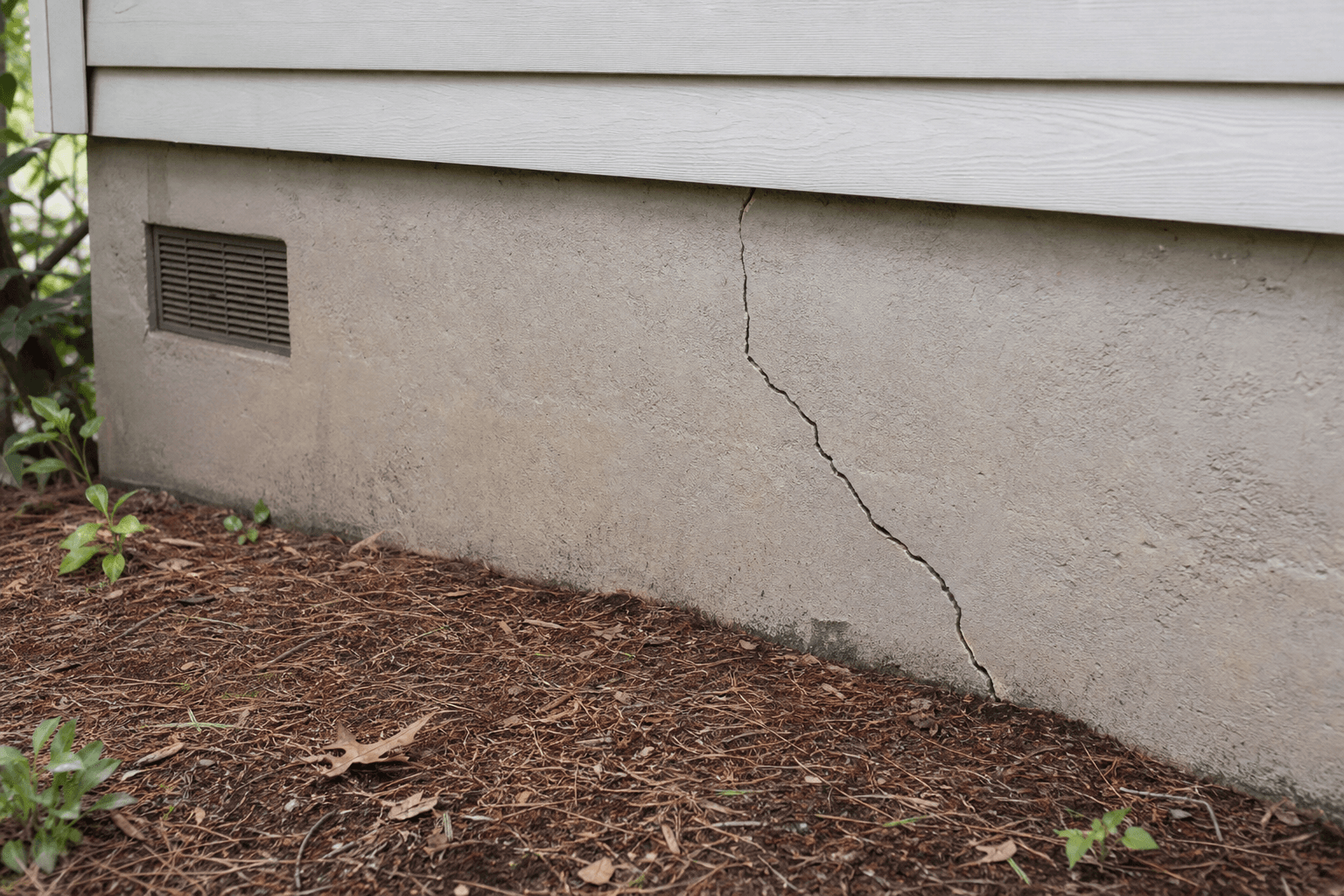
Foundation warning signs
Foundation Problem Assessment Tool
Use this foundation problem assessment tool to organize cracks, uneven floors, water issues, wall movement, crawl-space concerns, and next steps before requesting guidance.
What it does
A careful symptom organizer
- Select the warning signs closest to what you see.
- Add rain, crawl-space, change-over-time, and sale context.
- Get a cautious concern level and related next pages.
- Use the result to prepare photos, notes, and questions.
This tool does not diagnose your home or replace an in-person review.
Start here
What this foundation assessment can and cannot do
Foundation symptoms are easier to discuss when they are organized. A single crack, sticky door, damp crawl space, or sloping floor may have several possible explanations. This tool helps you group what you are seeing before you compare repair pages, request guidance, or decide whether a structural engineer should be involved.
The result is intentionally cautious. It points to concern level, possible review categories, documentation steps, and related guides. It does not say a foundation is safe, failing, settling, or repaired. Those decisions require an in-person review and, in some situations, engineering input.
How to use it
A better way to prepare before asking for help
Choose visible symptoms
Start with cracks, floor slope, water, wall movement, doors, windows, chimney gaps, or crawl-space support clues.
Add timing and context
Mark whether symptoms appear after heavy rain, are getting worse, affect a sale, or happen in multiple areas.
Review the concern level
Use the summary to decide whether to monitor, document, request guidance, or seek prompt professional review.
Read the right next page
The tool recommends symptom, cost, service, and learning pages based on the selected pattern.
Interactive checklist
Select what you are seeing
This tool organizes symptoms. It does not diagnose the home or decide whether a repair is needed.
Visible symptoms
Helpful context
Take useful photos
Capture the whole wall, room, crawl-space area, or exterior corner first, then take close photos of the crack, gap, water, or support issue.
Track change over time
Write down dates, rain timing, crack width if safe to measure, door or window behavior, and whether symptoms appear in more than one place.
Check water movement
Look at gutters, downspouts, grading, low soil, driveway edges, ditches, crawl-space doors, and water pooling beside foundation walls.
Important safety boundary
This tool is educational. It cannot confirm structural safety, identify the exact cause, or replace an in-person inspection. If a wall is moving, cracking is sudden, water is active, or an area feels unsafe, avoid the area and seek prompt professional help.
What it covers
Foundation symptoms and where each one is explained
The symptoms the assessment asks about, what each one usually points to, and the page that covers it in full. You do not have to run the tool to use this — if you already know which symptom you have, go straight to its page.
| Symptom | Usually points to | Read more |
|---|---|---|
| Foundation cracks | Crack review | Cracks in block, brick, concrete, slab edges, or foundation walls. |
| Stair-step brick cracks | Settlement or masonry movement | A stepped pattern through mortar joints, often near corners, windows, or doors. |
| Uneven or sloping floors | Floor support or settlement | Floors slope, dip, bounce, or feel different from one room to another. |
| Sticking doors or windows | Movement pattern review | Doors rub, latch poorly, or windows are newly hard to open. |
| Water after heavy rain | Drainage and water control | Water enters, soil stays wet, or symptoms appear after storms. |
| Bowing or leaning wall | Wall pressure or structural review | A foundation wall curves, leans, cracks horizontally, or appears pushed inward. |
| Chimney pulling away | Differential movement | A gap appears between the chimney and house, flashing opens, or masonry separates. |
| Crawl-space support concern | Crawl-space support | Damp crawl space, leaning posts, soft beams, settled piers, or floor support concerns. |
Categories describe where a symptom usually points, not what is wrong with your home. Nothing here is a diagnosis: the same symptom can come from framing, humidity, or drainage as easily as from the foundation, which is why the tool weighs several together and still ends at “have someone look.”
What raises the priority
The context questions that change the read
A symptom on its own says less than the same symptom that is changing, arriving with storms, or turning up alongside others. These are the follow-ups the assessment weighs on top of the symptoms themselves.
| Context | Why it matters |
|---|---|
| It seems to be getting worse | The crack, slope, gap, water, or sticking has changed over weeks or months. |
| It appears after heavy rain | Symptoms show up, leak, or become easier to notice after storms. |
| Water collects near the foundation | Downspouts, grading, driveways, ditches, or low spots send water toward the home. |
| The home has a crawl space | Floor symptoms may involve beams, posts, joists, piers, moisture, or settlement. |
| Multiple symptoms are happening together | For example, cracks plus floor slope, water plus wall movement, or doors plus masonry cracks. |
| This affects a home sale or purchase | You may need documentation, quote comparison, or an engineer-versus-contractor decision. |
FAQ
Foundation problem assessment FAQs
Can this tool tell me if my foundation is failing?
No. This tool organizes visible symptoms and next steps. It cannot diagnose structural safety, confirm the cause, or replace an in-person inspection.
When should I move faster?
Move faster when a wall is bowing or leaning, cracking changes quickly, water is actively entering, a chimney is separating, floors are changing, or multiple symptoms appear together.
Should I call a foundation contractor or structural engineer?
A contractor can explain repair options and pricing. A structural engineer may be useful when recommendations conflict, the repair is expensive, a sale is involved, or an independent opinion is needed.
What photos should I take before requesting guidance?
Take wide photos of the room, wall, crawl space, or exterior corner, then close photos of cracks, gaps, water, support posts, beams, or floor changes. Include dates and rain timing.
Can heavy rain cause foundation symptoms?
Heavy rain can reveal drainage problems, water intrusion, crawl-space moisture, wall pressure, and symptoms that were already developing. The rain timing is useful context, not a complete diagnosis.
Related guidance