Start here
Why foundation symptoms show up after rain
Heavy rain does not automatically mean a foundation is failing, but it can reveal weaknesses that stay hidden during dry weather. Water adds weight and pressure to soil, exposes low grading, overwhelms gutters, leaks through cracks, and can make crawl-space moisture problems more obvious. If the same symptom returns after storms, it is worth treating as a pattern.
Some storm-related symptoms are simple moisture behavior. A wood door may swell during humid weather. A small damp stain may appear near a known leak. But rain-related symptoms become more concerning when they cluster: a crack leaks, a door sticks, a floor slopes, water pools outside, and the same side of the home shows exterior cracking.
For Rocky Mount, Wilson, Tarboro, Nashville, and nearby eastern North Carolina communities, heavy rain and humid crawl-space conditions should be part of the foundation checklist. Local properties can experience roof runoff, saturated soil, damp crawl spaces, erosion near footings, and moisture-sensitive soil behavior where clay-rich soils are present.
Symptoms
Foundation signs that may appear after heavy rain
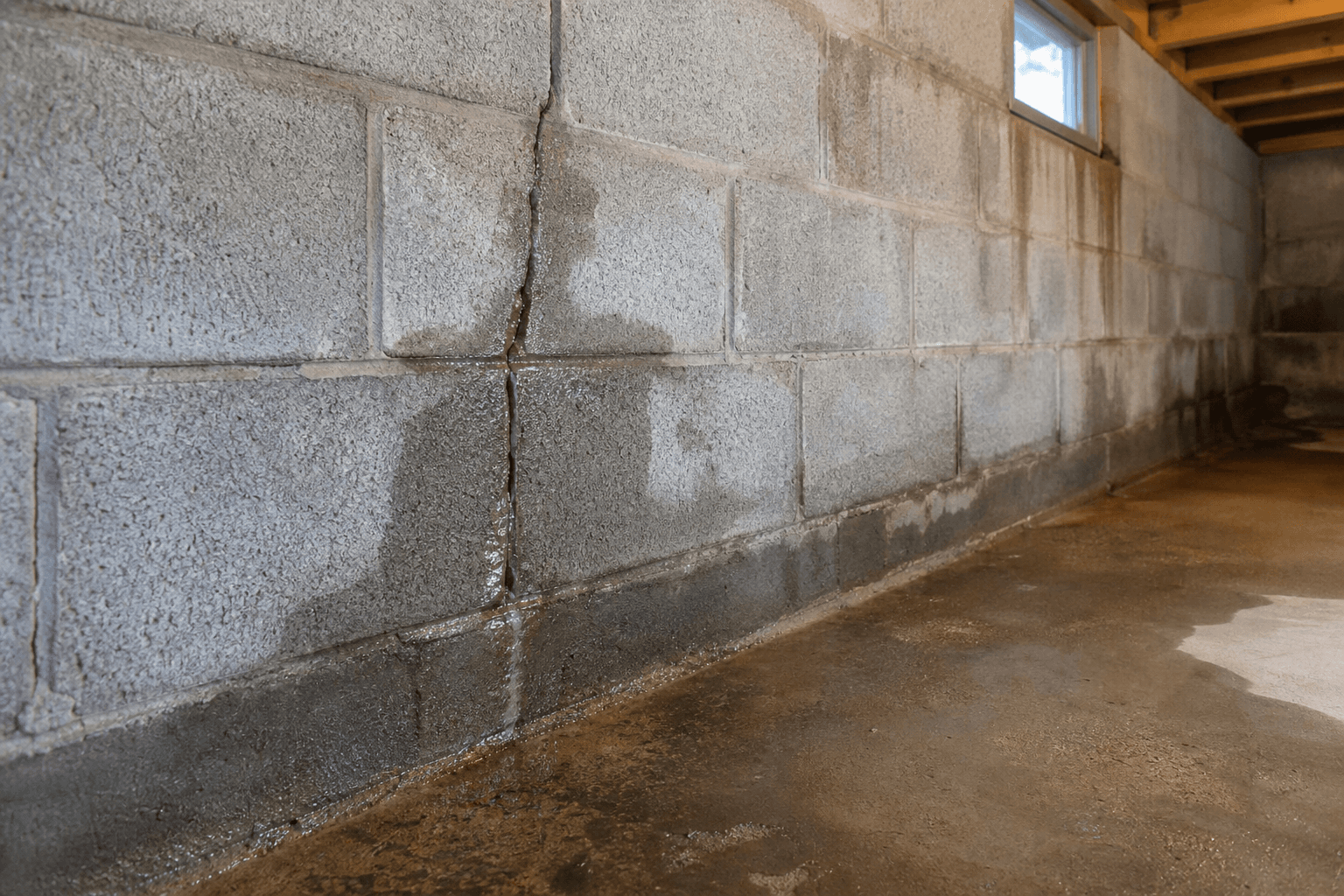
New or leaking foundation cracks
Rain can reveal cracks that were already present by creating enough water pressure for seepage. A crack that leaks after storms should be documented and reviewed with the outside drainage pattern.
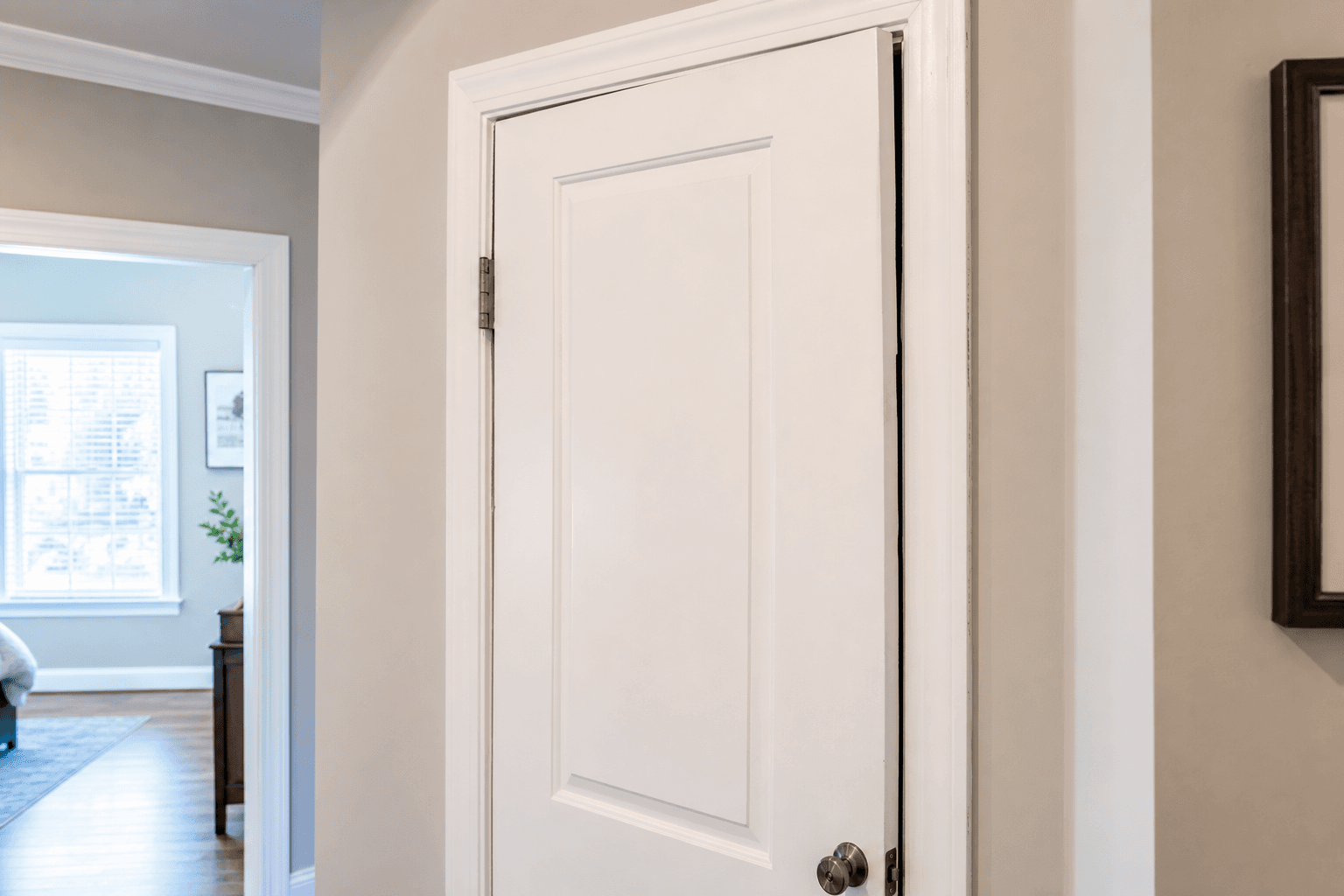
Doors or windows stick after storms
Humidity can swell wood, but storm-timed sticking can also happen when soil moisture changes affect the structure around openings.
Floors feel more uneven or bouncy
Wet crawl spaces, softened soil near supports, or moisture-damaged framing can make floor symptoms more noticeable after heavy rain.
Water enters through walls or crawl space
Water intrusion is often the clearest storm-related clue. The entry point matters, but the exterior water source usually matters more.
Bowing wall cracks look damp or wider
Saturated soil can increase pressure against foundation walls. Bowing, horizontal cracking, or wall movement after rain deserves prompt review.
Chimney, porch, or exterior gaps change
Heavy masonry or attached structures can move differently when soil around their footings becomes saturated or erodes.
Causes
How rain affects foundations and crawl spaces
Rain-related foundation symptoms usually come from a source, a path, and a vulnerable area. The source may be roof runoff, surface water, wet soil, or groundwater. The path may be a crack, mortar joint, wall-floor seam, low crawl-space door, or soil beside a support. The vulnerable area may be a footing, wall, crawl-space post, beam, pier, joist, chimney, or porch.
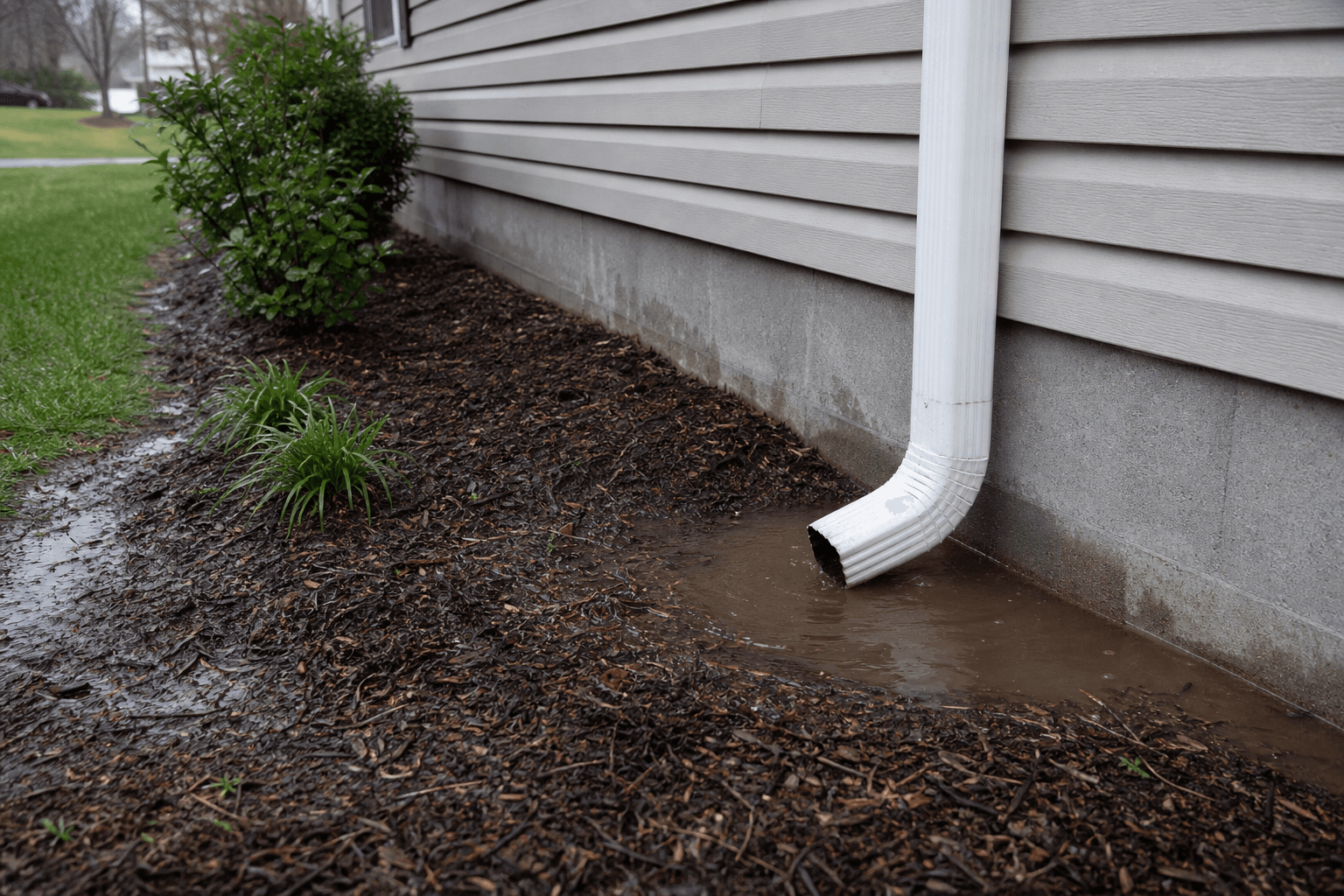
Short downspouts or overflowing gutters dump roof water beside the foundation.
Soil slopes toward the home, so stormwater collects against the wall.
Mulch beds, patios, walkways, or landscaping hold water near the foundation.
Crawl-space soil stays wet long enough to affect posts, piers, beams, or wood framing.
Water pressure finds weak points through cracks, block joints, wall-floor joints, or penetrations.
Moisture-sensitive soils may swell when wet or shrink later as they dry, creating movement cycles where those soils are present.
Erosion, soft soil, or poor compaction near a footing can reduce support after repeated storm events.
Urgency
When to monitor and when to request help
One symptom appears only during a storm and then disappears
Document it and check exterior water sources. If it repeats, treat it as a pattern.
Water enters the same area after more than one rain
Trace gutters, downspouts, grading, and wall entry paths before sealing finishes.
Cracks, sticking doors, or floor slope appear together
Look at the whole movement pattern rather than repairing each symptom separately.
A wall bows, leans, or has horizontal cracking
Request structural review promptly, especially if the wall is wet or changing.
Symptoms worsen as soil dries after rain
Note the timing. Wet-dry soil movement can reveal itself after the storm, not only during it.
Faster review is wise when a wall bows, a crack is wide or offset, water enters repeatedly, a chimney or porch separates, or doors and floors change along with exterior cracking. Those combinations suggest more than a one-time rain nuisance.
Homeowner checks
What to document after a storm
The best time to gather evidence is during or soon after rain, while the water path is visible. You do not need to diagnose the structure. You only need to document what happened, where it happened, and whether it repeats.
Photograph cracks, gaps, water stains, and floor symptoms from the same angle over time.
Walk the exterior during or soon after rain and note where downspouts discharge.
Look for water pooling beside foundation walls, chimneys, porches, crawl-space doors, or low corners.
Check whether mulch or soil sits high against siding or foundation vents.
Look inside for the first visible water entry point, not just the largest puddle.
Note whether doors or windows stick only in humid weather or specifically after storms.
If safe access exists, check crawl-space soil, posts, beams, joists, and insulation for dampness.
Do not climb, dig, or disturb unstable masonry, bowed walls, or saturated areas.
Repair path
What heavy-rain symptoms may point to
The repair path depends on what rain reveals. If water pools beside the foundation, drainage may be the first step. If water enters through a crack, crack repair and exterior water control may both matter. If a wall bows or cracks horizontally, structural review may need to come before waterproofing. If floors sag over a damp crawl space, support repair and moisture correction may need to be planned together.
Avoid treating each symptom in isolation. A sticky door, a damp crawl space, and a leaking crack may all be connected to the same stormwater path. A strong repair recommendation should explain the source of water, the entry or movement path, and which repair addresses which part of the problem.
FAQ
Common questions about foundation symptoms after rain
Can heavy rain cause foundation problems?
Heavy rain can reveal or worsen foundation problems when water collects near the home, saturates soil, increases wall pressure, enters cracks, softens support around footings, or affects crawl-space supports. It is often one part of a longer drainage and soil pattern.
Why do foundation cracks leak after rain?
Rain can saturate soil outside the foundation and create water pressure against the wall. Water then follows the easiest path through cracks, mortar joints, penetrations, or the wall-floor joint.
Why do doors stick after heavy rain?
Humidity can swell wood and make doors stick temporarily. If doors stick along with cracks, uneven floors, or exterior gaps after storms, soil moisture or foundation movement may also be involved.
Should I wait for everything to dry before calling someone?
You can clean up safely, but photos taken during or right after rain are very useful. If water entry, wall movement, or structural symptoms repeat, do not wait for cosmetic damage to grow.
What should be fixed first after rain-related foundation symptoms?
Start by identifying the water source and the symptom pattern. Gutters, downspouts, grading, drainage, crack repair, support repair, or structural stabilization may be needed depending on what is found.
Sources
How this guide was reviewed
Last reviewed: July 31, 2026. This page is educational and does not diagnose structural movement remotely. Repeating water entry, wall movement, or settlement symptoms should be reviewed in person.