Start here
What foundation crack repair should solve
Foundation crack repair is not one single product or method. A narrow, dry shrinkage crack in poured concrete is different from a leaking crack, a horizontal block-wall crack, a stair-step brick crack, or a crack that has shifted out of plane. The repair should answer two questions: what type of crack is this, and why did it form?
For homeowners in Rocky Mount, Wilson, Tarboro, Nashville, and nearby communities, water is often part of the story. Heavy rain, short downspouts, low soil near the foundation, and damp crawl-space conditions can create pressure or moisture paths that make cracks leak. Sealing the crack may help, but if water keeps collecting outside, the repair may not last.
A good crack repair recommendation should explain whether the goal is waterproofing, bonding, masonry repair, stabilization, or monitoring. If the recommendation jumps straight to a product without explaining the crack pattern and surrounding symptoms, ask for a clearer diagnosis.
Methods
Common foundation crack repair methods
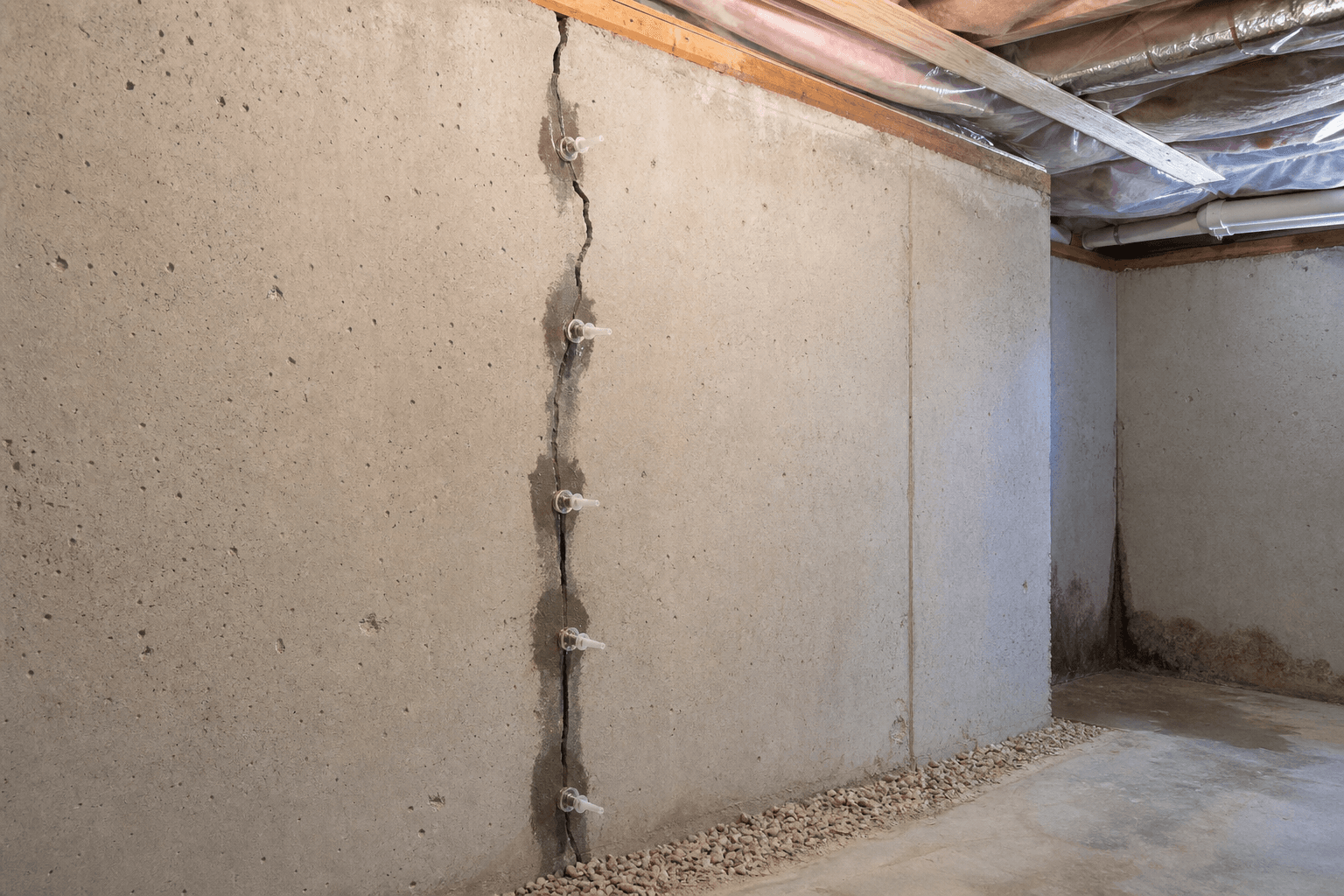
Epoxy injection
Often discussed for concrete cracks where bonding strength matters. It may not be suitable when the crack is actively leaking or movement is still occurring.
Polyurethane injection
Often used for water-sealing flexible crack repair where moisture is entering. It addresses the leak path, not the reason water reached the wall.
Masonry repair or repointing
Brick, block, and mortar cracks may need masonry-specific repair, but stair-step cracks should be reviewed for movement before repointing.
Drainage correction
If water pressure is contributing to the crack or leak, gutters, downspouts, grading, or drains may be part of the repair plan.
Structural stabilization
Wide, offset, horizontal, or moving cracks may require wall stabilization, pier support, or engineer-reviewed repair rather than simple sealing.
When needed
Signs crack repair may belong in the scope
The crack leaks during or after rain.
The crack is widening, offset, horizontal, or stair-stepped.
There are related symptoms such as sticking doors, sloping floors, or chimney separation.
The same crack was patched before and reopened.
Water collects outside near the same wall.
Sequence
How crack repair should be planned
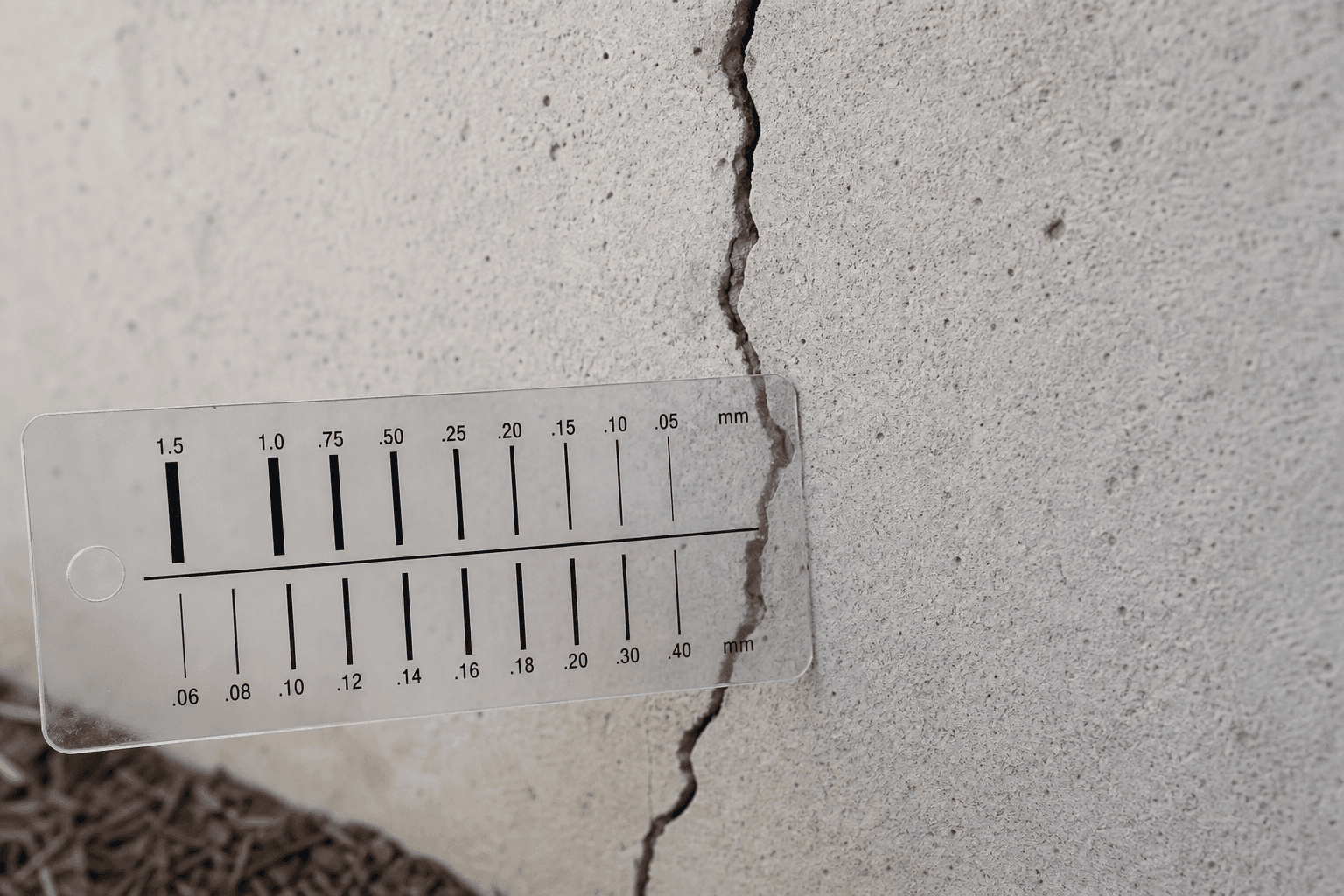
Start by documenting the crack location, direction, width, water staining, and related symptoms. Then check the outside drainage near the same wall. A repair plan should identify whether the crack is stable, whether water pressure is active, and whether the wall itself is moving.
For a simple non-moving leak, crack injection may be enough. For a crack that keeps reopening, sits in a bowed wall, or appears with settlement symptoms, the repair may need to address the support or pressure behind the crack. Cosmetic patching before understanding the cause can make the problem harder to track.
Questions
Questions to ask before approving crack repair
What type of crack is this?
Ask whether the crack is shrinkage, settlement, pressure-related, masonry-related, structural, waterproofing-related, or uncertain.
Is movement active?
A stable crack and a moving crack should not be discussed the same way.
What will the repair stop?
Clarify whether the repair stops water, bonds concrete, stabilizes movement, or only improves appearance.
Is drainage included?
If rain or wet soil is part of the cause, water control may need to be part of the scope.
Related guidance
Related pages
Foundation Cracks
Start here if you are still deciding whether a visible crack is concerning.
Stair-Step Cracks
Use this for brick or block cracks that follow mortar joints.
Foundation Water Intrusion
Use this when the crack leaks or staining appears after rain.
Foundation Crack Repair Cost
Use this later to compare price ranges and quote assumptions.
FAQ
Foundation crack repair FAQs
Can every foundation crack be repaired with epoxy or polyurethane?
No. Injection may be useful for some concrete wall cracks, but the right approach depends on crack type, width, movement, water entry, wall material, and whether the crack is structural or mainly waterproofing-related.
Should a leaking foundation crack be repaired from inside or outside?
It depends on access and the water source. Interior injection can address some crack leaks, while exterior drainage or waterproofing may be needed when water pressure continues to build against the wall.
When is a foundation crack structural?
A crack is more concerning when it is wide, offset, horizontal, stair-stepped through masonry, changing, paired with wall movement, or connected to settlement signs. Structural conclusions require in-person evaluation.
Will crack repair stop foundation movement?
Sealing a crack does not stop active settlement or wall movement. If movement is ongoing, stabilization, drainage correction, or a structural repair may be needed before cosmetic repair lasts.
What should I ask before approving crack repair?
Ask what type of crack it is, whether movement is active, whether water pressure is part of the cause, what material will be used, whether drainage is included, and what conditions are excluded from the repair.
Sources
How this guide was reviewed
Last reviewed: July 31, 2026. This page is educational and does not diagnose a foundation condition, provide engineering advice, or quote repair pricing without an inspection.