What you are seeing
What a horizontal foundation crack looks like
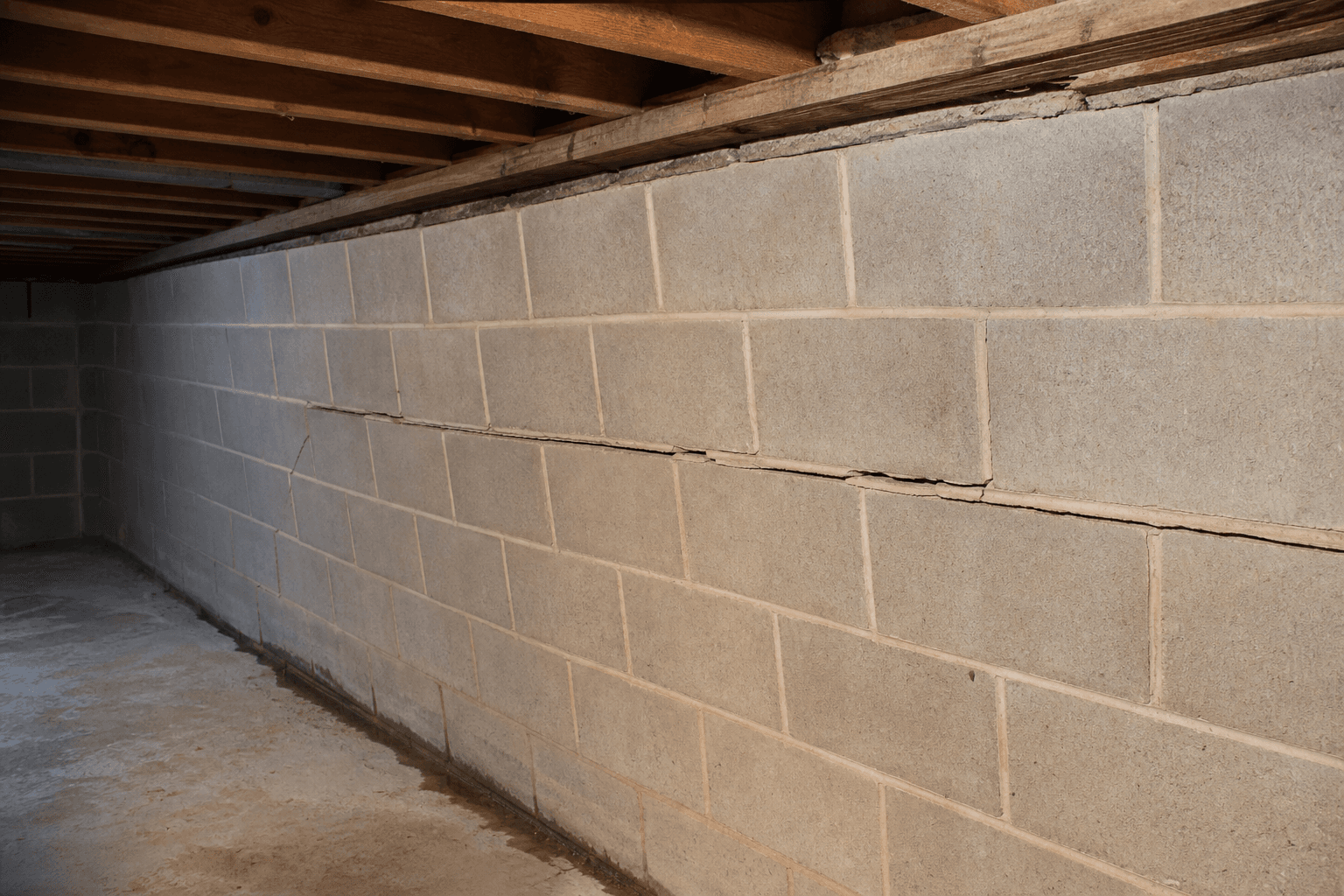
A horizontal foundation crack runs side to side across a foundation or basement wall, often near the middle third of the wall or along a mortar joint in a block or brick wall. It is different from a vertical crack, which runs up and down and is frequently tied to normal concrete shrinkage. A horizontal crack usually reflects force pushing against the wall from the soil side rather than the wall simply curing or settling.
Inside the home, long horizontal lines in drywall are more often related to seams, taping, or humidity movement. The horizontal crack most associated with foundation pressure is the one in the actual concrete, block, or brick wall — especially when it is paired with any inward bow.
Why it is treated differently
Why horizontal cracks raise more concern
Vertical and hairline cracks are common and often cosmetic. A horizontal crack is the pattern foundation professionals watch most closely because it typically means the soil or water outside is pressing inward hard enough to bend or break the wall. Left unaddressed, that pressure can lead to bowing, bulging, and — in severe cases — wall failure.
This does not mean every horizontal line is an emergency. A thin, stable, dry line with no bowing may be minor. The goal of this page is to help you read the surrounding signs so you know whether to monitor the crack or have it reviewed sooner rather than later.
Common causes
What causes horizontal foundation cracks
The common thread is lateral pressure. Most causes come down to how much water and soil force is acting on the outside of the wall, which is why drainage matters so much in eastern North Carolina.
| Likely cause | What is happening | What to check |
|---|---|---|
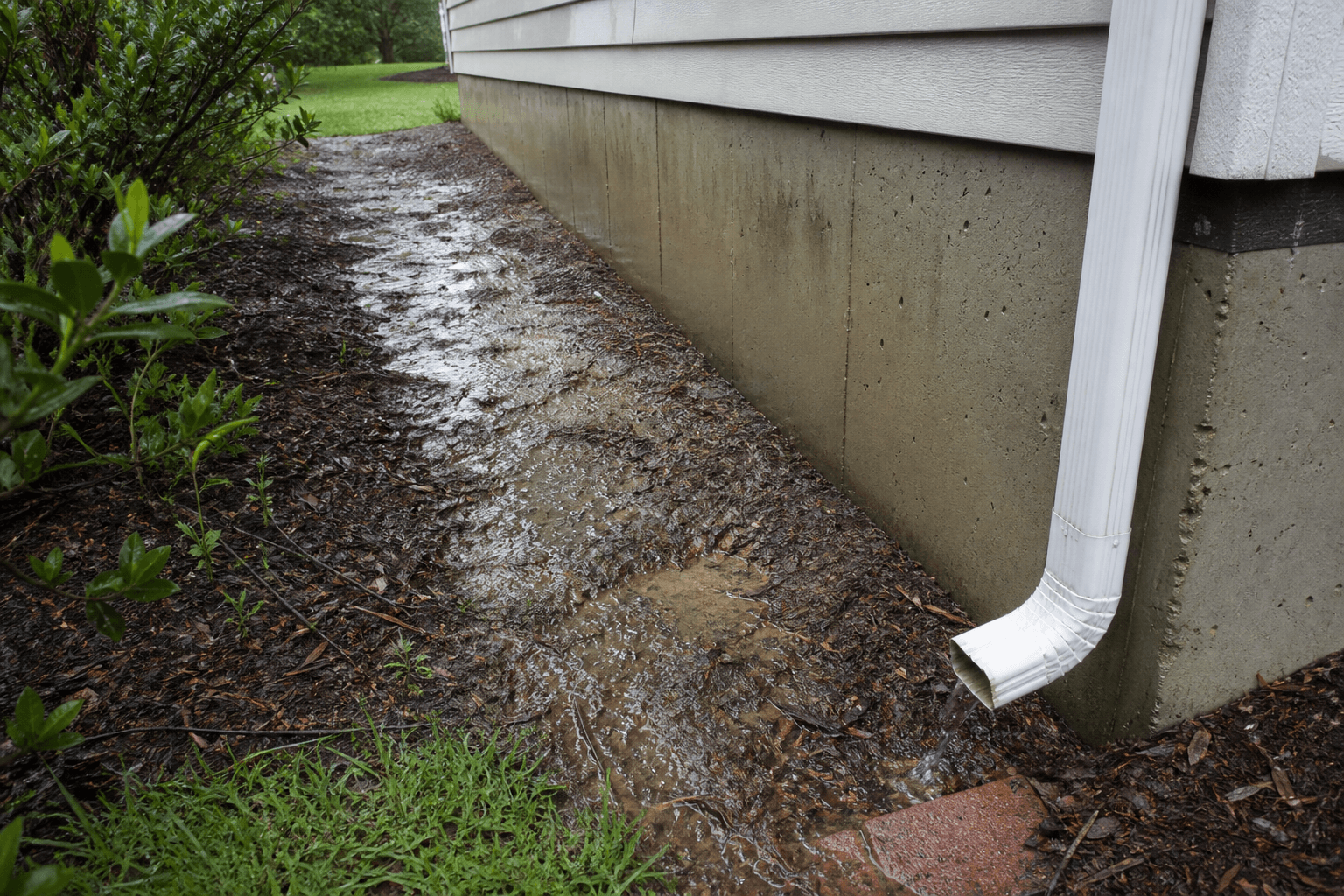
| Hydrostatic water pressure | Saturated soil holds water that presses against the wall | Check gutters, downspouts, grading, and pooling after heavy rain |
| Expansive clay soils | Clay swells when wet and shrinks when dry, pushing on the wall | Common where Piedmont clay meets eastern NC soils near the fall line |
| Poor drainage and heavy rain | Repeated saturation keeps lateral pressure high | Watch storm timing and where water collects near the foundation |
| Frost or temperature cycling | Freeze-thaw and thermal movement add stress over time | Less dominant in eastern NC but still possible |
| Backfill or nearby loads | Heavy equipment, vehicles, or backfill against the wall | Ask about grading changes, driveways, and construction history |
Severity signs
Signs that a horizontal crack needs prompt attention
Inward bowing or bulging
The wall curves or leans inward along the crack line, the clearest sign of active lateral pressure.
Width beyond a hairline
A crack wider than roughly 1/8 to 1/4 inch, or clearly widening over time, is worth a closer look.
Horizontal displacement
One side of the crack is pushed farther in than the other, meaning the wall has shifted, not just cracked.
Water or white deposits
Moisture, staining, or white mineral efflorescence at the crack points to water pressure behind the wall.
Growing or spreading
The crack is lengthening, new cracks are appearing, or stair-step cracks show up nearby.
Multiple signs together
Sticking doors, sloping floors, or exterior cracks appearing at the same time raise the overall concern.
Monitor or call
When to monitor and when to call a professional
Because a horizontal crack can indicate active pressure, it generally deserves attention sooner than a thin vertical crack. A useful approach is to document first, then decide.
Reasonable to monitor
A fine, stable, dry horizontal line with no bowing, no displacement, and no water can be measured and watched. Mark the ends with the date, record the width, and re-check monthly and after heavy storms.
Call sooner
Any bowing, bulging, displacement, widening, water intrusion, or a crack that keeps growing should be reviewed by a qualified professional. Rapid movement or a wall that feels unstable is a reason to act right away.
Inspection
What a foundation inspection may involve
Exterior drainage review
Gutters, downspouts, grading, and where water collects, since the water source often drives the pressure.
Measuring movement
Checking the wall for bow or deflection and measuring how far it has moved, not just how wide the crack is.
Interior and exterior clues
Comparing the wall crack with doors, floors, and exterior cracks to understand the whole picture.
When an engineer helps
A structural engineer can give a neutral opinion and specify repairs, separate from any repair quote.
Repair options
Possible repair categories
Repair depends on how far the wall has moved and what is causing the pressure — so the first step is usually to address the water and drainage source, not just seal the crack. The options below are explained for planning only; a proper recommendation comes from an inspection.
| Approach | Where it may fit | Notes |
|---|---|---|
| Drainage correction | Almost every case, because water pressure is the usual driver | Gutters, downspouts, grading, and sometimes interior or exterior drains |
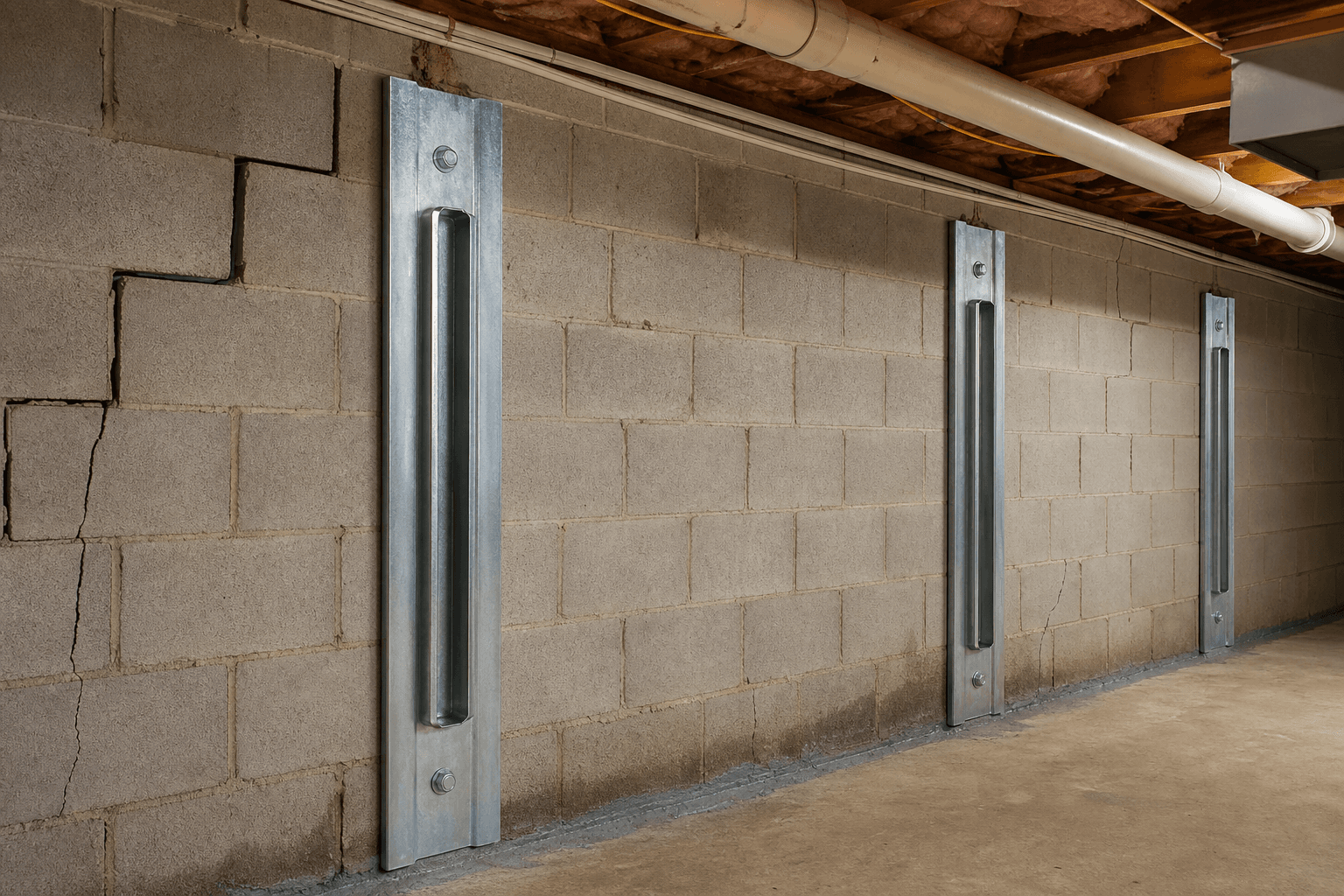
| Carbon-fiber straps | Minor bowing that has stabilized | Holds the wall and helps monitor; not a fix for large movement |
| Wall anchors or braces | Greater movement or ongoing pressure | Steel anchors, braces, or beams to stabilize and sometimes straighten |
| Excavation or rebuild | Severe bowing or displacement | More involved; may follow an engineer's assessment |
| Piers, if settlement is present | When the wall is also dropping, not only leaning | Addresses vertical settlement alongside lateral pressure |
Related guidance
Related pages
Horizontal vs. Vertical Cracks: Which Is Worse?
Read nextBowing or Leaning Foundation Walls
Read nextFoundation Water Intrusion
Read nextFoundation Cracks (overview)
Read nextVertical Foundation Cracks
Read nextHouse Settling Signs
Read nextFoundation Drainage Solutions
Read nextFoundation Settlement Repair
Read nextFoundation Repair Cost
Read nextFAQ
Horizontal foundation crack FAQs
Are horizontal foundation cracks always serious?
Horizontal cracks deserve a closer and sooner look than most vertical cracks because they often point to sideways pressure from soil or water pushing against the wall. That said, not every horizontal line is structural — a fine, stable line at a form joint or parge coat can be cosmetic. Bowing, widening, displacement, or moisture are the signs that raise concern, and only an in-person inspection can judge severity.
What causes a horizontal crack in a foundation or basement wall?
The common thread is lateral (sideways) pressure. Saturated soil creates hydrostatic water pressure, expansive clay swells when wet, poor drainage keeps soil wet after heavy rain, and backfill or heavy loads near the wall add force. Freeze-thaw and temperature cycling can contribute as well. In eastern North Carolina, clay-influenced soils and heavy rain make drainage a frequent factor.
How can I tell if a horizontal crack is getting worse?
Mark each end of the crack with a pencil and the date, measure the width, and take dated photos. Re-check monthly and after heavy storms. Widening, lengthening, new cracks, inward bowing, one side pushed farther than the other, or water and white mineral deposits appearing at the crack all suggest active movement that should be reviewed promptly.
Can a horizontal foundation crack be repaired without rebuilding the wall?
Often, yes, when it is caught early. Depending on how much the wall has moved, options can range from correcting the drainage that caused the pressure, to carbon-fiber straps for minor bowing, to wall anchors or braces for greater movement. Severe bowing or displacement may require excavation or rebuilding. The right path depends on inspection findings, and engineering input is sometimes appropriate.
Do horizontal cracks in drywall mean foundation problems?
Not necessarily. Long horizontal drywall cracks are often related to seams, taping, or humidity movement rather than the foundation. Foundation-related interior cracks more often appear diagonally from the corners of doors and windows. A horizontal crack in the actual foundation or basement wall is the one most associated with lateral pressure.
Should I get a structural engineer for a horizontal foundation crack?
An independent structural engineer can be useful when a wall is bowing, when repair quotes conflict or are expensive, when a home sale is involved, or when you want a neutral opinion separate from a repair company. An engineer diagnoses and specifies; a contractor prices and performs the work.
Sources
How this guide was reviewed
Last reviewed: August 8, 2026. This page is educational and should be paired with an in-person foundation review before repair decisions are made.
Local help
Foundation guidance in eastern North Carolina
If a horizontal crack has you concerned, the fastest next step is to organize what you are seeing and where. Use the foundation problem assessment to sort your symptoms, review local foundation guidance for the Rocky Mount area, or share a foundation concern to be pointed toward an appropriate professional.