What you are seeing
What a vertical foundation crack looks like
A vertical foundation crack runs roughly up and down the wall, often near the middle of a wall or rising from a corner. It is the most common crack in poured-concrete foundations and is usually the result of the concrete shrinking as it cured or the home settling slightly over time. That is very different from a horizontal crack, which runs side to side and points to sideways pressure from soil or water.
Most of the time a vertical crack is cosmetic. The goal of this page is not to alarm you, but to help you spot the few features — width, offset, water, and movement — that turn an ordinary vertical crack into one worth having looked at.
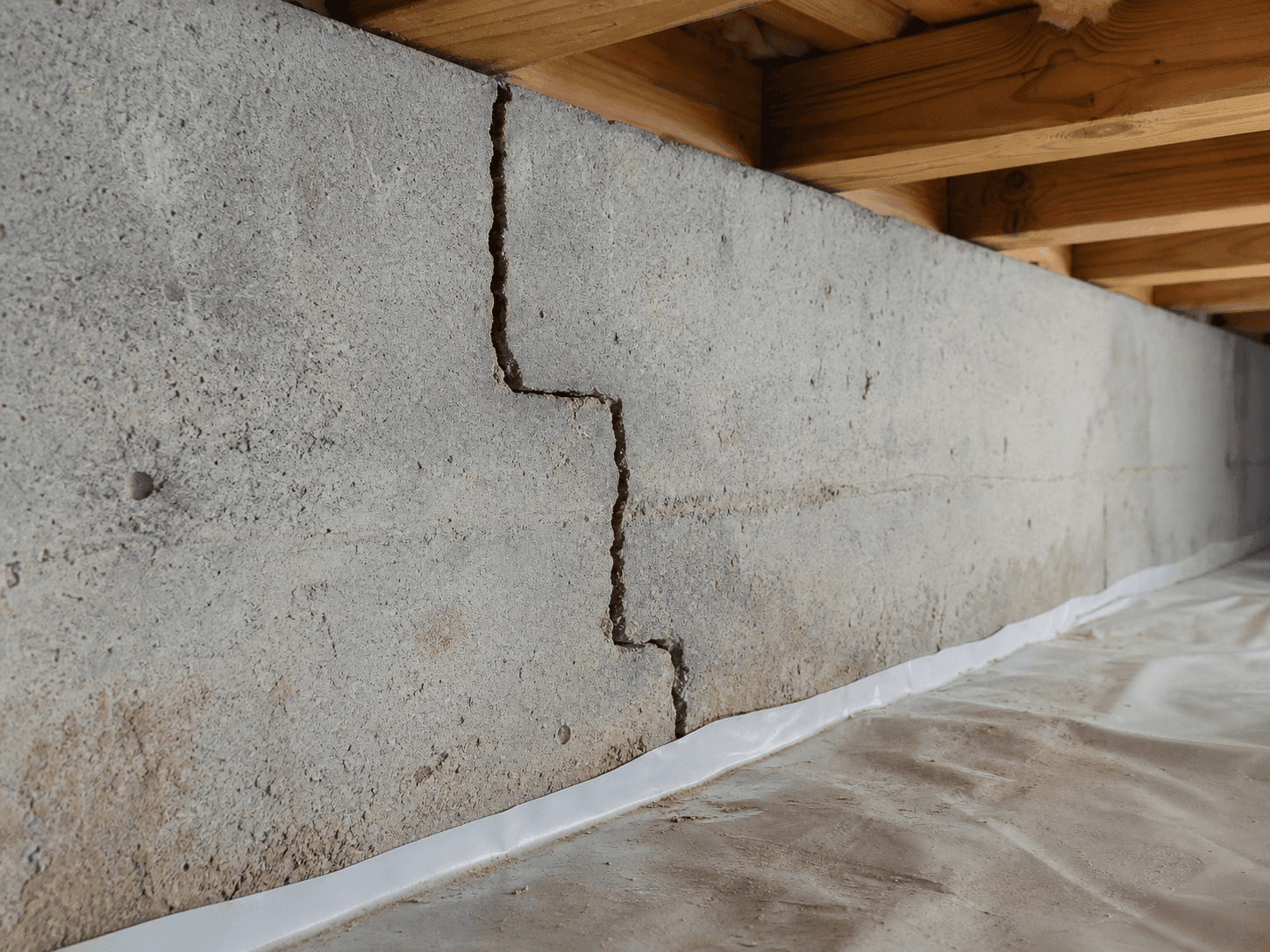
The reassuring part
Why vertical cracks are usually the least serious
As concrete cures it shrinks slightly, and as a new home settles the soil beneath it compacts. Both processes commonly leave thin vertical cracks that never cause a structural problem. A vertical crack narrower than about a quarter inch, with the two sides flush and no water coming through, is generally cosmetic and can simply be monitored.
Because vertical cracks are so common and usually harmless, the practical approach is to measure and watch rather than rush to repair — while staying alert to the specific warning signs below.
When to watch closely
When a vertical crack is worth an inspection
Wider than about 1/4 inch
Especially a crack that is visibly widening rather than holding steady.
One side offset from the other
If one side is higher or pushed out, the wall has shifted, which suggests settlement.
Water coming through
Moisture, staining, or white mineral deposits mean water is finding a path through the crack.
Growing or spreading
The crack is lengthening, or new cracks are appearing nearby.
Appeared suddenly
A new crack that shows up quickly is worth more attention than an old, stable one.
Paired with other signs
Sticking doors, sloping floors, or other cracks appearing at the same time raise the overall concern.
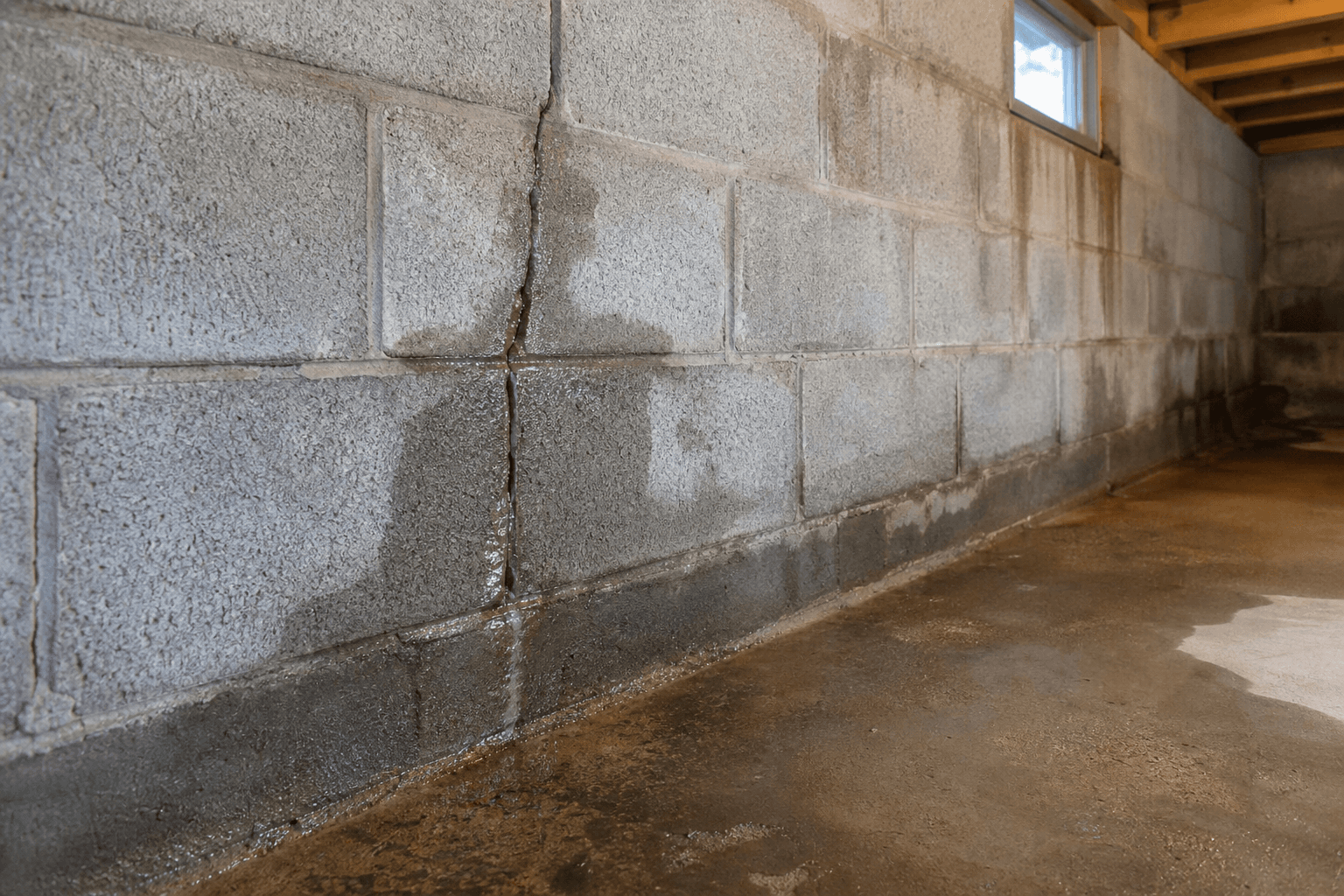
Cosmetic or not
Cosmetic vs. worth an inspection
The same vertical crack can be harmless or worth reviewing depending on its width, whether the sides line up, whether it is wet, and whether it is changing. This is a general guide, not a diagnosis.
| Feature | Usually cosmetic | Worth an inspection |
|---|---|---|
| Width | Hairline up to about 1/4 inch | Wider than 1/4 inch, or clearly widening |
| Displacement | Both sides flush and level | One side higher or pushed out from the other |
| Water | Dry, no staining | Leaking, damp, or showing white mineral deposits |
| Change over time | Stable for months or years | Growing, lengthening, or new cracks appearing |
| Pattern | A single vertical crack | Joined by horizontal, diagonal, or stair-step cracks |
Why it happens
What causes vertical foundation cracks
| Likely cause | What is happening | What to check |
|---|---|---|
| Concrete curing and shrinkage | New concrete shrinks slightly as it cures, leaving thin vertical cracks | Usually cosmetic; confirm it stays stable and dry |
| Normal settling | Soil compacts under the home in the first years | Watch that the crack is not widening or offsetting |
| Expansive clay soils | Clay swells and shrinks with moisture, moving the ground | Common in clay-influenced eastern NC soils near the fall line |
| Water and drainage pressure | Saturated soil can widen a crack and push water through | Check gutters, downspouts, grading, and storm timing |
Repair
How vertical cracks are sealed
Stable vertical cracks are commonly sealed with injection. Epoxy bonds the sides of the crack structurally, while polyurethane stays flexible and is often used to keep water out. If a crack is leaking, correcting the outside drainage and grading that let water reach the wall is usually part of a lasting fix.
The important caveat: sealing closes the crack, but it does not address an underlying cause. If the crack comes from ongoing settlement or water pressure, that source should be corrected too, which is why an inspection matters for anything beyond a thin, stable line. See foundation crack repair and foundation crack repair cost for how repairs and pricing are approached.
Track it
How to monitor a vertical crack
Mark each end of the crack with a pencil and the date, measure the width at its widest point, and take dated photos. Re-check monthly for the first three to six months and after heavy storms, noting any change in width, length, or moisture. A crack that stays the same is reassuring; one that is measurably moving is the signal to have it reviewed.
Related guidance
Related pages
Horizontal vs. Vertical Cracks: Which Is Worse?
Read nextHorizontal Foundation Cracks
Read nextFoundation Cracks (overview)
Read nextHouse Settling Signs
Read nextFoundation Water Intrusion
Read nextFoundation Crack Repair
Read nextFoundation Crack Repair Cost
Read nextFoundation Repair Cost
Read nextFAQ
Vertical foundation crack FAQs
Are vertical foundation cracks serious?
Vertical cracks are the most common and usually the least serious type of foundation crack. Most vertical cracks narrower than about a quarter inch, with the two sides flush and no water coming through, are cosmetic and tied to normal concrete curing or minor settling. They become worth a closer look if they widen, leak, or show one side offset from the other.
What causes a vertical foundation crack?
The most common cause is concrete shrinkage as the foundation cures, followed by normal settling as the soil compacts under the home. Some vertical cracks reflect soil movement, expansive clay, or water pressure, which can widen a crack over time. In eastern North Carolina, clay-influenced soils and heavy rain are the factors most likely to turn a stable crack into a changing one.
When should I worry about a vertical crack?
Watch for a crack wider than about a quarter inch, one side higher or pushed out from the other, water or dampness coming through, a crack that keeps widening or lengthening, or new cracks appearing suddenly. Any of those, especially combined with sticking doors or sloping floors, is a reason to have it inspected.
Can a vertical crack be repaired with epoxy?
Yes. Epoxy or polyurethane injection is a standard repair for stable vertical cracks. Epoxy bonds the sides structurally, while polyurethane stays flexible and is often used to seal out water. Sealing addresses the crack itself, but if the crack is caused by ongoing movement or drainage, that underlying source should be corrected too.
Are vertical foundation cracks bad?
Usually not. Vertical cracks are the most common type and most are shrinkage as concrete cures, or minor settling in the first years after construction. A thin, stable, dry vertical crack is generally considered cosmetic. What changes that judgement is width beyond roughly a quarter inch, edges offset so one side sits proud of the other, water or damp staining coming through, or measurable widening over time. Any of those is worth an in-person look. For a side-by-side of how vertical compares with other crack directions, see our horizontal vs. vertical foundation cracks comparison.
What does it mean if a vertical crack is wider at the top than the bottom?
A vertical crack that tapers — noticeably wider at one end than the other — suggests the wall is not simply shrinking, because shrinkage cracks tend to stay a fairly even width. Wider at the top often points to one part of the footing dropping relative to the rest; wider at the bottom can suggest movement lower in the wall or heave elsewhere. Neither pattern is a diagnosis on its own. Measure the crack at both ends, write down the date, and re-measure in a few weeks: a taper that is changing matters much more than a taper that has been stable for years.
Should I seal a vertical crack myself?
Small, stable, dry hairline cracks are sometimes sealed with DIY kits, but a homeowner cannot easily tell whether a crack is purely cosmetic or an early sign of movement. Before sealing, it is worth measuring and monitoring the crack, and getting a professional opinion if it is wide, wet, offset, or changing.
Sources
How this guide was reviewed
Last reviewed: August 8, 2026. This page is educational and should be paired with an in-person foundation review before repair decisions are made.
Local help
Foundation guidance in eastern North Carolina
If a vertical crack has you unsure whether to seal it or watch it, start by organizing what you are seeing. Use the foundation problem assessment to sort your symptoms, review local foundation guidance for the Rocky Mount area, or share a foundation concern to be pointed toward an appropriate professional.