The short answer
Which one is more serious?
Horizontal foundation cracks are the more serious pattern — they usually mean soil or water is pushing the wall sideways and it may be bowing. Vertical cracks are the most common and usually least serious, typically concrete shrinkage or minor settling. Any crack wider than about a quarter inch, growing, or leaking deserves a professional look.
That is the headline, but direction is only the first clue. The width of the crack, whether the two sides line up, whether water is coming through, and whether it is changing over time all shape how much a crack matters. The rest of this page gives you a side-by-side comparison, a diagram, and a simple way to work out which crack you are looking at and what to do next.
At a glance
Horizontal vs. vertical, side by side
The two patterns differ in more than direction — they usually come from different forces and call for different responses. This table is a starting point, not a diagnosis of your specific wall.
| Horizontal crack | Vertical crack | |
|---|---|---|
| Direction | Runs side to side, across the wall | Runs up and down the wall |
| Usual cause | Soil or water pressure pushing the wall inward | Concrete shrinkage or normal settling |
| Typical width that raises concern | Any distinct horizontal crack deserves review | Wider than about 1/4 inch, or clearly widening |
| What it usually means | The wall may be bending or bowing under pressure | Cosmetic movement, not usually structural |
| Urgency | Higher — have it inspected promptly | Lower — monitor; inspect if it changes |
| Likely repair direction | Address the pressure: drainage, wall bracing or anchors, plus sealing | Seal with epoxy or polyurethane once it is stable |
What the direction tells you
What each crack direction is telling you
A crack tends to open along the line of least resistance for whatever force is acting on the wall. That is why the direction is such a useful first clue to the cause.
Work it out
Which one do you have?
You do not need to diagnose the cause yourself — that is a professional's job — but these steps help you describe the crack accurately and gauge how quickly to act.
Note the direction
Measure the width
Check for movement and water
Track whether it is changing
Put simply: a horizontal crack, a crack wider than about a quarter inch, an offset crack, a wet crack, or one that is actively growing is worth a prompt professional review — especially if it comes with sticking doors or sloping floors. A single thin, dry, stable vertical crack can usually be monitored.
The serious one
Horizontal cracks, in brief
A horizontal crack runs across the wall and points to sideways pressure — expansive clay soil swelling with moisture, water-saturated soil pressing against the wall, or hydrostatic pressure building up behind it. That pressure can make the wall bend or bow inward, which is why a horizontal crack of almost any width is treated with more urgency than a vertical one.
Repairs address the pressure, not just the crack — improving drainage and grading, and in some cases bracing or anchoring the wall — before sealing. For the full picture, see the horizontal foundation cracks guide.
The common one
Vertical cracks, in brief
A vertical crack runs up and down and is the most common crack in poured-concrete foundations. Most come from the concrete shrinking as it cured or the home settling slightly, and stay cosmetic. They are worth a closer look when they are wider than about a quarter inch, offset, wet, or changing.
Stable vertical cracks are typically sealed with epoxy or polyurethane injection. The vertical foundation cracks guide covers the warning signs and repair options in detail.
The third pattern
Diagonal and stair-step cracks
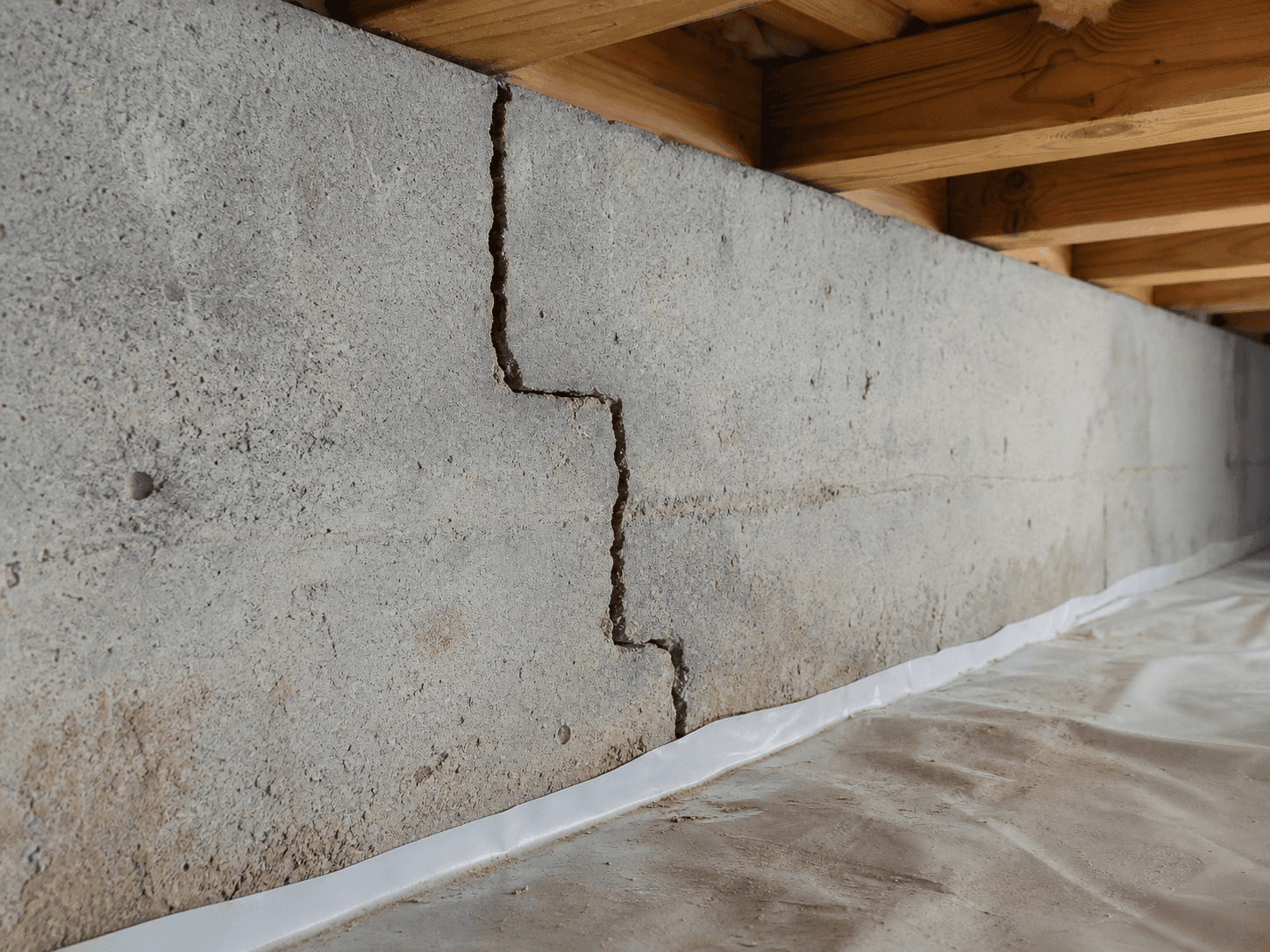
Not every crack is cleanly horizontal or vertical. A diagonal crack in a poured wall, or a stair-step crack that climbs along the mortar joints in block or brick, usually points to differential settlement — one part of the foundation settling more than the rest. These sit between vertical and horizontal cracks in seriousness and are worth monitoring, and inspecting if they are wide, offset, or growing. The stair-step cracks in brick guide goes deeper.
Track it or price it
Your next step
Measure and monitor it
Whether the crack is changing matters more than a single measurement. The crack monitoring log tracks width over time and flags a concerning rate of movement.
See a planning range
Once you know the crack type, the crack repair cost calculator and the crack repair cost guide give planning ranges — not quotes.
Keep reading
Related foundation crack guides
FAQ
Horizontal vs. vertical crack FAQs
Which is worse, a horizontal or vertical foundation crack?
A horizontal crack is generally the more serious of the two. It usually means soil or water is pushing sideways against the wall and the wall may be bending or bowing inward. A vertical crack is the most common type and is usually cosmetic — concrete shrinkage or minor settling. Width, water, and whether the crack is changing matter more than direction alone, but as a starting point, horizontal is the pattern to treat with more urgency.
Are vertical foundation cracks ever serious?
Sometimes. Most vertical cracks under about a quarter inch, with both sides flush and no water coming through, are cosmetic. A vertical crack becomes worth a closer look when it is wider than a quarter inch, one side is higher or pushed out from the other, it is leaking, or it keeps widening or lengthening — especially alongside sticking doors or sloping floors.
How wide does a foundation crack have to be to worry?
A common rule of thumb is that cracks wider than about a quarter inch deserve a professional look, and hairline cracks under an eighth of an inch are usually cosmetic. Width is only part of the picture, though — a thin horizontal crack, a crack that leaks, or a crack that is actively growing can matter more than a wider crack that has been stable and dry for years.
What does a diagonal or stair-step crack mean?
Diagonal cracks in poured walls, and stair-step cracks that follow the mortar joints in block or brick, usually point to differential settlement — one part of the foundation settling more than the rest. They fall between vertical and horizontal cracks in seriousness and are worth monitoring and having inspected if they are wide, offset, or changing.
Should I measure the crack before calling anyone?
Yes. Noting the crack's direction, its width at the widest point, whether the two sides line up, whether it is wet, and the date gives a professional far more to work with — and lets you see whether it is changing. A simple monitoring log makes this easy, and it is the single most useful thing a homeowner can do before an inspection.
Sources
How this guide was reviewed
Last reviewed: August 22, 2026. This page is educational and should be paired with an in-person foundation review before repair decisions are made.
This guide is educational and cannot diagnose your home. A crack that is horizontal, wide, wet, offset, or changing should be reviewed in person by a qualified foundation professional. When you are ready, a written assessment and repair plan is what turns a crack from a worry into a decision.