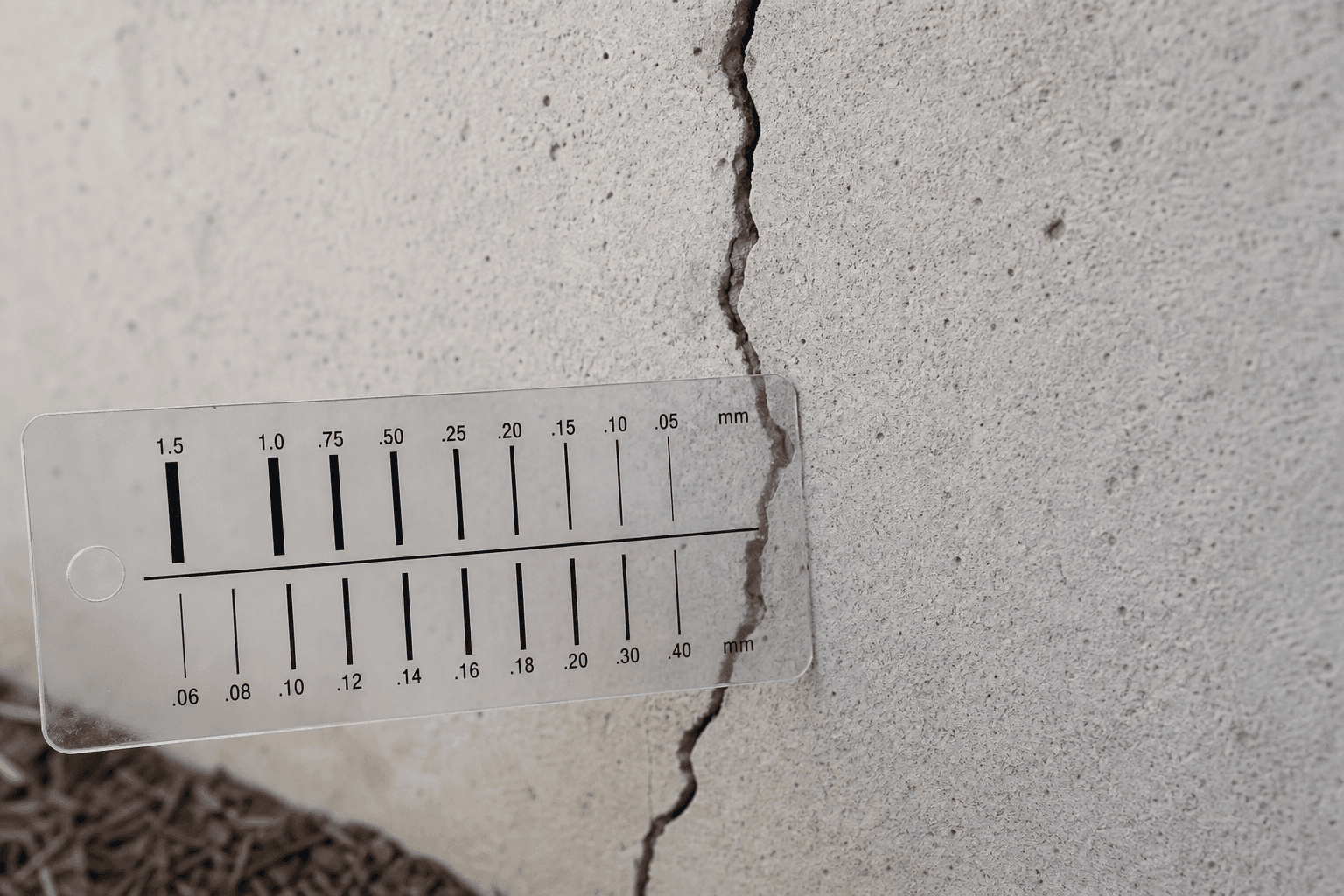
2026 planning tool
Foundation Crack Repair Cost Calculator
Estimate foundation crack repair cost by crack count, repair method, pattern, water, wall material, access, drainage, and documentation needs.
Quick answer
Price the crack by cause and condition
- Compare hairline sealing, polyurethane, epoxy, exterior repair, masonry repair, and reinforcement.
- Adjust for wet or dry cracks, wall material, access, and crack pattern.
- Add drainage or engineer allowances when the scope needs them.
- Use the output to ask better quote questions.
This educational tool does not diagnose structural movement or choose a repair material.
Start here
Estimate the crack repair scope before comparing quotes
Foundation crack repair costs can change quickly because a dry poured-concrete crack, a leaking crack, a stair-step masonry crack, and a horizontal wall crack are different repair problems. The cheapest material is not always the right repair.
This calculator uses the same 2026 planning ranges as the foundation crack repair cost guide. It separates crack count, method, pattern, water, wall material, access, drainage, and documentation so the estimate is useful for comparing contractor scopes.
Inputs
What the calculator considers
Repair method
Surface sealing, polyurethane, epoxy, exterior excavation, masonry repair, and reinforcement sit in different price categories.
Crack pattern
Vertical, diagonal, stair-step, horizontal, widening, or offset cracks carry different levels of concern.
Water and wall material
Wet poured-concrete cracks price differently from block, brick, mortar, or dry cracks.
Access and add-ons
Finished walls, tight crawl spaces, exterior obstructions, drainage, and engineering can all change the quote.
Interactive estimator
Estimate foundation crack repair cost
Choose the closest crack repair scope, then adjust for count, pattern, water, access, material, drainage, and documentation.
1. Repair method or likely scope
2. Number of cracks
Use a simple count for visible cracks in the same repair scope. Separate unrelated wall areas may price differently.
3. Crack pattern
4. Water at the crack
5. Access
6. Wall material
7. Add-ons
Assumptions used
- The estimate uses the 2026 ranges from the foundation crack repair cost guide.
- The calculator separates crack sealing, injection, masonry repair, exterior excavation, reinforcement, drainage, and documentation allowances.
- The result is a planning range, not a structural diagnosis, engineering opinion, waterproofing guarantee, or contractor quote.
Quote checks
- Horizontal, widening, stair-step, offset, or repeatedly leaking cracks should be reviewed carefully before choosing repair material.
- A quote should explain crack type, wall material, wet or dry conditions, movement concerns, repair material, drainage assumptions, warranty, and exclusions.
Methodology
How the estimate is calculated
The calculator starts with method ranges from the foundation crack repair cost guide: hairline sealing, polyurethane injection, epoxy injection, exterior excavation, masonry repair, and structural reinforcement. It multiplies the selected method by crack count and adjusts for pattern, water, access, and wall material.
Separate allowances can be added for drainage or engineering. The output is a range because crack repair depends on cause, movement, water source, access, and what the contractor includes in the written scope.
Planning ranges
Foundation crack repair cost by method
The calculator's own arithmetic, published for every repair method at one shared set of assumptions. Most methods carry a job minimum, which is why the price for three cracks is rarely three times the price for one — worth knowing before you read a quote that bundles several cracks together.
| Repair method | Typical price per crack | 1 crack | 3 cracks |
|---|---|---|---|
| Hairline surface sealing | $150–$500 | $150–$525 | $475–$1,700 |
| Polyurethane foam injection | $400–$1,000 | $425–$1,100 | $1,300–$3,300 |
| Epoxy injection | $350–$1,500 | $375–$1,700 | $1,100–$4,900 |
| Exterior crack excavation | $2,000–$7,000 | $2,100–$7,600 | $6,300–$23,000 |
| Masonry crack repair | $500–$3,000 | $525–$3,300 | $1,600–$9,900 |
| Structural reinforcement | $3,000–$15,000 | $3,100–$16,400 | $9,500–$49,200 |
Computed for a plain vertical crack in a damp, poured-concrete wall with open access, and no drainage or engineering allowance — the calculator's own starting selections. Horizontal, widening, and stair-step patterns, an actively leaking wall, block and brick, and finished or crawl-space access all raise the range; change them in the calculator above. Planning ranges, not quotes.
FAQ
Foundation crack repair calculator FAQs
How accurate is this foundation crack repair cost calculator?
It gives a planning range based on crack count, repair method, crack pattern, wet or dry conditions, wall material, access, drainage, and documentation allowances. It is not a quote, diagnosis, or engineering opinion.
How much does foundation crack injection cost?
For 2026 planning, polyurethane injection commonly falls around $400 to $1,000 per crack, while epoxy injection often falls around $350 to $1,500 per crack before access, water, or structural concerns are added.
Why does a leaking crack cost more?
A leaking crack may need flexible polyurethane injection and a review of outside water sources. If drainage or wall-side water pressure is ignored, the same area may leak again later.
When is a crack more than a simple seal?
Horizontal, stair-step, widening, offset, recurring, or repeatedly leaking cracks may need movement review, drainage correction, wall reinforcement, or engineering input instead of only sealant.
Can this calculator choose epoxy or polyurethane for me?
No. It helps compare cost categories after you choose a likely scope. The right material depends on crack condition, water, movement, wall material, and in-person review.
Related guidance