NC Foundation Guide
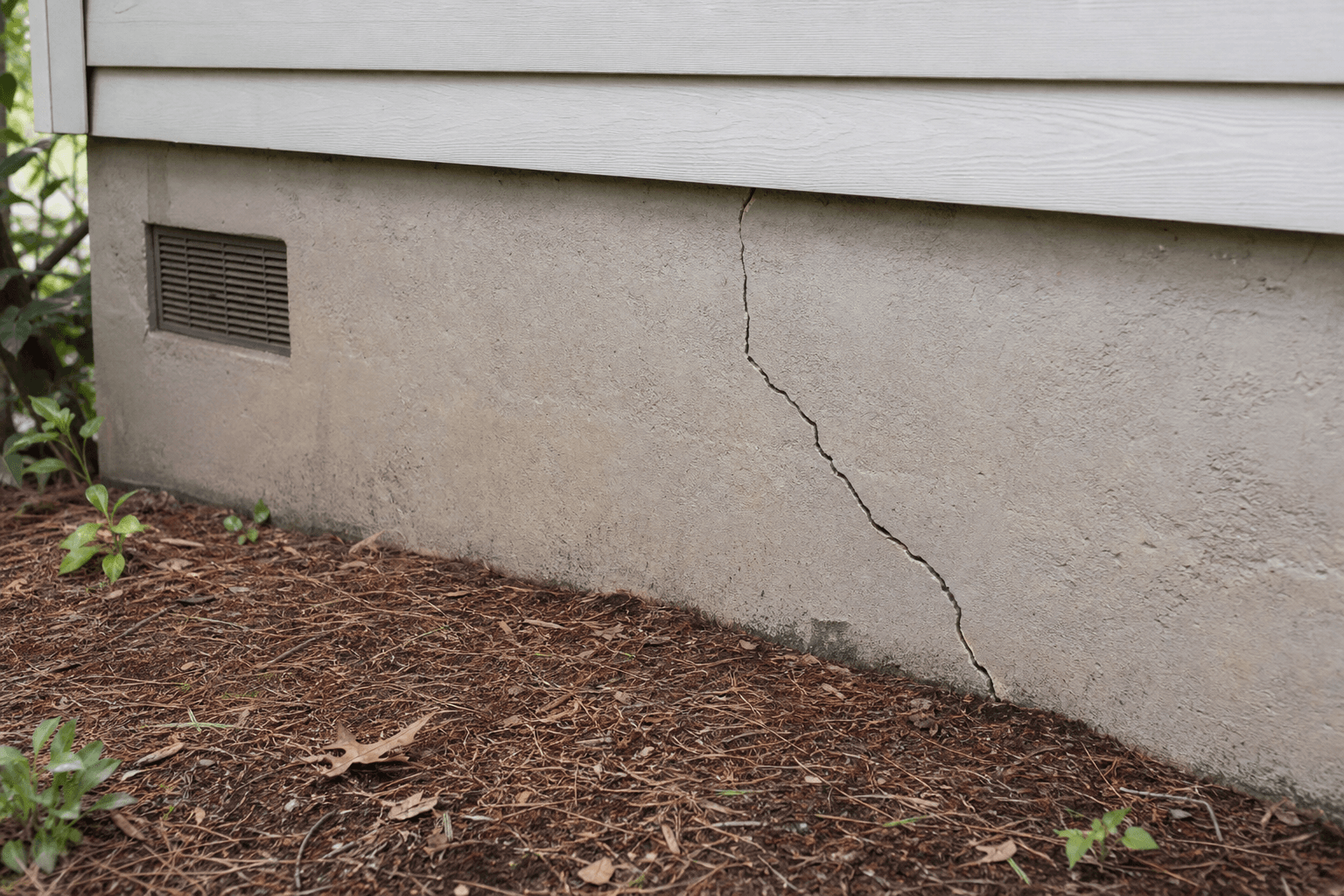
Foundation crack being measured on a North Carolina home

Monitor over time

Foundation Crack Monitoring Log

Track a foundation crack's width over time and see whether it's stable or getting worse. The rate of movement is what matters, and it's the one thing crack-gauge sellers and 'when to worry' articles never compute for you.

What it does

A private crack log with a rate-of-movement read

  • Log dated width readings for one or more cracks.
  • See the trend, the change, and the rate per month.
  • Get a cautious read combining rate, width, and crack type.
  • Saved on your device only — no account, nothing uploaded.

This tool organizes your readings. It does not diagnose structural safety or replace an inspection.

Why monitor

The rate of change tells you more than the width

A single measurement can't tell you whether a crack is a settled, cosmetic line or the early sign of ongoing movement. What separates the two is how the width changes over weeks and months. A crack that holds steady across several readings is usually far less urgent than one that widens a little each time — even if the second one looks smaller today.

That's the whole point of a log. Record the same spot on a schedule, and the pattern becomes obvious: flat means stable, a rising line means it's moving. This tool does that math for you and reads it against the width and the crack type, without ever claiming your foundation is safe, failing, or repaired — those are decisions for an in-person review.
How to measure it

Measure the same spot, the same way, every time

Mark a witness point

Draw a short pencil line across the crack, or fit a crack gauge, so you measure the exact same spot every time. Movement is only meaningful if the reference point doesn't move.

Use a consistent tool

A crack gauge, calipers, or a ruler all work — just don't switch between them. Record the width in the same unit (mm or inches) each reading.

Add the date and a photo

Log the date with each width, and take a photo with the date visible. The photo backs up the numbers and helps a professional later.

Keep a schedule

Every three to six months is a good baseline, plus a reading after heavy rain or drought, or when new symptoms show up.

Know the type

Crack type changes how much the width matters

Foundation crack types and how to measure themFour foundation crack patterns compared: a vertical crack (usually least urgent), a diagonal crack (can follow settlement), a horizontal crack (most serious — soil pressure), and a stair-step crack in block or brick (serious — movement). An inset shows a witness mark — a dated pencil line across the crack — with a ruler measuring the gap at the same point each time.Verticalusually mildDiagonalsettlementHorizontalmost seriousStair-stepseriousMeasure the same spot each timewitness markmeasure width here
The type frames the risk; a fixed witness mark makes each reading comparable.

Thin vertical cracks are the most common and usually the least urgent. Diagonal cracks can follow settlement. Horizontal and stair-stepcracks are the ones to take seriously — they can signal soil pressure or wall movement, and they warrant a professional look regardless of how slowly they're changing. Set the type in the log and the read adjusts accordingly.

Loading your log…

Thresholds

Foundation crack width chart

The width thresholds the log reads your measurements against, published so you can check a crack against them before you start a log. Width alone never settles it — a hairline crack that appeared last month matters more than a wider one that hasn't moved in a decade — but it is where most people start.

Crack widthOn a gaugeWhat it usually means
Under 1/8"Under 3 mmThin. Common in poured walls as shrinkage. Log it, and re-measure the same spot every few months.
1/8" to 1/4"3–6 mmWorth watching closely. Measure monthly rather than seasonally, and note whether water comes through.
Over 1/4"Over 6 mmPast the width where a professional look is usually advised, even if the readings are holding steady.

Thresholds

How fast is too fast for a crack to widen?

Rate is the number every page on this topic says matters and almost none compute. Log two dated readings above and the tool works it out; these are the bands it sorts the result into.

Rate of wideningWhat it usually means
Under 0.3 mm per monthHolding steady between readings. Keep logging every few months, and after heavy rain or drought.
0.3–1 mm per monthSlowly widening. Shorten the interval to monthly and watch whether the pace holds or picks up.
1 mm per month or moreActively widening. Worth a foundation contractor or structural engineer looking at it, rather than watching alone.

Horizontal and stair-step cracks warrant a professional look regardless of how slowly they are changing, and so does any crack already past 1/4 inch. Nothing here is a diagnosis — it organises what your readings show.

FAQ

Foundation crack monitoring FAQs

How do I monitor a foundation crack?

Mark a fixed spot across the crack (a pencil line on each side, or a crack gauge), measure the width at that same spot, and log the date and width here every three to six months. The log tracks the readings and shows the rate of change, which matters more than any single measurement.

Is my foundation crack getting worse?

The signal is the rate of change between readings, not the width alone. If the width holds steady over several readings, the crack is stable; if it climbs month over month, it's actively moving. This tool computes that rate and flags widening for you.

How wide does a foundation crack have to be to worry?

As a rough guide, a crack over about 1/8 inch is worth watching closely, and one over 1/4 inch usually warrants a professional look. Width isn't the only factor, though — crack type and whether it's moving matter just as much.

Are horizontal or stair-step cracks more serious than vertical ones?

Generally yes. Horizontal and stair-step cracks can point to soil pressure or movement in the wall and are worth a professional review regardless of how fast they're changing, especially alongside bowing, leaning, or water. Most thin vertical cracks are less urgent, but still worth logging.

How often should I measure?

Every three to six months is a reasonable baseline, plus an extra reading after heavy rain or drought, or whenever new symptoms appear — sticking doors, gaps at trim, or uneven floors. Measure more often if the log shows the crack slowly widening.

What should I measure the crack with?

A crack gauge is ideal, but calipers or even a ruler at a marked point work as long as you're consistent — same spot, same tool, each time. Photograph the crack with the date visible, so you have a visual record alongside the numbers.

When should I call a contractor or a structural engineer?

Reach out when a crack is widening, horizontal, stair-stepped, leaking, or displaced, or when several symptoms appear together. A foundation contractor can explain options; a structural engineer is useful for an independent opinion on expensive or conflicting recommendations. This tool organizes your observations — it does not diagnose your foundation.

Related

Understand the crack you're tracking

Not sure your numbers are right?

A person reads every one of these and writes back — usually within a couple of days. Your email doesn't go to anyone else.

We can't tell you whether a house is structurally safe from a description — nobody can. If something is moving fast, or a wall or floor feels unsafe right now, that's a licensed structural engineer today, not an email.