Start here
What does a bowing foundation wall mean?
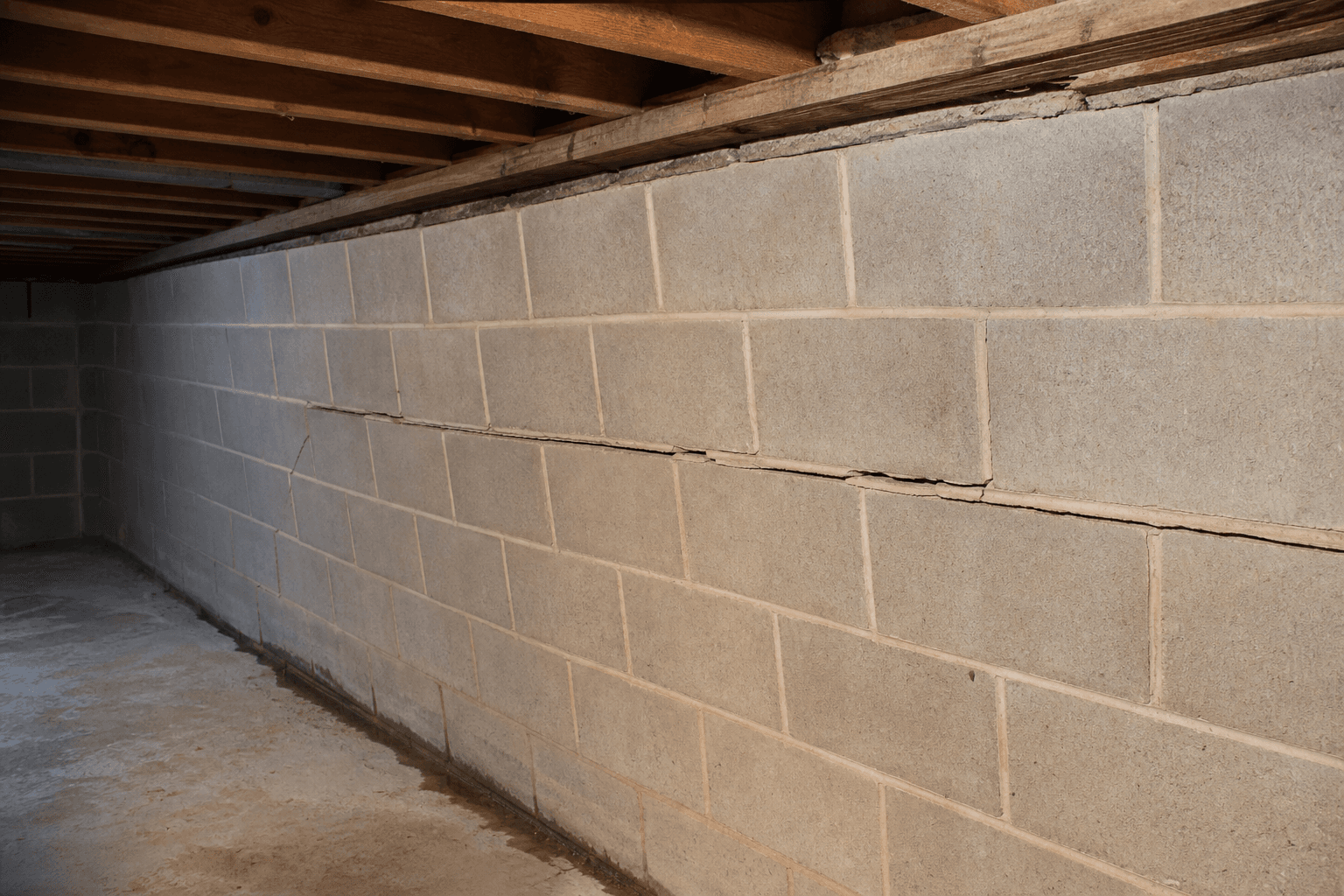
A bowing foundation wall is a wall that has started to bend, lean, or push inward. Homeowners often first notice a horizontal crack, a stair-step crack near a corner, a wall that looks curved, or block faces that no longer line up. Unlike a small hairline surface crack, a bowed wall can indicate pressure acting on the foundation from outside.
The most common concern is lateral pressure from soil and water. When soil beside the house becomes saturated after heavy rain, it can press against basement, crawl-space, or block foundation walls. If the wall is weak, older, poorly drained, or already cracked, that pressure can show up as inward movement.
This is not a symptom to cover with paint, paneling, foam board, or storage shelves. The shape of the wall, crack pattern, and amount of movement are evidence. If the wall is visibly leaning, cracked open, displaced, or leaking, it should be reviewed before cosmetic repairs.
Visual clues
How bowing wall symptoms usually appear
Horizontal crack through block or concrete
Often associated with lateral pressure against the wall, especially when the crack runs along a mortar joint or mid-wall area.
Measure and photograph it. If the crack is open, offset, or growing, request evaluation.
Wall bows inward
The wall may be bending under soil or water pressure from the outside.
Do not cover it with finishes. The wall shape and amount of movement matter.
Top of wall leans inward
The wall may be rotating at the base or moving where it meets the floor framing.
Treat this as more serious than a surface crack and get a structural review.
Stair-step cracking near corners
Block walls may show stepped cracks when pressure, settlement, or corner movement is active.
Check whether cracks connect to water entry, wall bowing, or exterior drainage problems.
Water enters along the bowed wall
Moisture and pressure may be working together rather than existing as separate problems.
Drainage and wall stability should be considered together.
One crack can be easy to dismiss. A horizontal crack with inward wall movement, damp staining, or exterior water problems is more meaningful because the symptoms may be connected.
Causes
Why foundation walls bow or lean inward
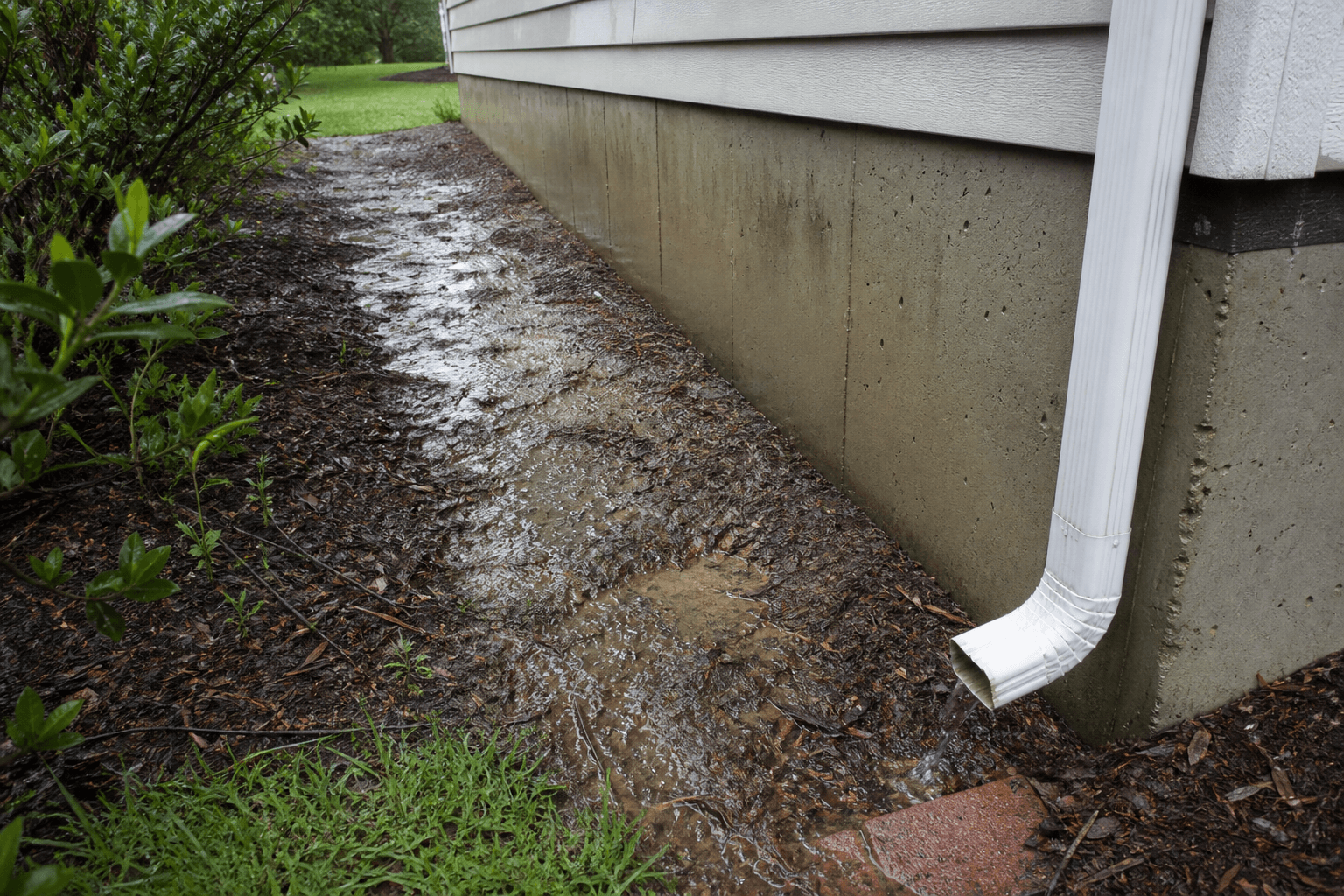
Saturated soil can push against foundation walls after heavy rain, especially when gutters, grading, or downspouts keep water near the home.
Clay-rich soils can expand as they absorb moisture and shrink during dry periods, creating repeated pressure cycles where those soils are present.
Poor exterior drainage can create hydrostatic pressure, which is the pressure of water held in the soil against the wall.
Tree roots, heavy soil, driveways, patios, or backfilled areas may add load near a wall, depending on the site.
Older block walls, previous patching, weak mortar, or inadequate reinforcement can make a wall more vulnerable to movement.
Waterproof coatings may hide staining but will not hold back an actively moving structural wall.
In Rocky Mount and nearby eastern North Carolina communities, long rainy periods and poor roof-water control can keep soil wet along foundation walls. Where shrink-swell soils are present, moisture changes can also add movement stress. The practical takeaway is simple: a wall problem and a drainage problem may be two sides of the same condition.
Urgency
When to monitor, schedule, or move faster
Document and watch
Hairline crack, no bowing, no water, no change, and no related symptoms.
Photograph and re-check after storms and seasonal moisture changes.
Schedule review
Horizontal crack, small inward bow, recurring water, stair-step cracking, or uncertainty about change.
Request a foundation or structural evaluation before cosmetic repair.
Move faster
Wall is visibly leaning, crack is wide or offset, blocks are displaced, or movement appears to be increasing.
Keep heavy storage away from the wall and get professional review promptly.
If a wall is visibly leaning or blocks appear displaced, keep heavy storage away from the wall and avoid finishing the space until the wall is evaluated. A finished wall can hide movement, water, and cracks that an inspector needs to see.
Repair paths
Possible repair paths after inspection
The right repair depends on how far the wall has moved, whether water pressure is active, whether the wall is block or poured concrete, and whether the framing can support a stabilization method. The goal is not just to close a crack; it is to reduce risk of continued movement.
Drainage correction
Downspout extensions, grading changes, gutter correction, exterior drainage, or water management may reduce pressure against the wall. Drainage is often part of the discussion even when structural reinforcement is also needed.
Wall anchors
Wall anchors can be used in some situations to stabilize or gradually improve a bowing wall. Suitability depends on access, soil, wall condition, and engineering requirements.
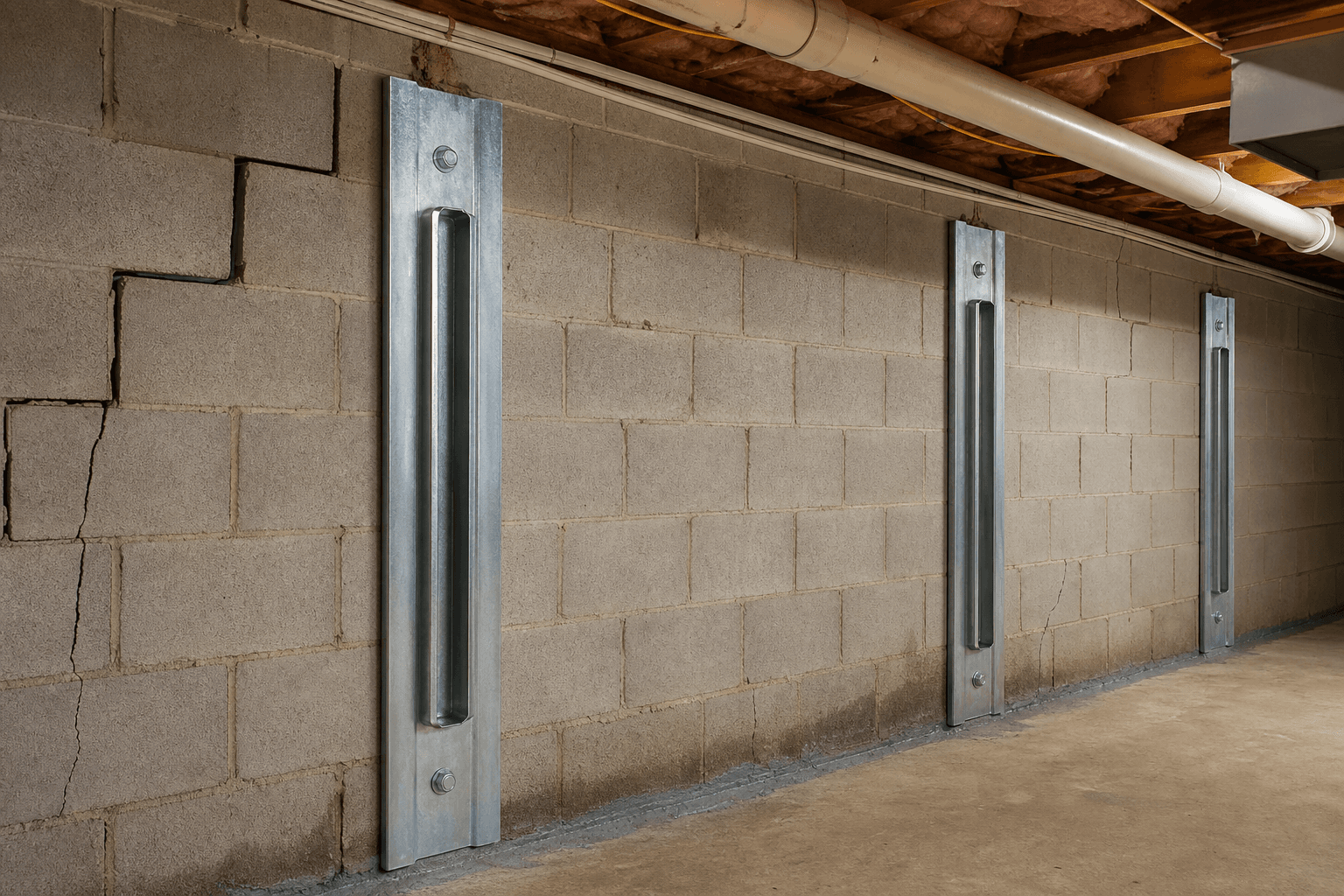
Steel braces
Interior steel braces may be used to resist further inward movement when the wall and framing can support that approach. They are not a substitute for addressing water pressure.
Carbon fiber reinforcement
Carbon fiber may be appropriate for some walls with limited movement, but it is not right for every bowing or displaced wall. The amount and type of movement matter.
Wall rebuild or engineering design
Severe movement, failing block, or safety concerns may require more extensive structural work and engineer involvement.
Avoid
What not to do with a bowing wall
The biggest mistake is treating a bowing wall like a cosmetic surface. Paint, paneling, foam board, storage shelving, or a thin patch can make the space look cleaner while the wall continues to move behind the finish. If the wall is already leaning or cracked horizontally, the visible condition should stay accessible until it is reviewed.
Avoid loading the affected wall area with heavy stored items, especially where block faces are offset or cracked. Do not chip, grind, or widen cracks just to make them easier to fill. Do not assume a waterproof coating will solve the pressure problem. Coatings can sometimes reduce dampness, but they are not structural reinforcement and they do not remove saturated soil pressing from outside.
Also be careful with quick comparisons. A neighbor may have used carbon fiber straps, another home may have wall anchors, and another may have only corrected drainage. Those are not interchangeable decisions. The right answer depends on the wall material, amount of movement, exterior access, water load, soil conditions, and whether engineering input is needed.
Inspection
What a good wall review should look at
A useful review should connect the inside wall symptoms with the outside pressure sources. Inside, the reviewer should look at crack direction, width, length, offset, wall plumbness, water staining, floor-wall joints, corners, and whether movement appears active. Outside, the review should include grading, downspout discharge, gutter performance, paved surfaces, landscaping, and where water sits after rain.
For a block wall, the pattern of mortar-joint cracking and whether individual blocks have shifted can matter. For a poured wall, crack width, leakage, and wall deflection matter. In both cases, the goal is to understand whether the wall is stable, moving slowly, or at risk of continued movement if pressure is not reduced.
If the wall has significant lean, wide or offset cracks, or recommendations vary widely, a structural engineer may be worth involving. An engineer can help separate repair sales language from structural requirements and may be especially useful before buying, selling, or finishing the space.
FAQ
Common questions about bowing foundation walls
Is a bowing foundation wall serious?
Yes, it can be serious. A wall that bows or leans inward may be responding to soil or water pressure from outside the foundation. The urgency depends on the amount of movement, crack width, displacement, water entry, and whether the condition is changing.
What causes foundation walls to bow?
Common causes include saturated soil, poor drainage, hydrostatic pressure, expansive soil, heavy loads near the wall, weak masonry, and repeated wet-dry cycles. Often, water management and structural stability need to be reviewed together.
Can I patch a horizontal crack in a bowing wall?
Patching may hide the crack, but it will not stabilize an actively moving wall. Horizontal cracks and inward bowing should be evaluated before cosmetic sealing or waterproof coating.
Are wall anchors or braces always needed?
No. Repair depends on wall movement, soil pressure, water conditions, access, and structural review. Some situations may focus first on drainage; others may require stabilization.
Should I call an engineer for a leaning foundation wall?
An engineer can be useful when the wall is visibly leaning, cracks are wide or offset, movement is worsening, or repair recommendations need independent review.
Related guidance
Pages that help complete the picture
Sources
How this guide was reviewed
Last reviewed: July 31, 2026. This page is educational and does not diagnose structural or waterproofing conditions remotely. Foundation wall movement and active water intrusion should be reviewed in person.