Local overview
Foundation repair guidance for Nashville homeowners
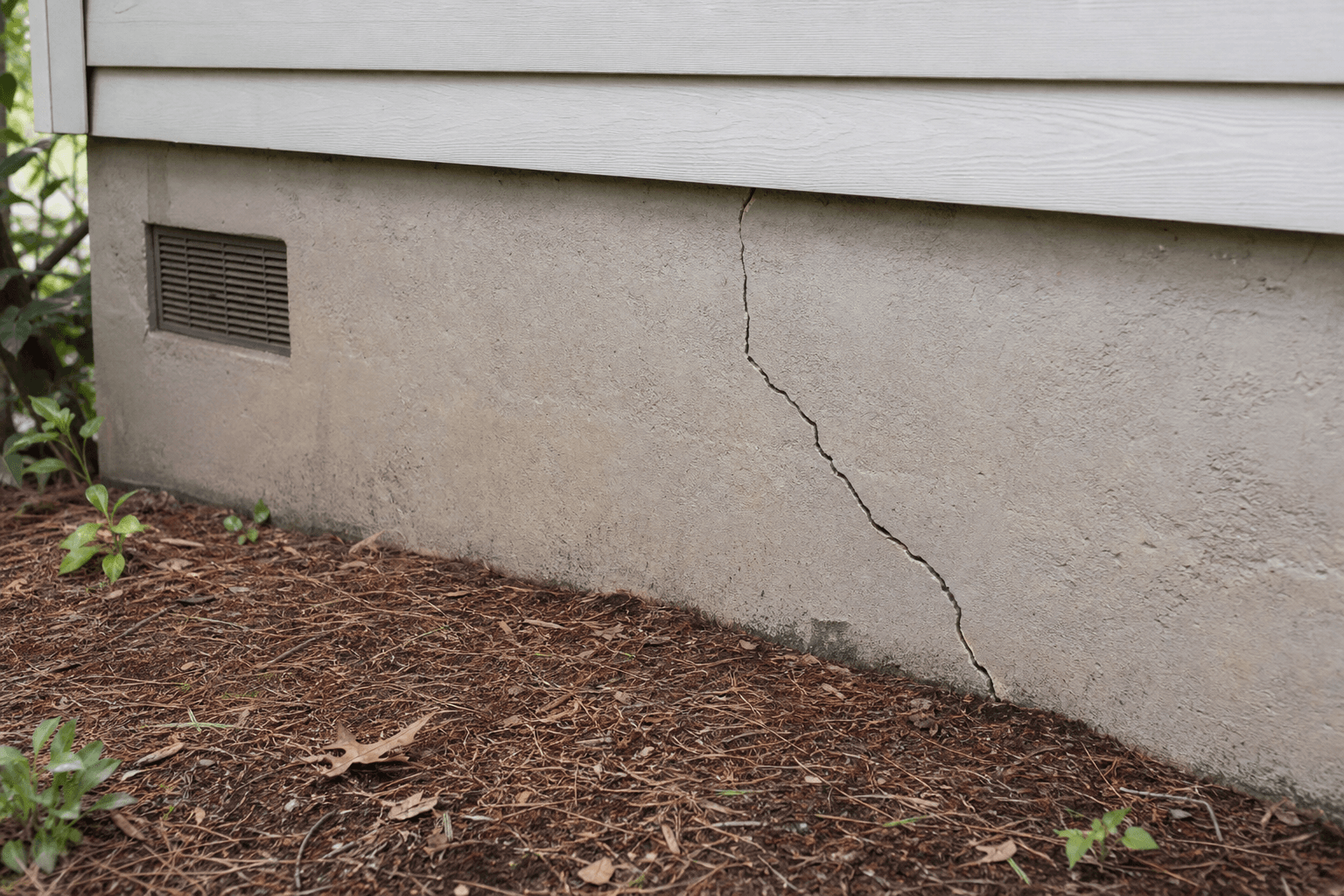
Foundation repair in Nashville, NC should begin with a clear reading of the symptoms. A crack by itself does not always mean settlement. A sloping floor may come from crawl-space supports instead of the perimeter foundation. A leaking wall may need drainage review before structural repair. The best first step is to connect what you see inside with what is happening outside and below the home.
Around Nashville, homeowners should pay attention to rainfall, roof runoff, crawl-space moisture, grading, and whether symptoms change after storms. Local stormwater and drainage conditions can make foundation concerns easier to notice, especially where water collects beside a wall, under a crawl space, near a chimney, or around older repairs.
This page is a local planning guide for homeowners comparing warning signs, repair options, and quotes. It does not diagnose your home remotely. A useful repair recommendation should be based on inspection findings, measurements where appropriate, and a written scope that explains what is included.
Local factors
What can affect foundations in Nashville
| Local factor | Why it matters | What to check |
|---|---|---|
| Stoney Creek flooding | The Town of Nashville identifies Stoney Creek as the main source of flooding for the town | Check whether the property sits near mapped flood hazard areas or low drainage paths. |
| Elm Street drainage work | Nash County describes an aging Elm Street stormwater system needing replacement after rains beginning with Hurricane Matthew | Use this as a reminder to inspect public and private drainage context. |
| Nash County setting | Nashville is close to Rocky Mount but has its own town drainage and flood information | Clarify Nashville, NC when searching or comparing local repair guidance. |
| Flood insurance note | The town states homeowners insurance excludes flood damage and flood insurance is separate | Separate foundation repair cost from flood-coverage questions. |
| Crawl-space moisture | Damp soil, standing water, or high humidity can affect floor supports | Check beams, posts, piers, joists, insulation, and soil after storms. |
| Permits and rebuilding | The town flood page reminds residents to secure permits for building or rebuilding | Ask whether permits or inspections are part of the repair scope. |
Housing & soil
Nashville's fall-line soils and Cecil clay
Nashville, the Nash County seat, sits right on North Carolina's fall line — the boundary that runs through the Red Oak, Nashville, Stanhope, and Bailey area, separating the clay-rich Piedmont from the sandier Coastal Plain. On the Piedmont side, Cecil soils predominate: a classic red clay that can shrink and swell as its moisture changes, a recognized contributor to seasonal foundation movement. Toward the Coastal Plain side, soils grow sandier and drainage behaves differently. Nash County housing data shows a median build year around 1986, with roughly one in nine homes predating 1950 and a meaningful share of manufactured homes, so pier and crawl-space support conditions appear alongside masonry and slab. Layered on top is Nashville's own drainage context around Stoney Creek and the aging Elm Street stormwater system.
Fall-line location means Piedmont Cecil clay on some lots and sandier Coastal Plain soils on others.
Cecil red clay shrinks and swells with moisture, a common driver of seasonal cracks, sticking doors, and floor movement.
A meaningful share of manufactured homes makes pier spacing, tie-downs, and support settlement worth checking, not just wall cracks.
Stoney Creek flooding and the aging Elm Street stormwater system add local drainage context near some properties.
Because soils and home types vary across town, base repair decisions on the specific property.
Stormwater context
Nashville drainage details worth connecting to foundation symptoms
Nashville, NC has very specific local drainage context. The town identifies Stoney Creek as the main flooding source, and Nash County describes the Elm Street drainage system as aging infrastructure that needed replacement after semi-recent rainfalls beginning with Hurricane Matthew. For homeowners, that points to the same practical question: where does water go on and around the property?
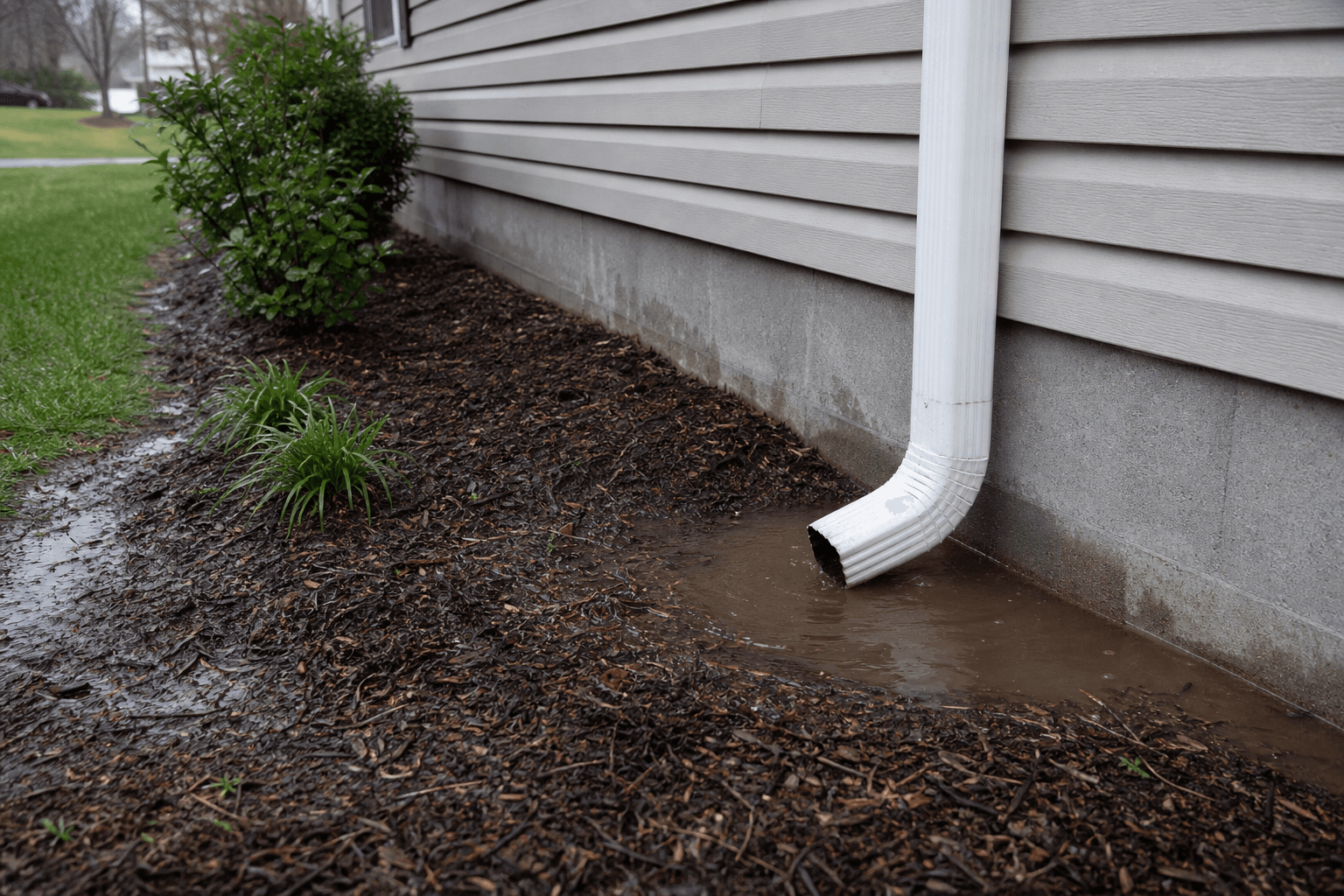
Check whether downspouts, driveways, sidewalks, or low grading send water toward the home.
Ask whether the property is near Stoney Creek, a ditch, or a mapped flood hazard area.
Look for crawl-space dampness, wet insulation, soft soil, or support movement after storms.
Clarify whether the repair quote includes drainage work, foundation work, or both.
Warning signs
Foundation symptoms to take seriously
Stair-step brick cracks
May point to masonry movement, settlement, or differential support near a wall or corner.
Uneven or sloping floors
Can come from crawl-space supports, joists, beams, posts, piers, footings, or foundation settlement.
Sticking doors and windows
Can be humidity or hardware, but combined with cracks or floor slope it deserves a closer look.
Water entering foundation walls
Often means the water source and the entry path both need to be understood before repair.
Bowing or leaning walls
Wall movement can involve soil pressure and should be reviewed promptly.
Chimney or porch separation
Heavy attached structures can settle differently from the main home and need focused evaluation.
Repair options
Foundation repair options commonly discussed near Nashville
Foundation crack repair
Useful when cracks are leaking, widening, returning after patching, or paired with other movement signs.
Foundation drainage solutions
Important when roof runoff, grading, saturated soil, or pooling water appears near the affected area.
House leveling
Considered when floors slope, dip, bounce, or point to support or settlement problems.
Push piers and helical piers
Used when a foundation area needs deeper support and the site fits the repair method.
Crawl-space support repair
Relevant where beams, posts, piers, joists, footings, or moisture affect floor support.
Wall stabilization
Needed when foundation walls bow, lean, crack horizontally, or show pressure-related movement.
The right repair is not chosen by city name. It depends on the cause, foundation type, access, water conditions, structural movement, and whether the goal is sealing, stabilizing, supporting, draining, or lifting. A strong quote should explain why the proposed method fits your home.
Cost factors
What affects foundation repair cost in Nashville
Foundation repair pricing depends on method and scope. Crack injection may be priced per crack. Piering may be priced by support location and depth. Drainage may depend on linear footage, discharge route, and sump needs. House leveling may involve support posts, beams, joists, footings, or foundation settlement repair.
Before comparing totals, ask whether each quote includes inspection notes, repair quantities, engineering, permits, drainage, access work, cleanup, warranty terms, and exclusions. Two quotes can be thousands of dollars apart because they are solving different problems.
Inspection flow
What to document before requesting help
Take wide and close photos
Capture the room or wall first, then the crack, gap, slope, or water stain.
Note storm timing
Write down whether symptoms appear after heavy rain, during humidity, or as soil dries.
Walk the exterior
Check gutters, downspouts, grading, pooling water, patios, porch edges, and crawl-space access.
Check the crawl space if safe
Look for wet soil, damaged beams, leaning posts, settled piers, rot, or fallen insulation.
Keep old repair records
Prior crack repair, drainage work, piering, leveling, or warranty documents help explain the history.
Compare written scopes
Ask every company to put repair method, quantities, exclusions, and warranty terms in writing.
Nearby areas
Nashville and nearby communities
This service-area guide is written for Nashville homeowners and nearby communities where residents may be comparing the same foundation warning signs, drainage patterns, and repair options.
Red Oak
Momeyer
Dortches
Spring Hope
Castalia
Rocky Mount
Related guidance
Useful next pages
FAQ
Foundation repair in Nashville FAQs
What foundation problems are common in Nashville, NC?
Nashville homeowners may notice foundation cracks, crawl-space moisture, uneven floors, sticking doors, drainage near the home, water intrusion, and support problems that need a site-specific review.
Does Stoney Creek affect foundation planning in Nashville?
The Town of Nashville identifies Stoney Creek as the main source of flooding for the town. That does not diagnose any one home, but it makes drainage, floodplain awareness, and water movement important local context.
What is the Elm Street drainage project, and why does it matter?
Nash County describes the Elm Street drainage system as an aging stormwater system in Nashville that needed replacement after semi-recent rainfalls beginning with Hurricane Matthew. It is a useful reminder that local drainage infrastructure can affect homeowner concerns.
How should Nashville homeowners compare foundation repair estimates?
Ask each company to explain the cause, drainage assumptions, repair method, quantities, warranty terms, exclusions, engineering needs, and whether crawl-space support or settlement repair is being priced.
What nearby areas does the Nashville guide include?
This guide focuses on Nashville and nearby Nash County communities including Red Oak, Momeyer, Dortches, Spring Hope, Castalia, and Rocky Mount.
Sources
How this local guide was reviewed
Last reviewed: July 31, 2026. This page is educational and should be paired with an in-person foundation review before repair decisions are made.
- Town of Nashville flood information
- Nash County Elm Street Drainage Project
- Soil Survey of Nash County, North Carolina (USDA), ECU Digital Collections
- Point2Homes Nash County housing and construction-age profile
- Nash County Regional Hazard Mitigation Plan
- North Carolina hazard mitigation plans
- NC State Extension soil and drainage guidance
- NC DEQ flooding guidance